Ghana’s AU Petition on South African Xenophobia Tests Continental Governance Frameworks
Ghana’s formal petition to the African Union to place xenophobic violence in South Africa on the agenda of the Eighth AU Mid-Year Coordination Meeting represents more than a bilateral diplomatic dispute. It raises a structural question about whether continental institutions possess the enforcement architecture to translate pan-African norms into accountable state behavior.
The Petition and Its Institutional Basis
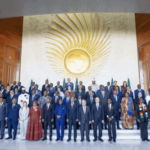
Ghana’s Foreign Affairs Minister, Samuel Okudzeto Ablakwa, submitted the petition ahead of the AU coordination meeting scheduled for 24–27 June 2026 in Cairo, Egypt. The document invokes two foundational continental instruments: the African Charter on Human and Peoples’ Rights and the African Continental Free Trade Area (AfCFTA) framework, both of which carry explicit obligations regarding the protection of African nationals and the facilitation of free movement across member states.
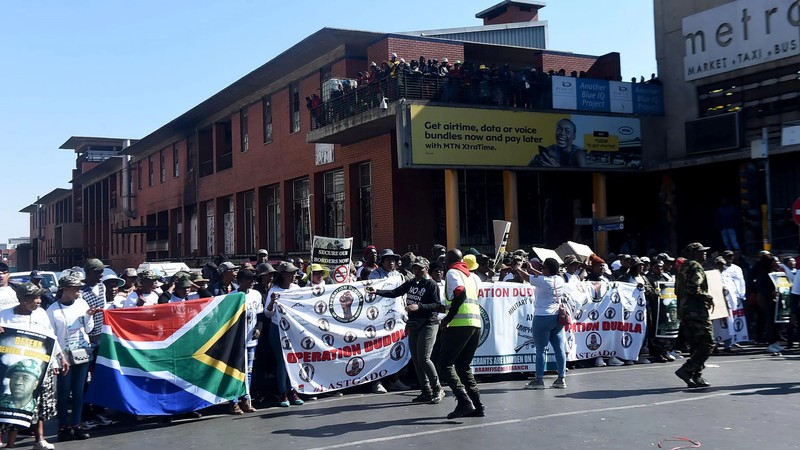
The petition documents a pattern of violence against foreign nationals in South Africa, including reported loss of life, destruction of property, and sustained insecurity among migrant communities. Ghana’s government argues that these incidents are not isolated social disturbances but systematic failures of protection that contradict the foundational architecture of African integration.
South Africa’s government characterized the escalation as “regrettable,” reaffirming its preference for bilateral diplomatic engagement. President Cyril Ramaphosa publicly condemned xenophobia, while Pretoria maintained that no credible evidence supports claims of systematic targeting of Ghanaian or Nigerian nationals by law enforcement agencies.
AfCFTA Coherence and the Free Movement Gap
Ghana’s invocation of the AfCFTA is legally and politically significant. The continental trade framework, operational since 2021, is premised on the progressive liberalization of goods, services, and ultimately the movement of people across 54 member states. Xenophobic violence directed at African migrants structurally contradicts this architecture by creating a hostile regulatory environment for intra-African mobility.
South Africa is both a critical AfCFTA signatory and the continent’s most industrialized economy, accounting for roughly 20 percent of sub-Saharan Africa’s GDP. Its domestic labor market absorbs an estimated three million migrants, with approximately 90 percent originating from other African countries. The tension between South Africa’s role as a regional economic anchor and its domestic anti-immigration politics creates a coherence problem for AfCFTA’s long-term credibility.
For West African states, the stakes are concrete. Ghana, Nigeria, and Senegal each have significant diaspora communities in South Africa. If AfCFTA’s promise of deeper integration cannot guarantee basic physical security for African nationals operating across borders, the framework’s political legitimacy among sending-country populations will erode before its trade provisions are fully implemented.
The Moral Authority Question and Ghana’s Governance Record
The IOL Sunday Independent’s framing of the “moral authority” question deserves analytical treatment rather than dismissal. Ghana’s petition draws explicitly on the country’s pan-African heritage, positioning Accra as a legitimate custodian of continental solidarity norms. Under Kwame Nkrumah, Ghana served as the organizational hub of African liberation politics and materially supported South Africa’s anti-apartheid movement. That historical capital is real.
However, Ghana’s own governance record on migration and xenophobia is not without contradiction. Periodic anti-foreigner sentiment, regulatory restrictions on foreign traders in retail markets, and the enforcement of the Ghana Investment Promotion Centre (GIPC) Act restrictions on non-citizen retail trade have drawn criticism from ECOWAS partners, particularly Nigerian traders operating in Accra. The 2019 enforcement operations that shuttered foreign-owned retail shops generated significant diplomatic friction within the ECOWAS free movement framework.
This does not invalidate Ghana’s petition, but it does underscore that the credibility of continental norm enforcement depends on consistent application. A governance-centered approach to the xenophobia debate requires that petitioning states also subject their own migration governance to the same standards they invoke against others.
ECOWAS, AU Architecture, and Enforcement Gaps
Ghana’s petition exposes a structural weakness in continental governance: the AU’s monitoring and enforcement mechanisms for human rights and free movement obligations remain underdeveloped relative to the normative commitments member states have signed onto.
The African Commission on Human and Peoples’ Rights, based in Banjul, holds a mandate to investigate violations of the African Charter but operates with limited investigative capacity and no binding enforcement authority over member states. Ghana’s call for a fact-finding mission into xenophobic violence in South Africa would, if approved, represent one of the more assertive deployments of this mechanism in recent continental history.
Within West Africa, the ECOWAS Protocol on Free Movement of Persons, signed in 1979 and progressively expanded, provides a more developed regional framework for mobility rights than the AU’s continental instruments. ECOWAS citizens hold the right to enter, reside, and establish businesses across member states without visa requirements. The contrast between this West African framework and the conditions facing West African nationals in South Africa, which is an ECOWAS non-member, illustrates both the achievements and the limits of regional integration architecture.
South Africa’s counter-proposal, that the AU also place migration governance, push factors, and economic disparities on the Cairo agenda, is not without merit. Addressing xenophobic violence without examining the structural conditions driving intra-African migration, including governance deficits, unemployment, and inequality in sending countries, produces incomplete policy responses. Ghana’s unemployment rate stood at approximately 14.7 percent in 2023, while South Africa’s official rate exceeds 32 percent, with youth unemployment above 60 percent. These figures are not justifications for violence, but they are essential context for designing durable policy solutions.
Investor Confidence and Regional Governance Signals
For investors and development finance institutions operating across West and Southern Africa, the Ghana-South Africa dispute signals something beyond bilateral tension. It reflects the degree to which continental governance institutions can, or cannot, manage the social externalities of economic integration.
Foreign direct investment flows into West Africa, which reached approximately US$11.5 billion in 2023 according to UNCTAD data, are sensitive to perceptions of regional stability and institutional predictability. Persistent xenophobic violence in South Africa, combined with the absence of credible continental enforcement mechanisms, creates reputational risk for the AfCFTA brand at a moment when the framework is still building private sector confidence.
Ghana’s petition, whatever its diplomatic outcome in Cairo, performs a governance function: it places on record that continental norms carry expectations of enforcement, and that member states will invoke institutional channels when those norms are violated. Whether the AU’s coordination machinery can convert that petition into meaningful accountability will be a test of institutional maturity that extends well beyond this specific dispute.
Policy Pathways for Continental Institutions
Three institutional responses would advance governance coherence on this question. First, the AU should commission an independent review of the African Commission on Human and Peoples’ Rights’ investigative capacity and resource allocation, with a view to operationalizing fact-finding missions as a standard response to documented patterns of violence against African nationals.
Second, the AfCFTA Secretariat should formally integrate free movement monitoring into its implementation review processes, creating a mechanism by which violations of migrant rights can be flagged as trade framework compliance issues rather than purely bilateral diplomatic matters.
Third, ECOWAS, as the most institutionally developed regional economic community on the continent, should establish a formal dialogue channel with the Southern African Development Community (SADC) on migration governance standards, creating peer-to-peer institutional learning rather than leaving these issues to escalate into AU-level confrontations.
Ghana’s petition to the AU is a legitimate exercise of continental institutional rights. Its credibility, and the credibility of the continental governance architecture it invokes, will depend on whether African institutions can move from norm declaration to norm enforcement.