
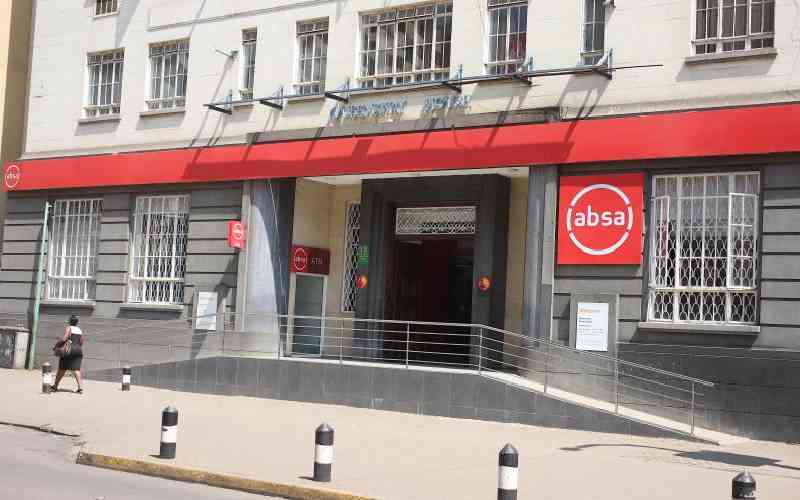
A Market Share Shift With Regional Implications
The completion of Absa Bank Uganda’s takeover of Standard Chartered’s wealth and retail banking business on 13 November 2024 represents more than a bilateral corporate transaction. It marks a structural realignment of Uganda’s retail banking sector, concentrating a significant share of household deposits within a single institution and raising substantive questions about market competition, regulatory oversight, and the broader trajectory of pan-African banking consolidation.
The deal transfers Standard Chartered Uganda’s entire Wealth and Retail Banking portfolio to Absa, including its customer base, product suite, and staff. The Common Market for Eastern and Southern Africa (COMESA) Competition Commission, which reviewed the transaction under its mandate to prevent anti-competitive mergers across member states, projected that the combined entity would command between 20 and 30 per cent of Uganda’s retail deposit market and between 10 and 20 per cent of retail lending.
That is a substantial footprint for a single lender in a market where financial inclusion remains unfinished business.
Standard Chartered’s Strategic Retreat From Retail Africa
To understand how this transaction came about, it is necessary to trace Standard Chartered’s evolving posture toward sub-Saharan African retail banking over the preceding years. The London-headquartered bank had long maintained a presence across the continent, but its retail operations in smaller markets generated returns that increasingly failed to justify the capital and compliance costs attached to them.
In November 2024, Standard Chartered Group formally announced its intention to explore the sale of its wealth and retail banking operations in Uganda, Botswana, and Zambia simultaneously, signalling a deliberate exit from the retail segment across three distinct African jurisdictions. The decision reflected a global strategic pivot toward institutional, corporate, and private banking clients in higher-margin markets, a recalibration that several international banks operating in Africa have pursued since the mid-2010s.
For Uganda specifically, Standard Chartered’s withdrawal from retail banking closed a chapter that had made the British institution a recognisable name among Kampala’s middle-class depositors and salaried professionals. Its customer relationships, branch infrastructure, and staff now pass to Absa under the terms finalised in November.
Absa’s Accumulation of Scale and the COMESA Review
Absa Bank Uganda entered this transaction already operating 39 branches, 85 ATMs, and 25 cash deposit machines across the country, a network that, combined with Standard Chartered’s absorbed retail base, positions it as one of the dominant forces in Ugandan retail banking. The bank is a subsidiary of Absa Group, which maintains banking operations across Kenya, Uganda, Tanzania, South Africa, Zambia, and several other African markets, giving it a continental footprint that few rivals can match at comparable depth.
The COMESA Competition Commission’s involvement in reviewing this merger underscores an institutional reality that often goes underappreciated in coverage of African financial markets: regional competition authorities do exercise meaningful oversight over cross-border corporate consolidation. COMESA’s mandate covers 21 member states and requires that mergers meeting defined thresholds submit to its review process, independent of national regulators. Its projected market share figures, the 20 to 30 per cent retail deposit range and the 10 to 20 per cent retail lending estimate, formed part of its assessment of whether the transaction would substantially lessen competition in Uganda’s banking sector.
The Commission ultimately cleared the deal, but the figures it published are not merely procedural footnotes. They define the competitive landscape that Ugandan consumers, businesses, and smaller lenders now inhabit.
What Concentration at This Scale Means for Ugandan Borrowers
A retail deposit share of up to 30 per cent, held by a single institution, carries implications that extend well beyond Absa’s balance sheet. In markets where deposit concentration is high, the pricing of savings products and the terms attached to retail credit tend to reflect the dominant lender’s preferences rather than competitive pressure. Uganda’s banking sector already exhibits characteristics common to many East African markets: a small number of large commercial banks capturing the bulk of formal deposits, while a long tail of smaller institutions and microfinance providers serve segments that the majors regard as too costly to reach profitably.
The integration of Standard Chartered’s wealth and retail clients into Absa’s systems will test the acquirer’s operational capacity, its ability to retain customers who may have chosen StanChart precisely because of its brand positioning, and its commitment to maintaining service quality during the transition period. Absa’s statement welcoming “Standard Chartered’s Wealth and Retail Banking clients and colleagues” reflects the standard reassurance language of any acquisition, but the substantive test lies in whether pricing, credit access, and product quality hold up once the competitive pressure of two separate institutions disappears.
Regional Banking Consolidation and the AfCFTA Dimension
Viewed from a continental governance perspective, this transaction is one data point in a larger pattern of banking sector consolidation across West and East Africa. Pan-African banking groups, Absa, Ecobank, United Bank for Africa, Equity Bank, and KCB among them, have steadily expanded their footprints through organic growth and acquisition, accumulating market share across multiple jurisdictions simultaneously. This consolidation carries genuine efficiency benefits: larger institutions can invest in digital infrastructure, absorb compliance costs more readily, and offer a broader range of products to corporate clients operating across borders.
It also creates regulatory challenges that national authorities and regional bodies are only beginning to address systematically. The African Continental Free Trade Area (AfCFTA) includes financial services within its liberalisation agenda, and as intra-African trade volumes grow, the demand for banks capable of facilitating cross-border transactions in local currencies will intensify. Absa’s expanded Ugandan retail base, combined with its presence in Kenya, Tanzania, and Zambia, theoretically positions it to serve businesses operating along East African trade corridors more comprehensively than a purely domestic institution could.
But scale without corresponding regulatory alignment creates gaps. Uganda’s Bank of Uganda, COMESA’s Competition Commission, and the East African Community’s nascent financial sector integration frameworks each hold partial jurisdiction over different aspects of how a bank of Absa’s growing size operates across borders. The coordination between these bodies remains incomplete, and the Absa-StanChart transaction, precisely because it attracted COMESA scrutiny, illustrates both the progress made and the distance still to travel in building coherent regional financial oversight.
Policy Pathways for Uganda and the Region
For Uganda’s Bank of Uganda, the immediate priority is ensuring that the transition does not disrupt deposit security or credit access for the customers absorbed from Standard Chartered. Beyond the operational transition, the central bank faces a structural question: at what point does retail deposit concentration in a single institution require additional prudential requirements, whether in the form of enhanced capital buffers, ring-fencing of retail operations, or more granular reporting obligations tied to market share thresholds?
At the regional level, COMESA’s role in clearing this merger points to an institutional capacity that deserves greater investment and visibility. Regional competition review is only as effective as the quality of market data available to the reviewing body and the enforceability of its decisions within member states. Strengthening COMESA’s analytical resources and deepening the legal integration between its rulings and national regulatory frameworks would make future merger reviews more robust and more credible to the investors and institutions they are designed to govern.
Absa’s consolidation of Uganda’s retail banking market is, in the end, a governance story as much as a business one. The mechanisms through which regulators, regional bodies, and national institutions respond to this concentration will shape whether the transaction delivers broad-based benefits or simply transfers market power from one large institution to a larger one.