A criminal sand-extraction operation on the Accra–Kumasi Expressway project corridor has exposed a critical gap in Ghana’s capacity to protect strategic public infrastructure, prompting a security crackdown in the Ashanti Region and raising pointed questions about institutional oversight of the country’s most significant road development project.
The operation had been running for approximately two weeks before authorities intervened, with suspects allegedly using trucks under cover of darkness to extract sand from the expressway site in the Sewua–Donyina–Appiadu enclave of the Ashanti Region. That timeline alone signals a monitoring failure: a coordinated, vehicle-intensive extraction effort went undetected on a nationally significant corridor for fourteen days.
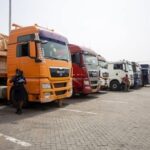
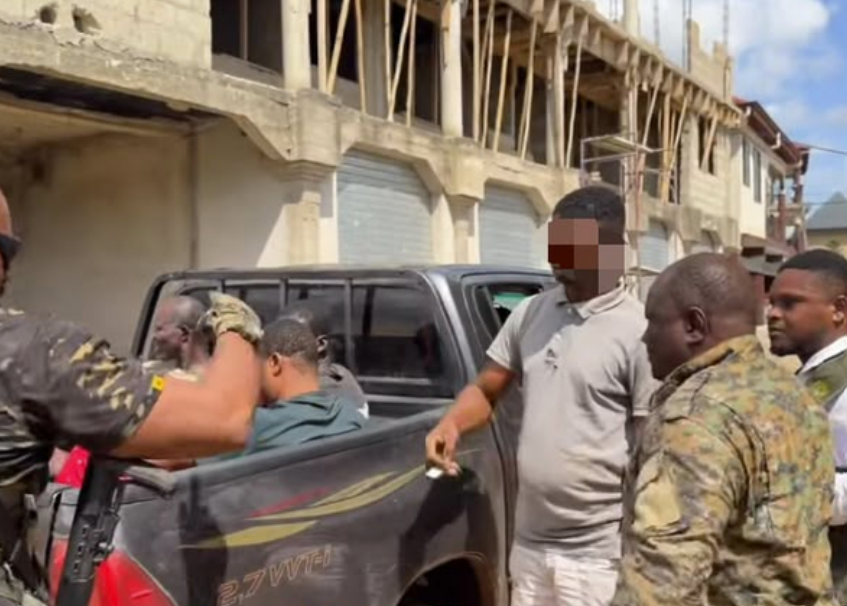
On 14 October 2024, a security operation led by the Ashanti Regional Security Coordinator, Captain (Retired) John Kwame Jabari, resulted in the arrest of 15 men suspected of engaging in illegal sand-winning activities at the project site. Six vehicles were impounded during the operation, including a wheel loader, indicating the industrial scale of the extraction rather than opportunistic petty theft.
The 15 suspects were subsequently transported to the National Security headquarters in Accra, where Assistant Liaison Officer Ivan Bilson Yeboah confirmed they were held for custody and further investigation. The involvement of National Security in what might otherwise be treated as a local enforcement matter reflects the political sensitivity surrounding the expressway project and the government’s stated commitment to its delivery.
Speaking on Eyewitness News on 15 October 2024, Captain Jabari announced the deployment of a dedicated security patrol team along the expressway corridor. His public warning was unambiguous: individuals found engaging in sand-winning activities on the site would face severe consequences. “It is a big project that this government wants to embark on, and we are not going to entertain anybody who wants to disrupt the progress of that work,” he stated.
The Accra–Kumasi corridor is Ghana’s most commercially trafficked inland route, connecting the national capital to the Ashanti Region’s economic hub. Kumasi functions as a regional trade gateway, with goods moving through it toward northern Ghana, Burkina Faso, and beyond into the broader ECOWAS market. Infrastructure degradation or project delays on this corridor carry costs that extend well past Ghana’s borders, affecting the logistics chains that underpin West African intra-regional trade.
Sand-winning, a persistent governance challenge across West Africa, involves the illegal or unregulated extraction of sand from riverbeds, construction sites, and open land for sale to construction markets. In Ghana, the practice has historically been associated with environmental degradation, riverbank erosion, and the undermining of public infrastructure. Its emergence on an active expressway project site represents an escalation, one that targets nationally funded assets directly.
The two-week window during which the operation went undetected points to a structural weakness in site security protocols. Large-scale infrastructure projects in Ghana and across the region frequently rely on contractor-managed perimeter security rather than integrated state surveillance, creating jurisdictional ambiguities that criminal actors exploit. The wheel loader recovered during the arrest suggests the sand-winning operation required logistical coordination and capital investment, characteristics of an organized network rather than informal scavenging.
Within the ECOWAS framework, member states have committed to infrastructure harmonization as a prerequisite for deepening regional trade under the African Continental Free Trade Area (AfCFTA). Road corridors connecting coastal economies to landlocked Sahelian states are classified as priority infrastructure under the ECOWAS Regional Transport Master Plan. Ghana’s ability to deliver and protect such corridors directly affects its credibility as a regional infrastructure anchor, particularly as it competes with Côte d’Ivoire, which has accelerated its own corridor investments linking Abidjan to Ouagadougou and beyond.
Investor confidence in Ghana’s infrastructure pipeline is also at stake. The expressway project, if completed on schedule and within budget, would demonstrate that Ghana can execute complex public works despite fiscal constraints, a signal that matters to development finance institutions and private capital considering the country’s infrastructure bonds and public-private partnership frameworks. Disruptions caused by illegal extraction, even if contained quickly, introduce cost overruns and material shortfalls that erode that confidence.
Captain Jabari’s deployment of a patrol team addresses the immediate threat, but the institutional response raises a longer-term question: why was perimeter security not sufficient to prevent a two-week extraction operation in the first place? Effective infrastructure protection requires integrated protocols combining contractor responsibility, community liaison mechanisms, and state enforcement, not reactive deployment after a breach has already occurred.
Ghana’s Environmental Protection Agency and the Minerals Commission both carry statutory mandates over sand extraction activities, yet neither institution appears to have been cited in the government’s response to this incident. Clarifying which agency bears primary regulatory authority over sand-winning on active infrastructure sites, and ensuring that authority is operationalized through enforceable site agreements with contractors, would close the governance gap that this episode has exposed.
The Bank of Ghana has flagged infrastructure investment as a structural driver of medium-term economic recovery, and the Ministry of Finance has positioned road development as a central plank of the government’s growth strategy. Those commitments carry institutional weight only when backed by enforcement capacity that matches their ambition. The arrests in Sewua–Donyina–Appiadu are a necessary corrective, but the more durable fix lies in designing infrastructure governance systems that do not depend on criminal activity becoming visible before the state responds.