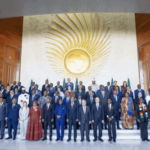

A continental free trade agreement means little if a Ghanaian exporter still needs US dollars to pay a Kenyan supplier. That is not a hypothetical — it is the operational reality AfCFTA Secretary-General Wamkele Mene described at a recent gathering in Nairobi, where he put the annual cost of currency conversion in intra-African trade at approximately US$5 billion.
The AfCFTA entered into force in 2021 with a mandate to create a single continental market covering 54 countries, 1.3 billion people, and a combined GDP exceeding US$3 trillion. On paper, it is the world’s largest free trade area by membership. In practice, the gap between the agreement’s architecture and its operational reality exposes a governance problem that no tariff schedule alone can resolve. The mechanisms that would make the agreement function — payment infrastructure, customs modernization, regulatory alignment — remain fragmented, underfunded, or unevenly implemented across member states.
For West Africa specifically, this fragmentation carries a particular institutional irony. ECOWAS has existed since 1975, and WAEMU countries share a common currency, the CFA franc, backed by the French Treasury. Yet even within this sub-regional bloc, intra-regional trade accounts for less than 12 percent of total trade for most member states — a figure that compares poorly with the European Union’s intra-bloc trade rate of roughly 60 percent. The AfCFTA was designed to accelerate integration beyond what ECOWAS has achieved, but it inherits the same structural bottlenecks: border delays, non-harmonized customs procedures, and payment systems that route transactions through New York or Paris before they reach Accra or Abidjan.
The payment infrastructure problem is both the most quantifiable and the most tractable of AfCFTA’s implementation deficits. Mene specifically cited Ghana and Kenya as examples of countries where cross-border business transactions still default to the US dollar as an intermediary currency, even when both trading parties operate in functioning local currency environments. The Pan-African Payment and Settlement System, known as PAPSS, was developed by Afreximbank in collaboration with the AfCFTA Secretariat to address precisely this inefficiency. PAPSS allows participating businesses to settle cross-border transactions in local currencies, bypassing the dollar conversion layer that inflates costs and introduces exchange rate exposure. The system has secured central bank participation from several African countries, but its utility scales directly with adoption breadth. A Ghanaian firm trading with a counterpart in a country whose central bank has not yet integrated PAPSS gains nothing from the system’s existence.
This is where the governance dimension becomes decisive. PAPSS is not a technical problem awaiting a technical solution — it is a regulatory coordination problem. Central banks must amend correspondent banking frameworks. Finance ministries must align capital account policies. Regulators must agree on dispute resolution mechanisms for cross-border digital transactions. Each of these steps requires institutional will, legislative bandwidth, and in some cases, politically sensitive decisions about monetary sovereignty. For WAEMU countries, where monetary policy is already pooled, PAPSS integration may be structurally simpler. For Ghana, which operates an independent cedi-based monetary system and has faced significant currency depreciation pressures since 2022, the calculus involves both opportunity and risk management.
Customs modernization presents a parallel set of governance challenges. The AfCFTA Secretariat has identified policy alignment at border posts as a critical implementation gap, and the evidence from West Africa’s trade corridors supports that assessment. The Tema-Ouagadougou corridor, one of the region’s most commercially significant trade routes connecting Ghana’s main port to landlocked Burkina Faso, has historically been characterized by lengthy dwell times, duplicative documentation requirements, and informal payments that function as a shadow tariff system. Côte d’Ivoire’s Abidjan-Lagos corridor presents similar structural inefficiencies. These are not incidental frictions — they represent embedded institutional failures that AfCFTA’s tariff liberalization schedule cannot address on its own.
PMI’s Managing Director for Sub-Saharan Africa, George Asamani, framed the implementation challenge in terms of human capital and institutional coordination capacity. “A continental agreement becomes meaningful when a business can use it,” Asamani said, adding that this depends on “people who can coordinate institutions, manage risk, deliver reliable systems and keep the intended benefit in view.” This observation points to a deficit that regional development banks and the AU Commission have been slow to address systematically: AfCFTA implementation requires a professional class of trade facilitation specialists, regulatory harmonization experts, and cross-border compliance managers who understand both the agreement’s legal architecture and the operational realities of specific trade corridors.
Mene also acknowledged the competitive exposure that market opening creates for domestic industries, particularly in countries with less diversified manufacturing bases. Ghana’s industrial sector, for instance, faces the prospect of increased competition from more cost-competitive manufacturers in countries like Morocco, Egypt, or even Côte d’Ivoire as tariff barriers are progressively eliminated. The AfCFTA framework includes safeguard provisions and infant industry protections, but the effectiveness of these mechanisms depends on how robustly member states invoke them and whether the AfCFTA Secretariat has the institutional authority to adjudicate disputes in a timely manner. Senegal’s emerging petrochemical sector and Nigeria’s manufacturing base face analogous exposure, and the political economy of liberalization in both countries will test the agreement’s dispute resolution architecture in the years ahead.
The AfCFTA Digital Trade Protocol, which Mene cited as a framework for digital commerce, emerging technologies, and data infrastructure, adds a further governance layer. West Africa’s digital economy is expanding rapidly, with fintech activity concentrated in Nigeria, Ghana, and Senegal. But digital trade across borders requires data localization policies, cross-border data flow agreements, and digital identity frameworks to be harmonized — a regulatory undertaking that has taken the EU over a decade and remains contested. Accelerating this process across 54 jurisdictions with vastly different regulatory capacities will require the AfCFTA Secretariat to exercise a degree of normative authority it has not yet demonstrated.
What the Nairobi discussion ultimately clarified is that AfCFTA’s implementation deficit is not primarily a resource problem, though resources matter. It is an institutional sequencing problem. Payment infrastructure, customs reform, regulatory alignment, and digital governance frameworks must advance in parallel, coordinated across national governments, regional bodies like ECOWAS and WAEMU, and the AfCFTA Secretariat itself. The Secretariat’s mandate gives it convening authority but limited enforcement power. Closing that gap, whether through strengthened AU dispute resolution mechanisms, conditional financing tied to implementation benchmarks from Afreximbank or the African Development Bank, or peer-review processes modeled on ECOWAS governance protocols, is the policy question that African governments and their institutional partners must answer concretely, with timelines and accountability structures attached.