The Institutional Financing Question at the Heart of COMESA’s 25th Summit
At the 25th Summit of the Common Market for Eastern and Southern Africa (COMESA), held on 1 May 2025 at the New Parliament Building in Harare, Zimbabwe, Kenyan President William Ruto placed a pointed institutional question before his peers: if African governments do not trust African financial institutions with their own reserves, why should international markets? The remark was not rhetorical. It targeted a structural contradiction at the core of African development finance — a continent holding more than US$4 trillion in domestic financial assets, much of it parked in foreign accounts, while domestically financed infrastructure projects queue for capital that never arrives.
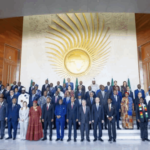
Ruto’s address, delivered as he handed the COMESA chairmanship to Zimbabwean President Emmerson Mnangagwa, reframed what is too often treated as a foreign-aid debate into a governance and institutional-trust question. The summit brought together heads of state alongside COMESA Secretary-General Chileshe Mpundu Kapwepwe, AfCFTA Secretary-General Wamkele Mene, and Zambian President Hakainde Hichilema, signalling that the convergence of regional trade architecture and continental finance mechanisms is now a live policy agenda, not an aspiration.
The Capital Paradox: $4 Trillion in Assets, Chronic Project Underfunding
The figure Ruto cited — US$4 trillion in African domestic financial assets — deserves institutional scrutiny rather than rhetorical deployment. African sovereign wealth funds, pension systems, central bank reserves, and insurance pools collectively represent a capital base that dwarfs the continent’s annual infrastructure financing gap, estimated by the African Development Bank at between US$68 billion and US$108 billion per year. Yet the routing of these assets through foreign custodians and international financial intermediaries means that African institutions are structurally bypassed in the very transactions they are mandated to support.
This is not a market failure in the abstract. It reflects specific governance choices: procurement regulations that favour international lenders, reserve management frameworks inherited from colonial-era monetary arrangements, and risk-rating conventions that systematically discount African institutions regardless of their actual performance records. Afreximbank, the Africa Finance Corporation (AFC), and the African Trade and Investment Development Insurance (ATIDI) have each demonstrated credible balance sheets and operational capacity, yet their share of African sovereign business remains disproportionately low relative to that of multilateral development banks headquartered outside the continent.
Kenya’s Recapitalisation as a Policy Signal
Ruto pointed to Kenya’s increased shareholding in Afreximbank, AFC, and ATIDI as a concrete policy commitment rather than a diplomatic gesture. More substantively, he confirmed that a planned US$16 billion East Africa refinery project would be financed almost entirely by African institutions — a transaction that, if executed, would represent one of the largest domestically financed infrastructure deals in the continent’s history. The choice of an energy project as the flagship case is deliberate: energy infrastructure sits at the intersection of industrial policy, regional integration, and investor confidence, and its financing structure sends a durable signal to capital markets about institutional credibility.
The Alliance of African Multilateral Financial Institutions: Architecture and Mandate
Central to Ruto’s argument was the Alliance of African Multilateral Financial Institutions, the pooling mechanism that allows African development finance institutions to aggregate balance sheets, share risk, and act at continental scale. The Alliance represents an attempt to solve a coordination problem that has long limited African institutional finance: individually, most African multilateral institutions lack the capital depth to anchor large sovereign transactions; collectively, they can compete with Bretton Woods institutions on deal size, if not yet on cost of capital.
The governance logic here matters. Pooling mechanisms of this kind work only when member states treat participation as a binding institutional commitment rather than an optional supplement to their primary banking relationships. COMESA’s 21-member architecture, spanning Eastern and Southern Africa, provides a natural constituency for the Alliance, but the mechanism’s effectiveness depends on whether finance ministries across the bloc actually redirect reserve placements and project mandates toward African institutions. AfCFTA Secretary-General Wamkele Mene’s presence at the summit underscored that the continental free trade framework and the financing architecture are increasingly treated as interdependent: trade volumes under AfCFTA cannot scale without trade finance, insurance, and guarantees provided by institutions that understand African market conditions.
Fiscal Discipline as a Precondition for Institutional Credibility
Ruto’s second major intervention addressed a governance failure that undermines the entire financing argument: the tendency of African governments to make development commitments that their budgets cannot support. “Every programme we agree upon must be matched by the resources to deliver it. Otherwise, our communiqués will promise what our budgets cannot pay for,” he told the summit. This is a pointed critique of a pattern visible across COMESA and ECOWAS alike — summit declarations that generate diplomatic momentum but no implementation architecture, leaving institutions to manage the reputational cost of unfulfilled commitments.
The discipline Ruto called for is not austerity in the structural-adjustment sense. It is a demand for policy coherence: that the ambition of continental development programmes be calibrated against actual revenue mobilisation, debt sustainability frameworks, and institutional delivery capacity. For African multilateral financial institutions to attract sovereign and institutional investors, the governments that back them must themselves demonstrate fiscal credibility. A government that cannot match its commitments with budgetary allocations erodes the guarantee value that underpins the bonds and instruments its institutions issue.
Regional Trade Architecture and the Protectionist Pressure Test
Ruto’s call for deeper regional trade, barrier removal, and stronger value chains arrived at a moment when global protectionist pressures are reshaping the incentive structures that African exporters face. The reimposition of tariff barriers by major trading partners — most visibly the United States under its revised trade posture — compresses the external market access that African economies have historically relied upon, and places renewed weight on intra-African trade as a structural buffer. COMESA, with intra-bloc trade valued at approximately US$11 billion annually according to the bloc’s own reporting, remains significantly below its potential given the combined GDP of its member states.
The governance mechanisms that constrain intra-COMESA trade are well-documented: non-tariff barriers, inconsistent customs procedures, underdeveloped payment and settlement infrastructure, and regulatory divergence across national jurisdictions. AfCFTA provides the overarching legal framework for addressing these, but implementation is uneven, and the institutional capacity to enforce commitments varies sharply between member states. Ruto’s framing of value chain development as a response to external protectionism is analytically sound — but it requires the kind of regulatory harmonisation and institutional investment that COMESA and AfCFTA have so far delivered only partially.
West African Relevance: ECOWAS, WAEMU, and the Continental Financing Debate
Although the COMESA summit is an Eastern and Southern African forum, the financing debate Ruto articulated has direct implications for West African governance and monetary architecture. ECOWAS member states, including Ghana, Nigeria, Senegal, and Côte d’Ivoire, face an identical structural tension: significant domestic financial assets managed through external custodians, chronic infrastructure financing gaps, and a regional monetary cooperation framework — particularly within the WAEMU zone — that has not yet been leveraged to scale African institutional finance. The ECOWAS single currency project, repeatedly deferred, would itself require the kind of institutional trust and reserve-pooling discipline that Ruto described. Ghana, currently navigating a post-IMF programme fiscal consolidation, faces this question acutely: its reserve management choices and its engagement with African development finance institutions will shape both its own recovery trajectory and its credibility within regional monetary discussions.
Policy Pathways: From Summit Declaration to Institutional Delivery
The COMESA summit’s significance lies not in its declarations but in whether the institutional mechanisms it endorsed translate into binding policy changes at the national level. Three governance levers are available to member states that choose to act on Ruto’s framework. First, reserve management reform: central banks can revise their investment mandates to increase allocations to African multilateral institutions, subject to prudential limits that maintain liquidity and credit quality standards. Second, procurement reform: development project mandates can be structured to require or preference African institutional financing, creating a demand-side incentive for institutions like Afreximbank and AFC to scale their balance sheets. Third, fiscal framework alignment: national medium-term expenditure frameworks can be required to demonstrate financing plans for every major development commitment before a programme receives cabinet approval, closing the gap between summit communiqués and budgetary reality.
None of these pathways is technically complex. Each requires political will and institutional coordination that has historically been in short supply. The Alliance of African Multilateral Financial Institutions provides the supply-side architecture; what remains is the demand-side commitment from finance ministries and central banks across COMESA, ECOWAS, and the broader AU membership. Ruto’s challenge to his peers — “Can we finance what we commit and can we deliver what we finance?” — will be answered not in Harare but in the budget offices and reserve management committees of 55 African capitals over the next fiscal cycle.