Fossil Fuels Set to Supply 61% of Africa’s Electricity by 2030, as New Database Exposes Planning Gaps Across 3,139 Power Plants
A comprehensive continental audit of Africa’s electricity infrastructure reveals that fossil fuels will continue to dominate power generation through 2030, supplying 61% of total output even as renewable capacity expands, raising critical questions about whether African governments can reconcile energy access targets with their Paris Agreement commitments and increasingly stressed freshwater systems.
The findings, drawn from a newly published open-access database cataloguing 3,139 power plants across Africa, including operational facilities, plants under construction, and projects planned through 2030, offer the most granular picture yet of the continent’s energy trajectory and its governance implications for regional institutions, climate finance mechanisms, and cross-border water management.
The Infrastructure Gap and What the Data Shows
Africa currently provides electricity access to approximately 57% of its population, with the deficit concentrated in sub-Saharan Africa. Meeting the UN Sustainable Development Goal of universal affordable electricity access by 2030 requires a rapid and coordinated scale-up of generation capacity.
The database, compiled by researchers specialising in integrated water management modelling, maps each facility with precise geographic coordinates and records generating capacity, electricity output, water consumption, and carbon emissions per plant. This granularity matters: without plant-level data, national energy ministries and regional bodies like the African Union’s Africa Energy Commission (AFREC) cannot accurately model trade-offs between energy output, water withdrawal, and emissions trajectories.
The data projects that Africa’s total power generation will rise by 57% by 2030. Renewable energy’s share of generation will climb from 19% to 34%, a meaningful shift. Yet because overall demand is expanding so rapidly, fossil fuel-based generation grows in absolute terms, with coal and gas plants driving a 19% increase in continental carbon dioxide emissions over the same period.
The research concludes that Africa’s planned energy build-out falls slightly short of the emissions reduction commitments embedded in countries’ Nationally Determined Contributions (NDCs) under the Paris Agreement, a governance failure with direct consequences for climate finance eligibility and international credibility.
West Africa’s Energy Posture Within a Continental Pattern
Within West Africa, the database highlights a bifurcated landscape. Nigeria, the region’s dominant economy, has large gas-fired power plant projects planned or under construction, cementing a fossil fuel pathway that reflects both its hydrocarbon endowments and chronic grid infrastructure deficits. Ghana, by contrast, is investing substantially in wind and solar expansion, positioning itself alongside Morocco, Egypt, Namibia, Ethiopia, and Kenya as a continental leader in renewable deployment.
Countries such as Somalia and Eritrea have minimal planned generation capacity despite severe electricity access deficits. The database attributes this directly to conflict, political instability, and weak state financing capacity, illustrating how governance failure, not resource scarcity, is the binding constraint on energy access in the most underserved markets.
For ECOWAS, whose West African Power Pool (WAPP) was established precisely to facilitate cross-border electricity trade and grid interconnection, these divergent national trajectories present a coordination challenge. A regional grid that integrates Nigeria’s gas capacity with Ghana’s solar ambitions and draws on hydropower from Guinea’s Fouta Djallon highlands requires institutional alignment that current national planning frameworks do not guarantee.
Hydropower Expansion and the Water-Energy Governance Nexus
The database’s water-use analysis surfaces a conflict that African energy planners have historically treated as secondary: expanding hydropower will increase continental water consumption by 73%, with direct consequences for freshwater biodiversity, fisheries-dependent food security, and wildlife tourism revenues.
The 2024 southern African drought made these risks concrete. Zambia experienced daily power blackouts when the Kariba hydroelectric dam lacked sufficient water to meet generation targets, exposing the vulnerability of hydro-dependent grids to climate variability. As rainfall patterns become less predictable under accelerating warming, hydropower’s reliability as a baseload source across the Congo Basin and Zambezi River system will face growing stress.
Cross-border river systems, including the Niger, Senegal, and Volta basins, are shared resources governed by multilateral river basin authorities with varying degrees of institutional capacity. Energy investments upstream affect downstream water availability for agriculture, municipal supply, and aquatic ecosystems. Yet national energy ministries routinely plan hydropower projects without systematic coordination with water resource authorities or neighbouring riparian states, a governance gap the database is designed to help close.
The Renewable Transition: Financing, Speed, and Structural Constraints
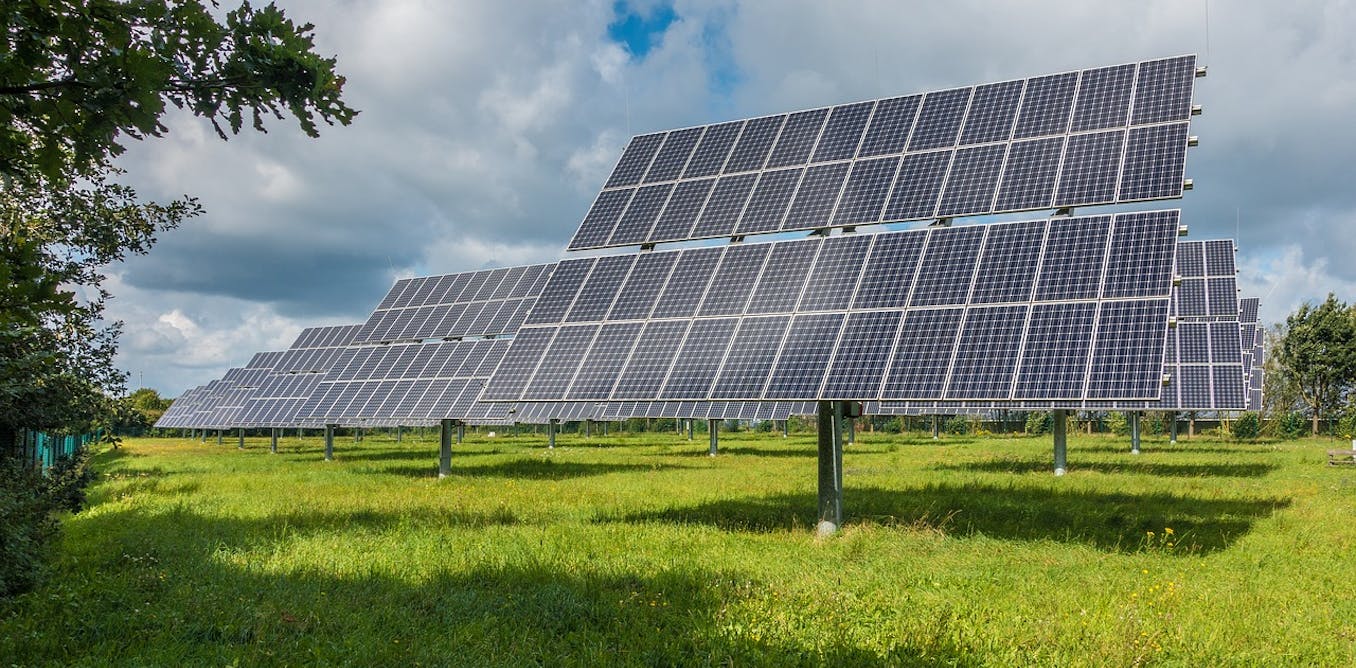
Solar and wind technologies offer a structurally superior profile for African conditions: minimal water consumption, significantly lower carbon emissions, faster construction timelines of one to two years, and declining capital costs that now make utility-scale solar cheaper than new coal in most African markets.
Africa has tapped only a marginal fraction of its solar and wind potential relative to hydropower. The constraint is not technical or resource-based. It is financial and institutional. Planned power projects across the continent face chronic delays and cancellations due to insufficient financing, weak power purchase agreement frameworks, and currency risk that raises the cost of international capital.
The AfCFTA’s potential to deepen intra-African energy trade remains largely unrealised. Cross-border high-voltage transmission infrastructure, which would allow surplus solar generation in Ghana or Morocco to offset deficits in landlocked Sahelian states, requires long-term investment commitments that multilateral development banks and bilateral financiers have been slow to mobilise at scale.
Battery storage, distributed solar home systems, and micro-hydro installations in rural areas represent complementary pathways that can accelerate last-mile access without requiring full grid extension. These solutions are particularly relevant for the WAEMU zone, where several member states maintain low electrification rates and limited fiscal space for large centralised infrastructure.
Policy Pathways: What Institutions Must Deliver
The database’s open-access design is itself a governance intervention. By making plant-level data on capacity, emissions, and water use publicly available, it enables national parliaments, civil society organisations, and regional bodies to hold energy ministries accountable for the consistency between stated NDC commitments and actual infrastructure decisions.
Three institutional priorities emerge from the analysis. First, ECOWAS and the African Union must integrate water-energy nexus modelling into regional infrastructure planning frameworks, ensuring that hydropower expansion decisions account for downstream impacts and climate-adjusted hydrological projections. Second, African governments must strengthen power purchase agreement frameworks and domestic capital markets to reduce the financing premium that makes renewable projects less competitive than their levelised cost of energy warrants. Third, river basin authorities governing shared watercourses must be granted formal consultative roles in national energy planning processes, converting coordination from a diplomatic courtesy into a legal requirement.
The 57% power generation increase projected by 2030 represents a genuine development opportunity. Whether it accelerates or undermines Africa’s climate commitments, water security, and regional integration depends on institutional choices being made now in energy ministries, development finance boardrooms, and ECOWAS technical committees. The data exists. The policy frameworks to act on it remain incomplete.