The number is deceptively modest. Three hundred and sixty-six contentious cases in two decades — a figure that, on its surface, might suggest a court of limited reach. But for the African Court on Human and Peoples’ Rights, each case represents a citizen who found no remedy at home, a state that failed its own people, and a continental institution asked to hold the line where national judiciaries could not or would not.
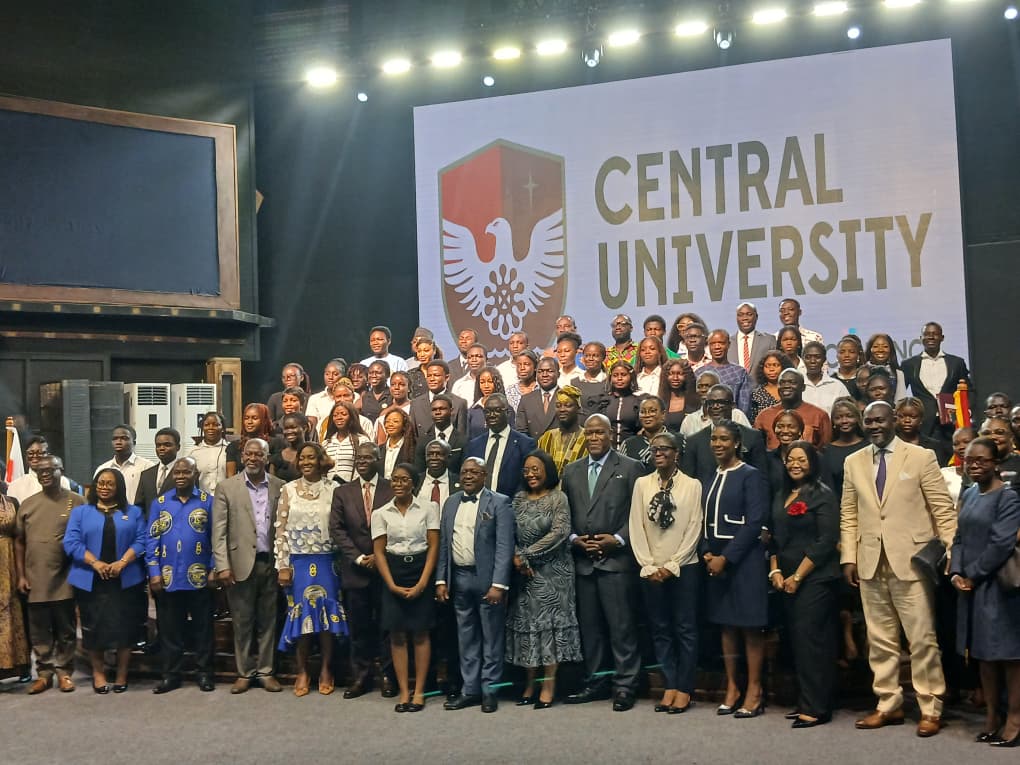
At a public lecture organised in collaboration with Central University on 31 July to mark the Court’s 20th anniversary, Justice Dennis Dominic Adjei — a sitting judge on the Court — laid out a pointed institutional assessment. His concern was not procedural. It was existential. Some African states, he noted, have chosen to withdraw their declarations of competence the moment the Court issues rulings that cut against their interests. That pattern, quiet and largely unremarked in mainstream coverage, represents one of the most corrosive threats to the legitimacy of African continental governance.
The African Court on Human and Peoples’ Rights, seated in Arusha, Tanzania, operates under the African Charter on Human and Peoples’ Rights and a 1998 Protocol that entered into force in 2004. It functions as the continent’s apex human rights adjudicator — the institution of last resort when domestic courts, truth commissions, and national human rights bodies have exhausted their capacity or their willingness. Of the 366 contentious cases filed since its establishment, 266 have been finalised. One hundred remain pending. These are not abstractions. They involve documented violence against women and children, arbitrary detention, suppression of political opposition, and land dispossession — the recurring governance failures that erode state legitimacy and, by extension, the investment climate across the region.
West Africa sits at the centre of this institutional drama. Several ECOWAS member states have been implicated in proceedings before the Court, and the region’s fragile democratic architecture — tested repeatedly by military coups in Mali, Burkina Faso, Guinea, and Niger since 2020 — makes the Court’s independence not a peripheral concern but a structural one. ECOWAS itself maintains a Community Court of Justice in Abuja with jurisdiction over human rights matters, creating a layered but occasionally inconsistent regional framework. The relationship between these two institutions, and the degree to which member states honour their rulings, shapes the credibility of West African governance in the eyes of investors, trading partners, and citizens alike.
Justice Adjei’s call for greater autonomy is grounded in a specific institutional gap. The Court currently lacks robust mechanisms to monitor and enforce compliance with its own rulings. When a state ignores a judgment — or worse, formally withdraws its Article 34(6) declaration, which grants individuals and NGOs direct access to the Court — the institution has limited recourse beyond political pressure through the African Union’s Executive Council. Rwanda withdrew in 2016, followed by Côte d’Ivoire and Tanzania in 2019 and 2020 respectively. Each withdrawal followed adverse rulings or the credible threat of them. The signal sent to citizens across the continent was unambiguous: the architecture of accountability has a structural ceiling.
This matters beyond the immediate human rights context. For Ghana, which has maintained its declaration and positioned itself as a rule-of-law anchor in West Africa, the Court’s strength or weakness directly affects the country’s reputational capital. Accra has cultivated a governance premium over regional competitors — a premium that translates into sovereign debt pricing, FDI flows, and its ability to attract AfCFTA-linked investment. A functional continental human rights court reinforces that premium. Its erosion, through selective state withdrawals and underfunding, narrows the institutional gap between Ghana and less stable neighbours.
The funding question is equally structural. Justice Adjei’s appeal for adequate resourcing of the Court’s legal aid fund points to a chronic problem across African Union institutions: the gap between mandated ambition and budgetary reality. The AU’s own financing remains heavily dependent on external donors, a dependency that compromises institutional independence and creates perverse incentive structures. When the Court cannot fund legal representation for indigent applicants, it effectively prices out the very populations it was designed to serve — rural communities, political prisoners, women facing gender-based violence — while remaining nominally accessible on paper. Civil society organisations operating across West Africa have partially filled this gap, but their capacity is finite and their funding equally precarious.
Comparative regional experience sharpens the stakes. The Inter-American Court of Human Rights, often cited as a functional benchmark, achieved its credibility through decades of sustained state compliance and consistent enforcement by the Organisation of American States. The European Court of Human Rights derives its authority partly from the binding nature of its judgments within EU membership frameworks. The African Court has neither of these structural advantages. It operates in a political environment where the AU’s non-interference norm has historically shielded governments from external accountability, and where the Court’s own enforcement depends on the political will of the same states whose conduct it adjudicates.
What Justice Adjei is asking for, stripped to its institutional core, is a shift in the political economy of compliance. African heads of state must treat the Court not as a threat to sovereignty but as a governance asset — one that strengthens state legitimacy by providing citizens with credible recourse, reduces the political cost of domestic judicial capture, and signals to international capital markets that property rights, contract enforcement, and fundamental freedoms rest on durable institutional foundations. The AfCFTA’s long-term viability depends precisely on this kind of institutional depth. Cross-border investment, regional value chains, and the free movement of persons across ECOWAS corridors all require a baseline of rights protection that national courts alone cannot guarantee.
The Court’s 20th anniversary is a moment for institutional audit, not celebration. Two hundred and sixty-six finalised cases represent real interventions — reforms inspired, detentions challenged, precedents set. But one hundred pending cases, a depleted legal aid fund, and a growing list of state withdrawals tell a different story: of an institution operating at a fraction of its designed capacity, in an environment where the political cost of accountability still exceeds, for too many governments, the political cost of impunity. Justice Adjei left Accra with his appeal on record. Whether African heads of state treat it as a governance imperative or a ceremonial gesture will define the Court’s next two decades — and with them, the credibility of the continental human rights architecture that millions of West Africans have no alternative but to rely on.