A Kenyan institutional investor can now buy into Nigeria’s most consequential industrial asset of the decade. Whether the regulatory plumbing that makes this possible can scale into a durable regional capital market is the harder question.
The Transaction and Its Regulatory Scaffolding
CPF Capital, a Nairobi-based investment firm, has opened participation in the Dangote Petroleum Refinery and Petrochemicals FZE (DPRP) initial public offering to Kenyan institutional investors, following approval by Kenya’s Capital Markets Authority (CMA). The offering opened on 14 September 2026 and is scheduled to close on 13 October 2026. CPF Capital is facilitating client access through a correspondent arrangement with Rand Merchant Bank Nigeria Limited (RMB Nigeria), one of the authorised transaction parties in the Nigerian offering.
The CMA’s approval is not a formality. It establishes a regulated corridor through which licensed Kenyan firms can route institutional capital into a foreign listing, a mechanism that has historically been absent or inconsistently applied across African jurisdictions. The approval signals that Kenya’s securities regulator is willing to operationalise cross-border participation frameworks, at least on a transaction-by-transaction basis. That distinction matters: a bespoke approval for a marquee deal is not the same as a harmonised, standing regime for intra-African capital flows.
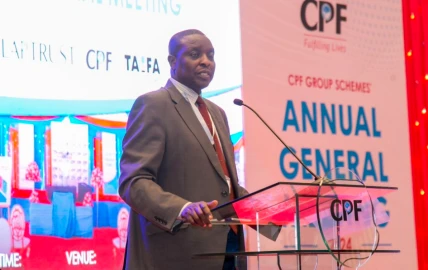
CPF Group Managing Director Dr Hosea Kili framed the transaction in explicit continental terms. “Africa does not lack capital,” he stated. “Our role in this transaction reflects our commitment to deepening African capital markets and mobilising institutional capital across borders, so that African investors play a meaningful role in directing capital towards transformative businesses and projects across our continent.” CPF Capital Executive Director Mercy Thuo added that the collaboration with RMB Nigeria “provides institutional investors with a credible and well-structured route to participate in this landmark African transaction.”
Why the Dangote Refinery Listing Carries Regional Weight
The Dangote refinery, located in the Lekki Free Zone in Lagos State, is Africa’s largest single-train petroleum refinery, with a nameplate capacity of 650,000 barrels per day. Its IPO is structurally significant beyond its size. Nigeria has long exported crude oil while importing refined petroleum products, a structural inefficiency that cost the country an estimated US$13 billion annually in import bills before the refinery came online. The listing converts a privately held industrial asset into a publicly tradeable security, and the decision to open that security to non-Nigerian institutional investors tests whether African capital markets can function as an integrated system rather than a collection of isolated national exchanges.
For West African governance and integration analysts, the transaction raises a pointed question about ECOWAS’s financial architecture. The Economic Community of West African States has long articulated ambitions for a regional capital market, including proposals for a West African Capital Market Integration project and the broader monetary convergence agenda tied to the ECO currency programme. Yet the DPRP IPO’s cross-border access is being facilitated not through any ECOWAS-mandated framework but through bilateral regulatory approvals between Nairobi and Abuja, mediated by a South African banking group. That is a revealing gap.
ECOWAS, AfCFTA and the Institutional Deficit in Regional Finance
The African Continental Free Trade Area (AfCFTA), which entered its operational phase in January 2021, includes a financial services protocol designed to progressively liberalise cross-border capital flows among its 54 signatory states. The DPRP transaction is precisely the kind of deal the AfCFTA financial services framework is meant to normalise: an African enterprise raising capital from African institutional investors across national borders, without routing funds through London, New York, or Paris.
In practice, the AfCFTA protocol’s implementation remains uneven. Most African stock exchanges still operate under domestic regulatory regimes with limited mutual recognition agreements. The Nairobi Securities Exchange and the Nigerian Exchange Group (NGX) are among the continent’s more liquid markets, yet there is no standing passporting regime between them comparable to what WAEMU member states share through the Bourse Régionale des Valeurs Mobilières (BRVM) in Abidjan. The BRVM, which serves eight francophone West African states under the West African Economic and Monetary Union, demonstrates that a regionally integrated exchange is operationally viable; the question is whether Anglophone West Africa and the broader continent can replicate and extend that model.
Comparative data underscores the scale of the opportunity. African pension funds collectively manage an estimated US$1.8 trillion in assets, the majority concentrated in South Africa, Nigeria, Kenya, and Egypt. Yet intra-African equity investment by these funds remains a fraction of total allocations, constrained by regulatory barriers, currency risk, and the absence of harmonised disclosure standards. The DPRP IPO, by attracting Kenyan pension capital into a Nigerian listing, represents a marginal but directionally correct shift in that allocation pattern.
The Correspondent Banking Model: Mechanism and Limitations
The structure CPF Capital is using, a correspondent arrangement with an authorised Nigerian transaction party, is functionally similar to the global depositary receipt (GDR) model used by African companies listing on the London Stock Exchange. A local intermediary holds the underlying securities and issues participation interests to foreign investors through a licensed channel. This approach solves the immediate problem of regulatory access but introduces layers of counterparty risk, fee extraction, and informational asymmetry that a direct cross-listing or a harmonised exchange framework would reduce.
For institutional investors, the correspondent model also raises questions about shareholder rights. When a Kenyan pension fund acquires participation through CPF Capital’s arrangement with RMB Nigeria, its ability to exercise voting rights, receive timely dividend distributions, or pursue legal remedies in the event of a dispute depends on the contractual architecture of the correspondent relationship rather than on any treaty-based investor protection framework. This is a governance gap that neither the CMA nor the Securities and Exchange Commission of Nigeria has fully addressed in the context of cross-border retail or institutional participation.
What This Means for West African Capital Market Governance
Nigeria’s position as West Africa’s dominant economy, accounting for roughly 67 percent of ECOWAS’s combined GDP, means that the governance of its capital markets has outsized regional consequences. The NGX’s decision to pursue a broad-based IPO for the Dangote refinery, rather than a private placement or a listing on a single international exchange, reflects a deliberate choice to build domestic and continental ownership in a strategic asset. That choice deserves analytical credit: it represents a departure from the pattern, common in earlier African resource development cycles, of listing primary assets in London or New York to access institutional capital.
The Ivory Coast, Ghana’s immediate competitor for Anglophone and Francophone investment flows in the Gulf of Guinea, has pursued a different model through the BRVM, where state and private enterprises raise capital within a regionally integrated framework backed by the BCEAO, the West African central bank for WAEMU states. Senegal’s recent sovereign sukuk issuances and its growing role in regional bond markets offer a third model. Ghana, whose own capital market has been constrained by the domestic debt restructuring programme that began in December 2022, is conspicuously absent from this cross-border capital mobilisation story, a governance and fiscal credibility deficit that the administration of President John Mahama will need to address to restore investor confidence.
For ECOWAS secretariat officials and AfCFTA implementation bodies, the DPRP IPO provides a concrete test case. A deal of this size, structured through bilateral regulatory approvals rather than a regional framework, demonstrates both what African institutional capital can do when given a regulated channel and what it cannot do when that channel must be rebuilt from scratch for each transaction. The policy implication is direct: the ECOWAS Capital Market Integration project and the AfCFTA financial services protocol need accelerated implementation timelines, mutual recognition agreements between member-state securities regulators, and a standing passporting mechanism that allows any licensed African institutional investor to participate in any listed African offering without requiring transaction-specific regulatory approvals. Until that infrastructure exists, landmark deals like the DPRP IPO will remain the exception rather than the operating norm of African capital markets.