Chilalo Graphite Dispute Exposes Jurisdictional Fault Lines in African Cross-Border Mining Investment
A US$195 million dispute over a Tanzanian graphite project is forcing South African and Tanzanian courts to answer a question with direct consequences for foreign investment across the continent: when a contract is signed in Johannesburg and governed by South African law, does that automatically confer jurisdiction on South African courts over foreign parties?
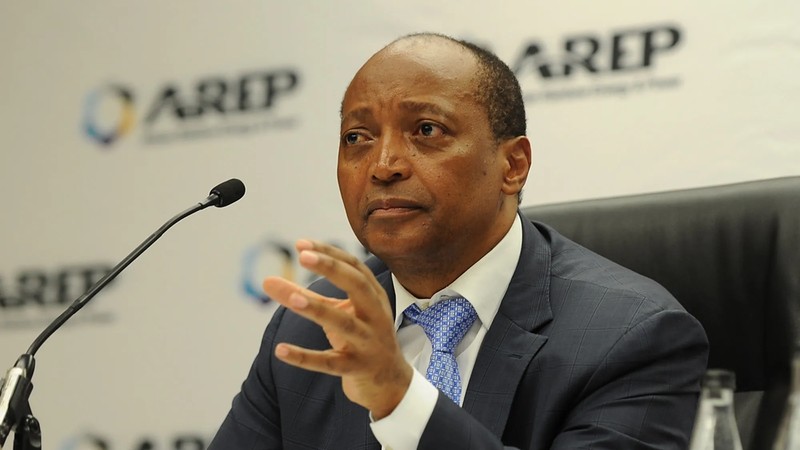
The Gauteng High Court granted US-based Pula Group and its subsidiary Pula Graphite Partners leave to appeal a April 2025 ruling that had favoured African Rainbow Capital (ARC), the investment vehicle of South African billionaire Dr Patrice Motsepe. The appeal will be heard by the full court of the Gauteng division, with Judge Leicester Adams acknowledging “reasonable prospects” that another court could reach different legal conclusions.
The case centres on the Chilalo Graphite Project in Tanzania, one of the continent’s most strategically significant graphite deposits at a moment when global demand for battery-grade graphite has surged alongside electric vehicle manufacturing. Its resolution will shape how multinational mining agreements are structured, enforced, and contested across African jurisdictions.
The Contractual Architecture Under Scrutiny
The dispute originates in a confidentiality agreement signed in Sandton, Johannesburg, in October 2019 between Pula Group and African Rainbow Minerals (ARM), a separately listed entity within Motsepe’s broader corporate constellation. Pula Group alleges that confidential information shared under that agreement was subsequently used to support investment activity in the Chilalo project through Evolution Holdings, an Australian Stock Exchange-listed company, in which ARC and Motsepe reportedly held relevant interests.
Judge Adams ruled in April 2025 that ARC was not a signatory to the 2019 agreement and that any contractual remedies available to Pula lay exclusively against ARM. That ruling effectively severed ARC from the South African proceedings, a finding Pula Group is now challenging on appeal.
Pula’s central argument is that although ARC and ARM are legally distinct entities, they did not operate independently in this transaction. The company cited Australian Stock Exchange filings by Evolution Holdings, which allegedly identified Motsepe as holding controlling interests across all named entities, including ARC, ARM, and ARCH Emerging Markets.
This “corporate veil” argument, whether common ownership and coordinated conduct can override formal legal separation between affiliated companies, sits at the heart of the appeal and has significant implications for how holding structures are treated in African commercial litigation.
Parallel Proceedings in Tanzania Complicate the Governance Picture
Pula Group has not confined its legal strategy to South Africa. Separate proceedings are running concurrently in the Commercial Division of the High Court of Tanzania in Dar es Salaam, where Pula is pursuing damages claims against Motsepe personally, ARC, ARM, and ARCH Emerging Markets.
The Tanzanian proceedings have a contentious procedural history. ARM, ARCH, and Motsepe personally failed to appear at a December 2023 hearing in Dar es Salaam. The Tanzanian High Court ruled in July 2024 that those three parties had lost standing in the main case. They are now seeking to set aside the resulting default judgment, adding another layer of active litigation to an already complex dispute.
ARC’s position is that the 2019 agreement’s South African governing law clause makes South Africa the appropriate jurisdiction for the entire dispute. Pula contests this interpretation directly, arguing that a choice-of-law clause cannot, by itself, constitute submission to a foreign court’s jurisdiction over a company incorporated and operating elsewhere.
Judge Adams acknowledged in granting leave to appeal that this specific legal question, whether a governing law clause amounts to jurisdictional submission, is one on which another court could plausibly disagree with his original conclusion. That acknowledgment is significant: it signals that South African common-law principles on jurisdiction over peregrini (foreign entities) remain unsettled in the context of complex cross-border commercial agreements.
Graphite, Strategic Resources, and the Investment Governance Stakes
The Chilalo dispute is not occurring in an economic vacuum. Tanzania holds some of Africa’s largest graphite reserves, and the mineral has been classified as a critical raw material by the European Union and the United States, primarily because of its role in lithium-ion battery anodes. Demand projections tied to electric vehicle adoption have made graphite projects in East and Southern Africa targets for both Western and Asian capital.
For the African Continental Free Trade Area (AfCFTA) framework and ECOWAS-aligned investment governance standards, the case highlights a structural problem: African jurisdictions lack a unified framework for resolving cross-border commercial disputes between investors operating across multiple national legal systems. The absence of a continental commercial arbitration protocol means disputes of this scale default to parallel national court proceedings, creating forum-shopping risks and contradictory rulings.
The African Union’s ongoing work on harmonising investment dispute mechanisms remains incomplete. Meanwhile, bilateral investment treaties between individual African states and external partners continue to govern the practical resolution of disputes, often favouring international arbitration over domestic African courts. The Chilalo case, by contrast, is being fought entirely within African court systems, which gives it a different institutional significance.
Implications for Corporate Structuring and Investor Confidence
For legal practitioners and corporate strategists operating across African markets, the appeal raises three concrete governance questions.
From an investor confidence perspective, the dispute sends a cautionary signal about the due diligence required when entering confidentiality and joint development agreements with major African conglomerates. Pula Group, chaired by Charles R. Stith, a former US Ambassador to Tanzania, entered the 2019 agreement with ARM apparently without explicit dispute resolution clauses robust enough to prevent the current multi-jurisdictional fracture.
For Motsepe’s entities, the reputational dimension is equally significant. ARC secured an important procedural victory in April 2025, but the granting of leave to appeal, combined with active default judgment proceedings in Tanzania, means the dispute will continue to attract scrutiny in both South African and East African business circles.
What Institutional Reform Could Prevent the Next Chilalo
The structural lesson from this dispute points toward a specific institutional gap. African commercial courts, including Tanzania’s Commercial Division and South Africa’s Gauteng High Court, are functioning as designed. The problem is the absence of a coordinating layer above them.
The ECOWAS Community Court of Justice has jurisdiction over human rights matters but not commercial disputes between private parties. The AU’s proposed African Investment Court, discussed intermittently since the 2016 withdrawal of several states from the International Centre for Settlement of Investment Disputes (ICSID), has not been operationalised. The AfCFTA Secretariat in Accra has a dispute settlement mechanism, but it applies to state-to-state trade disputes, not investor-investor conflicts.
Until a continental commercial arbitration framework with mutual enforcement capacity exists, high-value cross-border mining agreements in Africa will continue generating disputes of the Chilalo type: expensive, multi-jurisdictional, and resolved on timelines that deter the long-term investment the continent’s resource sector requires.
The full Gauteng court hearing, when scheduled, will determine whether South African common law on jurisdictional submission requires revision. Whatever the outcome, the Chilalo graphite dispute has already demonstrated that Africa’s legal infrastructure for managing complex cross-border resource investments is operating under significant structural strain.