A Forum, a Mandate, and an Unresolved Question
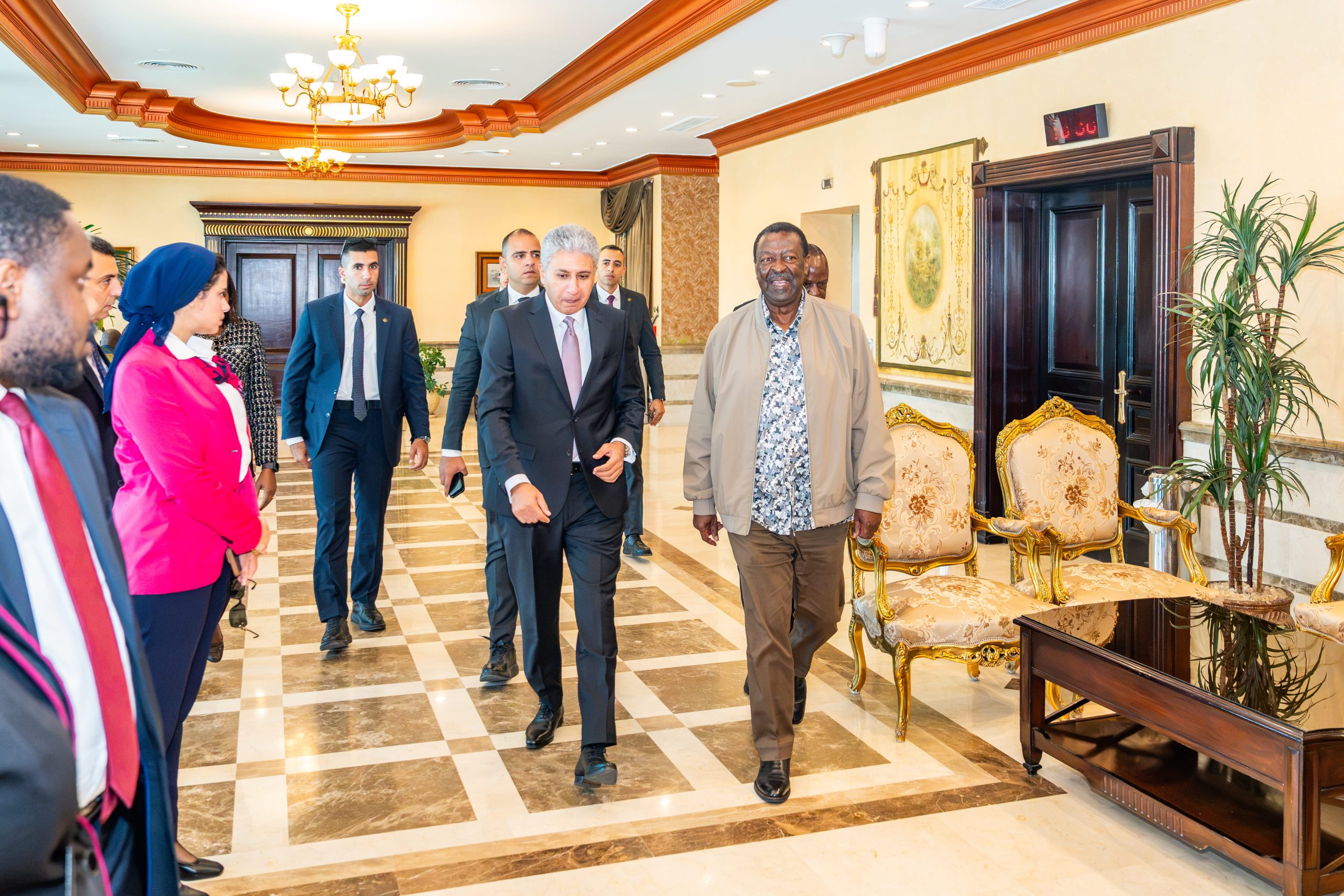
When Kenya’s Prime Cabinet Secretary Musalia Mudavadi addressed delegates ahead of the inaugural El Alamein Africa Business Forum and the eighth African Union Mid-Year Coordination Meeting in Egypt, he framed African unity not as aspiration but as operational necessity. The gathering brought together heads of state, business executives, and representatives from regional and international financial institutions to deliberate on trade, infrastructure, critical minerals, and technology. Yet beneath the summit diplomacy lies a harder institutional question: what governance architecture must African states actually build to convert rhetorical solidarity into measurable economic integration?
Mudavadi’s intervention identified trade, investment, agriculture, energy, technology, mining, manufacturing, and human capital as the structural pillars of continental growth. That list is not new. What matters now is the degree to which African institutions, from the African Union to ECOWAS and the African Continental Free Trade Area Secretariat, possess the regulatory authority, enforcement capacity, and fiscal resources to operationalise those pillars at scale.
The AfCFTA Implementation Gap: From Signature to Structural Change
The African Continental Free Trade Area, which entered its operational phase in January 2021, represents the most ambitious trade liberalisation project in the continent’s post-independence history. With 54 of 55 AU member states having signed the agreement, AfCFTA’s legal architecture is largely in place. The implementation record, however, remains uneven. Intra-African trade stood at approximately 15 percent of total African exports as of the most recent AU Commission data, compared to roughly 60 percent for intra-European Union trade and nearly 70 percent for intra-Asian trade among major economies. That structural gap is not primarily a problem of political will. It reflects deficits in customs harmonisation, non-tariff barrier reduction, cross-border payment infrastructure, and rules-of-origin verification capacity.
Mudavadi’s call for African governments and the private sector to build resilient economies capable of withstanding global shocks directly implicates AfCFTA’s Phase II negotiations, which cover investment, intellectual property, and competition policy. These are precisely the domains where domestic regulatory quality determines whether liberalisation produces structural transformation or merely cheaper imports. For West African states operating within ECOWAS, the challenge is compounded by the need to align national AfCFTA commitments with the ECOWAS Trade Liberalisation Scheme, a framework that has itself struggled with inconsistent implementation across member states.
West Africa’s Dual Integration Burden
West African economies carry a distinctive institutional burden: they must simultaneously comply with ECOWAS protocols, honour WAEMU monetary union obligations where applicable, and now calibrate national policy to AfCFTA schedules. Ghana, which sits outside the WAEMU franc zone but operates within ECOWAS, exemplifies this complexity. Accra’s ability to attract manufacturing investment under AfCFTA depends partly on its capacity to offer competitive tariff treatment to regional partners while managing its own fiscal consolidation programme under the International Monetary Fund’s US$3 billion Extended Credit Facility, approved in May 2023. Nigeria, as the ECOWAS hegemon and Africa’s largest economy by GDP, has ratified AfCFTA but has moved cautiously on tariff concessions, reflecting domestic industrial protection concerns that directly constrain the depth of regional market integration.
Senegal’s accelerating hydrocarbons sector, with first oil production from the Sangomar field expected to reshape its fiscal position through 2025 and beyond, introduces a new variable into West African integration dynamics. Dakar’s capacity to channel resource revenues into productive infrastructure, rather than recurrent expenditure, will influence whether Senegal emerges as a regional investment hub or replicates the resource-curse patterns that have historically fragmented rather than integrated African economies.
Digital Infrastructure and the Governance of Technology Adoption
Mudavadi’s emphasis on digital innovation and technology adoption as drivers of economic transformation reflects a genuine continental priority, but the governance dimensions of that agenda receive insufficient attention in summit communiqués. Africa’s digital economy requires not only connectivity infrastructure, which remains severely unequal across the continent, but also data governance frameworks, cybersecurity regulation, digital payment interoperability, and intellectual property regimes capable of protecting African-originated innovation.
The AU’s Digital Transformation Strategy for Africa, adopted in 2020, set targets for universal broadband access and a single digital market by 2030. Progress toward those targets has been uneven. Mobile money penetration in West Africa, driven substantially by Ghana’s robust fintech sector and Côte d’Ivoire’s mobile payment ecosystem, demonstrates that African-led innovation can generate genuine structural change. The regulatory question is whether ECOWAS can develop a harmonised digital financial services framework that allows these national successes to scale regionally, rather than fragmenting along national licensing boundaries.
Chinese technology partnerships, which have financed significant portions of Africa’s telecommunications infrastructure through entities such as Huawei and ZTE, raise legitimate questions about data sovereignty, technology transfer obligations, and the long-term ownership structure of digital infrastructure assets. Western capital, increasingly channelled through the G7’s Partnership for Global Infrastructure and Investment, offers an alternative financing stream but has historically attached conditionalities that constrain policy space. African governments must negotiate both relationships from a position of greater institutional coherence than they have typically managed, and that requires stronger AU-level coordination on technology procurement standards.
Critical Minerals: Governance Architecture Determines Who Benefits
The El Alamein forum’s focus on critical minerals reflects a global investment surge driven by the energy transition. Africa holds an estimated 30 percent of the world’s critical mineral reserves, including cobalt, lithium, manganese, and rare earth elements essential for electric vehicle batteries and renewable energy systems. The continent’s historical experience with resource extraction, however, provides a sobering baseline: commodity wealth has repeatedly generated enclave economies that enrich multinational extractors and narrow domestic elites while leaving host communities and national fiscal systems with marginal gains.
The AU’s Africa Mining Vision, adopted in 2009, explicitly sought to break that pattern by linking resource extraction to beneficiation, local content requirements, and technology transfer. Implementation has been inconsistent. The Democratic Republic of Congo, which holds roughly 70 percent of global cobalt reserves, continues to export the overwhelming majority of its cobalt as unprocessed ore, capturing a fraction of the value that accrues to processors and manufacturers in China, Europe, and North America. West African gold producers, including Ghana and Mali, face analogous structural constraints in moving up the value chain from extraction to refining to finished goods manufacturing.
What the El Alamein forum must grapple with, and what Mudavadi’s call for African ownership of the development agenda implicitly demands, is a continent-wide minerals governance framework with teeth. That means harmonised royalty regimes, mandatory beneficiation targets with enforceable timelines, regional processing zones that pool infrastructure investment across borders, and transparent revenue management systems linked to AU peer review mechanisms. The African Peer Review Mechanism, established under the AU’s NEPAD framework, has the institutional mandate to assess governance quality in precisely these areas; its authority and resourcing deserve strengthening rather than marginalisation.
Institutional Credibility and the Investment Signal
Foreign direct investment flows to Africa reached approximately US$45 billion in 2022, according to UNCTAD data, a figure that understates the continent’s absorptive capacity relative to its population and resource base. Investor hesitation correlates strongly with governance risk perceptions, including regulatory unpredictability, contract enforcement weakness, and political instability. Mudavadi’s framing of unity as the continent’s greatest strength is accurate, but unity without institutional credibility produces summits rather than capital allocation decisions.
The ECOWAS Court of Justice and national supreme courts across West Africa have demonstrated real authority in commercial and constitutional disputes, providing a foundation of legal predictability that regional investment frameworks can build upon. The Bank of Ghana, despite the severe stress test imposed by Ghana’s 2022 debt restructuring, maintained operational independence through the crisis in ways that preserved institutional credibility with both domestic and international counterparts. These are not trivial achievements. They represent the kind of institutional resilience that differentiates economies capable of absorbing and deploying investment productively from those that cycle through boom-and-bust resource dependency.
What the El Alamein forum and the AU Mid-Year Coordination Meeting must produce is not another declaration of intent but a specific institutional roadmap: binding AfCFTA implementation timelines with peer accountability mechanisms, a harmonised ECOWAS digital financial services framework, a continental minerals beneficiation standard with AU-level monitoring, and a dedicated financing window within the African Development Bank for regional infrastructure that directly reduces non-tariff barriers. African agency, as Mudavadi correctly insists, is the necessary condition for continental development. Institutional architecture is what converts that agency into durable economic outcomes.