Africa’s Youth Governance Deficit: UNISA Summit Exposes Gap Between AU Institutional Inclusion and Structural Economic Power
At a summit marking the 50th anniversary of the Soweto Uprising, young African leaders gathered at the University of South Africa (UNISA) to confront a specific institutional failure: the African Union’s framework for youth participation grants demographic recognition without transferring decision-making authority or economic ownership.
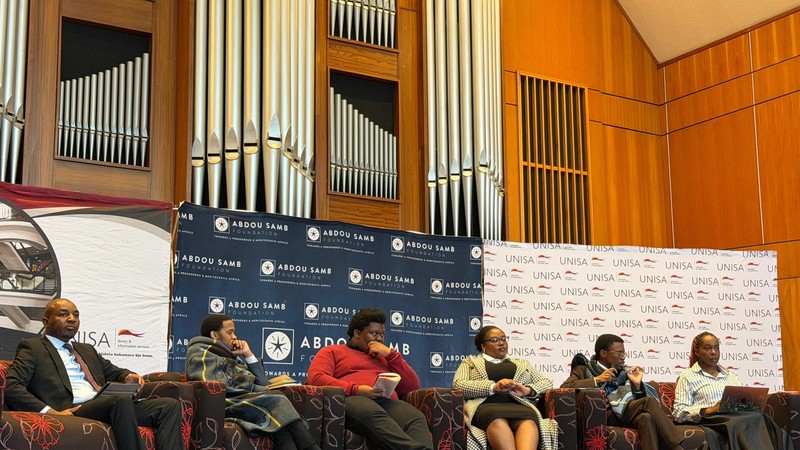
The Youth Regeneration Summit 2026, convened by UNISA in collaboration with the Abdou Samb Foundation on 16 June 2026, drew delegates from across the continent to interrogate whether existing continental governance structures are designed to absorb youth energy or to redistribute power toward it.
The “Seventh Region” Framework: Recognition Without Mandate
The summit’s central analytical framework positioned Africa’s youth not as a geographic constituency but as a demographic and intellectual force the AU has nominally designated as its “seventh region,” alongside the continent’s five geographic zones and the diaspora.
That designation, however, carries no binding institutional mandate. The AU’s African Youth Charter, ratified by 40 member states since its adoption in 2006, establishes normative commitments to youth participation in governance and economic development. Yet the Charter lacks enforcement mechanisms, and no AU member state has faced accountability proceedings for non-compliance.
Moderator Rutendo Chikowore opened the forum by challenging the rhetorical conventions that have historically substituted for structural reform. “Young people cannot simply be leaders of tomorrow,” she said, directly contesting the Mandela-era formulation that has anchored African youth policy discourse for three decades. The implication was institutional: tomorrow’s framing defers agency, and deferred agency is a governance design choice, not an inevitability.
Coloniality, Economic Ownership, and the Limits of Procedural Transformation
Panellists drew a sharp distinction between procedural transformation, the appointment of young people to advisory councils, youth ministries, and consultative forums, and substantive transformation, which requires reordering ownership structures, capital access, and policy authority.
The critique is grounded in measurable data. Across West Africa, youth aged 15 to 35 constitute over 60% of the population in countries including Ghana, Nigeria, Senegal, and Côte d’Ivoire, yet World Bank data consistently shows this cohort controls a disproportionately small share of formal business assets, land titles, and credit portfolios. In Ghana, the Bank of Ghana’s 2023 Financial Inclusion Index recorded that adults under 35 account for fewer than 22% of active formal credit accounts, despite representing the majority of the economically active population.
Delegates at the summit identified coloniality as a structural mechanism, not a historical metaphor, that continues to shape asset distribution, trade architecture, and institutional design across the continent. The argument is that post-independence governance frameworks inherited extractive economic structures and have not systematically dismantled them, leaving youth economic exclusion as a feature of inherited institutional design rather than a correctable policy gap.
AfCFTA and ECOWAS: Integration Architecture Without Youth Economic Participation Clauses
The summit’s governance critique carries direct implications for the continent’s flagship integration instruments. The African Continental Free Trade Area (AfCFTA), now in its operational phase with 54 signatory states, is projected to lift 30 million Africans out of extreme poverty and boost intra-African trade by over 81% by 2035, according to the UN Economic Commission for Africa. However, the agreement’s current protocols contain no binding provisions specifically targeting youth-owned enterprise access to preferential trade corridors.
Within the ECOWAS region, the Supplementary Act on Free Movement of Persons and the ECOWAS Trade Liberalisation Scheme similarly lack structured youth economic participation frameworks. WAEMU countries operating under the West African CFA franc zone have made incremental progress through the Bourse Régionale des Valeurs Mobilières (BRVM) in expanding capital market access, but transaction volumes remain dominated by established corporate entities, with negligible participation from youth-led SMEs.
The structural gap is not incidental. ECOWAS’s 2020-2050 Vision document references youth as a demographic dividend but does not specify institutional mechanisms for converting that dividend into ownership stakes, board representation, or procurement quotas within regional integration frameworks.
Institutional Legitimacy and the Demand for Binding Accountability Mechanisms
A recurring demand from summit participants was the conversion of normative commitments into binding accountability mechanisms with defined timelines and measurable indicators. This is a governance design question with precedent in other regional frameworks.
The European Union’s Youth Guarantee, introduced in 2013 and reinforced through the 2020 Reinforced Youth Guarantee, offers a comparative reference point: member states are required to ensure young people receive a quality offer of employment, education, or training within four months of becoming unemployed or leaving education. The mechanism is imperfect and unevenly implemented, but it establishes a justiciable standard against which national performance can be measured.
No equivalent mechanism exists within the AU or ECOWAS frameworks. The AU’s 2063 Agenda references youth empowerment across multiple aspirations but does not specify the institutional actor responsible for enforcement, the timeline for compliance, or the remedial process when member states fall short.
Summit delegates argued that the Soweto Uprising’s 50th anniversary represents a specific institutional moment: a point at which commemorative rhetoric must be converted into treaty-level commitments. The demand is not symbolic. It is a request for the AU Commission and ECOWAS Secretariat to initiate a protocol revision process that embeds youth economic participation standards into the legal architecture of regional integration.
Policy Pathways: From Advisory Inclusion to Structural Mandate
Three concrete institutional interventions emerged from the summit’s deliberations as priority policy pathways.
The UNISA summit did not produce a binding communiqué. What it produced was a precise institutional diagnosis: Africa’s governance frameworks have created categories for youth without creating power within them. Closing that gap requires treaty revision, not inspiration. The AU Commission’s next ordinary session and the ECOWAS Authority of Heads of State summit scheduled for late 2026 represent the nearest institutional windows in which that revision process could formally begin.