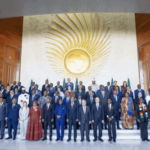

Afrophobia and Institutional Erosion Threaten Pan-African Integration, Thabo Mbeki Lecture Warns
The 16th Thabo Mbeki Africa Day Lecture, held on 24 May 2025 at the Century City Conference Centre in Cape Town, placed two converging governance failures at the centre of continental debate: the spread of Afrophobia within African borders, and the weakening of democratic institutions that underpin the African Union’s integration agenda.
Convened under the theme “Rebuilding African Unity in an Age of Fragmentation: Sovereignty, Solidarity and the Renewal of Institutions,” the annual lecture brought together former heads of state, senior academics, AU officials, and civil society representatives to examine the structural contradictions undermining Pan-African solidarity.
Afrophobia as a Governance Failure, Not a Social Anomaly
The lecture’s main address, delivered by former Ekiti State Governor and ex-Chair of the African Union’s African Peer Review Mechanism, Dr. Kayode Fayemi, reframed Afrophobia not as a social or cultural phenomenon, but as a direct consequence of institutional failure and political abdication.
Fayemi drew on the historical record of continental solidarity during South Africa’s liberation struggle, reminding delegates that African governments, workers, and intellectuals across the continent provided resources, sanctuary, and political backing to anti-apartheid movements for decades.
“South Africa’s liberation was not won by South Africans alone. The entire apartheid struggle became a continental responsibility across Africa,” Fayemi stated, framing contemporary violence against African migrants as a betrayal of that foundational compact.
His analysis pointed to a structural contradiction: the same AU Constitutive Act that commits member states to “promote and protect human and peoples’ rights” sits uneasily alongside documented patterns of xenophobic violence in South Africa, where migrants from Zimbabwe, Mozambique, Nigeria, and other AU member states have faced repeated attacks. Fayemi described this as “a crisis of continental consciousness” with direct implications for the AU’s free movement protocols and the AfCFTA’s long-term viability.
Democratic Backsliding and the Sahel Precedent
Fayemi’s address gave sustained attention to the wave of military coups that has reshaped West and Central African governance since 2020, with Burkina Faso, Mali, Niger, Guinea, and Gabon all experiencing unconstitutional transfers of power. His interpretation diverged from narratives that attribute these ruptures to external interference or security vacuums alone.
“Military intervention is often not the disease itself, but a symptom of deeper institutional crises. The real danger confronting many African democracies today is the erosion of public trust,” he said.
The framing carries direct relevance for ECOWAS, whose authority has been materially weakened by the withdrawal of Mali, Burkina Faso, and Niger from the bloc in January 2025 to form the Alliance des États du Sahel. ECOWAS’s inability to reverse any of the coups through its established sanctions and mediation mechanisms has exposed the limits of the community’s enforcement architecture, raising questions about institutional design rather than political will alone.
Fayemi argued that elections, without corresponding delivery of security, justice, and economic inclusion, cannot sustain democratic legitimacy. This diagnosis aligns with governance data from Afrobarometer’s 2023 survey across 39 African countries, which found that satisfaction with democracy declined in 22 of those countries over the preceding five years, while support for military rule increased in several Sahel states before the coups occurred.
Continental Citizenship and the AfCFTA Integration Imperative
A central policy proposal advanced at the lecture was the concept of “continental citizenship,” a framework under which African identity would complement rather than compete with national belonging. Fayemi argued that national governments have systematically failed to build this layer of civic identity, leaving populations without the institutional vocabulary to situate regional migration within a shared development project.
This deficit has measurable consequences for regional economic integration. The AfCFTA, which entered its operational phase in 2021 and covers a market of approximately 1.4 billion people across 54 AU member states, depends on the free movement of goods, services, capital, and eventually people. The AU’s Free Movement of Persons Protocol, adopted in 2018, has been ratified by only 33 member states and implemented by far fewer. Afrophobia in receiving countries creates a political environment hostile to ratification and enforcement.
South Africa, as the continent’s most industrialised economy and a critical node in Southern African Development Community (SADC) trade networks, carries particular weight in this dynamic. Its domestic political economy, marked by 32.9% unemployment as of the fourth quarter of 2024 according to Statistics South Africa, generates sustained pressure on elected officials to adopt restrictive migration postures, even where economic evidence supports managed labour mobility.
AU Institutional Architecture and the Mbeki Legacy
A message delivered on behalf of the African Union Commission acknowledged former President Thabo Mbeki’s foundational role in translating Pan-African vision into institutional architecture, specifically his centrality in establishing the African Union in 2002, the New Partnership for Africa’s Development (NEPAD), and the African Peer Review Mechanism (APRM). The commission affirmed that Mbeki’s insistence on capable institutions, human capital investment, and confident African engagement with global partners remained the relevant standard against which current governance must be measured.
The APRM, which now counts 46 member states, was designed precisely to provide peer-based accountability for governance standards, including on migration and human rights. Its effectiveness, however, depends on political will from member governments to act on review findings, a mechanism that has produced uneven results since its inception.
Former President Mbeki participated in a panel discussion alongside Professor Funmi Olonisakin, Vice President of King’s College London and a leading scholar of African security governance. The programme also included a structured youth dialogue at Unisa’s Parow Campus, embedding intergenerational input into what has become one of the continent’s most substantive annual policy forums since its founding in 2010 through a partnership between the University of South Africa and the Thabo Mbeki Foundation.
Policy Pathways: Institutions Over Rhetoric
The lecture’s cumulative argument pointed toward a specific institutional agenda. Afrophobia cannot be addressed through solidarity declarations alone; it requires that ECOWAS and SADC operationalise free movement frameworks with domestic legal effect, and that AU member states treat the APRM’s governance recommendations as binding political commitments rather than advisory inputs.
On democratic backsliding, the evidence from the Sahel suggests that ECOWAS needs a preventive governance architecture, one capable of identifying and responding to institutional erosion before military actors fill the vacuum. The bloc’s current toolkit is weighted toward post-coup sanctions, which have demonstrably failed to restore constitutional order in Mali, Burkina Faso, or Niger.
For investors and development partners operating across West Africa, the signals from the lecture reinforce a familiar calculus: institutional depth, not commodity cycles or bilateral agreements, determines the durability of market access and regulatory predictability. The AfCFTA’s commercial potential remains contingent on the political foundations that make cross-border economic activity secure and legitimate.
The 17th Thabo Mbeki Africa Day Lecture will be held on 25 May 2026. The institutional question it will inherit is whether the AU and its regional economic communities have moved from diagnosis to reform in the intervening year.