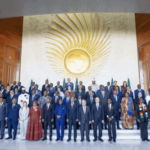
In the last week of July, Accra will become the temporary seat of a continental ambition. African heads of state and government are scheduled to convene on 21 and 22 July for the African Union’s first-ever Extraordinary Health Summit, a gathering that its architects describe as a decisive moment for the way Africa governs public health at the supranational level. The choice of Ghana as host is not incidental: Accra has positioned itself, over the past decade, as a credible convening ground for continental institutional reform, and the summit’s agenda reflects the scale of what is being attempted.
At the core of the two-day session is the adoption of a fully costed continental roadmap to end AIDS and tuberculosis by 2030, two diseases that have defined the burden of communicable illness across sub-Saharan Africa for generations and that continue to strain health systems from Dakar to Nairobi. But the summit’s mandate extends well beyond those twin targets. Preventable maternal mortality, the rising tide of non-communicable diseases, and the structural fragility of national health systems are all on the agenda, bound together by a single institutional logic: that Africa’s health crises cannot be resolved state by state, and that a coordinated continental framework, with binding commitments and shared financing mechanisms, is the only architecture capable of delivering durable change.
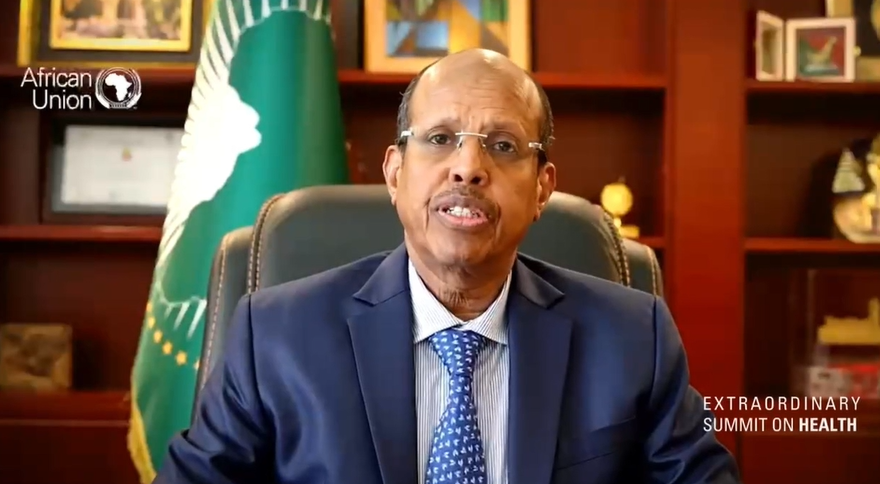
The AU Commission Chairperson, Mahmoud Ali Youssouf, framed the summit in explicitly collective terms ahead of the gathering. “I call upon member-states, partners, the private sector, civil society, health professionals and all Africans to join us in Accra as we forge a new continental compact for healthier communities and a more prosperous Africa,” he said, invoking the language of institutional compact rather than aspirational declaration. The distinction matters. A compact implies mutual obligation, monitoring mechanisms, and accountability structures, precisely the institutional sinews that previous continental health commitments have often lacked.
West Africa arrives at this summit with particular stakes. The ECOWAS region carries a disproportionate share of the continent’s tuberculosis burden, with countries including Nigeria, Guinea, and Côte d’Ivoire accounting for significant case volumes according to WHO reporting frameworks. Ghana itself, while having made measurable progress on HIV/AIDS prevalence reduction through sustained National AIDS Commission programming, still faces gaps in domestic health financing that leave its system vulnerable to external shocks, as the COVID-19 pandemic starkly demonstrated. The summit’s push for a “fully costed roadmap” directly addresses that vulnerability: costing implies domestic resource mobilisation, not merely donor dependence, and signals a shift toward the kind of fiscal ownership that regional integration frameworks demand.
That fiscal dimension connects the health summit to a broader governance question that West African policymakers have been wrestling with since the adoption of the African Continental Free Trade Area (AfCFTA), headquartered in Accra. Trade integration and health system resilience are not separate policy domains. Workforce mobility across ECOWAS borders, a foundational principle of regional integration, depends on harmonised health standards and cross-border disease surveillance. The 2014 to 2016 Ebola crisis exposed, with lethal clarity, how porous institutional coordination between Guinea, Sierra Leone, and Liberia allowed a contained outbreak to become a regional catastrophe. A continental health compact with genuine enforcement capacity would function, in part, as an integration infrastructure investment.
The summit’s structure, convening heads of state rather than health ministers alone, reflects a deliberate elevation of health governance to the level of political commitment. Ministerial-level summits produce communiqués; heads-of-state summits produce mandates. The AU’s decision to classify this gathering as “extraordinary” signals that the Commission regards the current moment as one requiring executive authority, not technical deliberation alone. Whether that authority translates into binding national budget allocations, reformed procurement frameworks, or strengthened regional disease surveillance networks will determine whether the Accra summit is remembered as a turning point or as another well-attended declaration.
For Ghana, the hosting role carries both diplomatic dividend and institutional responsibility. Accra’s credibility as a convening power rests on its democratic governance record and its institutional density, home to the AfCFTA Secretariat, the ECOWAS Court of Justice, and a central bank that, despite recent fiscal pressures, retains meaningful independence. Hosting the AU’s first extraordinary health summit reinforces that positioning, but it also places Ghana’s own health governance record under continental scrutiny. A country that hosts a summit on ending preventable maternal deaths must be prepared to account for its own maternal mortality ratios, which, while improved, remain above the targets embedded in the AU’s Agenda 2063 health benchmarks.
The private sector dimension of the summit, explicitly named by the AU Commission Chairperson, points toward a financing model that moves beyond official development assistance. African pharmaceutical manufacturing capacity, accelerated by the lessons of COVID-19 vaccine inequity, is now a live policy priority across the continent. The Partnerships for African Vaccine Manufacturing initiative and Ghana’s own Accra-based vaccine ambitions represent early institutional steps. A continental health compact that creates regulatory harmonisation, predictable procurement volumes, and investment-grade health infrastructure standards would materially improve the conditions under which African manufacturers can scale, and under which private capital, both continental and international, can be deployed with confidence.
What Accra produces on 22 July will be read carefully in finance ministries and investment offices across the region. A roadmap with credible costing, clear accountability mechanisms, and ECOWAS-level implementation structures would represent a qualitative advance in African health governance. The continent’s heads of state will have the authority in that room to make it so. The question is whether the institutional architecture they endorse will be robust enough to outlast the summit itself, and whether Ghana, as host, will emerge not merely as a gracious convener but as a genuine anchor of the continental health governance project it is helping to launch.