
A Certification Failure Worth Up to US$7 Million in Phantom Carbon Credits
A flagship mangrove restoration project in Senegal, certified by one of the world’s leading carbon standards bodies, sold credits representing carbon that was never actually stored, exposing structural weaknesses in the verification frameworks governing Africa’s rapidly expanding blue carbon markets.
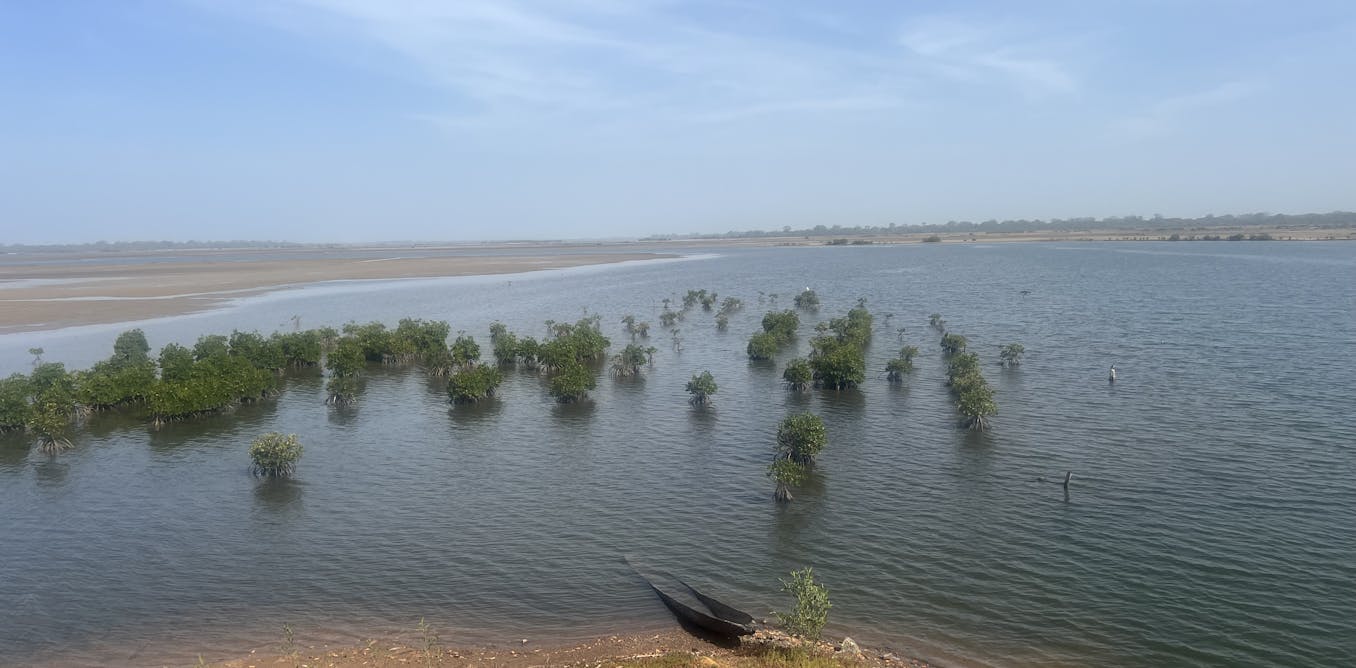
New research by a team of geographers using satellite analysis reveals that more than a third of the project’s 10,000-hectare restoration plots failed entirely, with no surviving mangroves. Across the full project area, only 18.3% to 20.5% of planted seedlings survived. Yet carbon credits were calculated as if the entire area had successfully regenerated, producing what researchers now describe as “ghost carbon.”
The discrepancy between certified carbon storage and actual carbon storage amounts to approximately 168,000 tonnes of CO₂, a gap worth between US$2 million and US$7 million at current market prices.
Design Failures Rooted in Ecological Misreading
Launched in 2008 and designed by Senegalese NGO Océanium in partnership with several French companies and a climate-focused investment fund, the project aimed to plant millions of mangrove propagules across the Sine-Saloum Delta and Casamance regions under a blue carbon financing model.
Blue carbon projects generate revenue by certifying the carbon sequestration capacity of restored coastal ecosystems and selling corresponding credits to corporations seeking to offset their greenhouse gas emissions. The model holds genuine promise for financing ecosystem restoration across West Africa’s 2,500-kilometre Atlantic coastline.
But the Senegal project’s foundational design contained critical ecological errors. Seedlings were planted in hypersaline mudflats unsuitable for mangrove growth unless subject to regular tidal flooding. Plots of up to 55 hectares were located too far from tidal channels to receive adequate hydrological support. Some sites sat up to 9 kilometres from existing mangrove stands, in conditions ecologically incompatible with natural mangrove habitat.
“Replanting should have started closest to existing mangroves,” the research notes, reflecting a basic principle of restoration ecology that the project’s design did not adequately apply.
Verra Certification and the Limits of Sampling-Based Monitoring
In 2020, Verra, the Washington-based body that administers the Verified Carbon Standard, approved a set of carbon credits from the project. Monitoring was conducted by Spanish forestry consultancy Agresta, which measured average mangrove height at approximately 70 centimetres and estimated an 18% failure rate across planting sites.
The methodological flaw was consequential. Agresta carefully measured a sample of surviving trees and used those measurements to calculate carbon storage, then extrapolated that figure across the entire 10,000-hectare project footprint, implicitly assuming near-universal survival.
Satellite analysis by the research team, which tracked canopy cover changes over time, identified a substantially higher failure rate. Researchers estimated total carbon storage at approximately 11,000 tonnes in above-ground biomass and 65,000 tonnes in soil, far below the figures used to generate certified credits.
The Verra certification process, which relies heavily on project-developer-submitted monitoring reports, did not independently detect the discrepancy. This raises questions about whether current verification protocols are adequate for large-scale, geographically dispersed restoration projects in West Africa and beyond.
Community Land Loss and Unpaid Labour: The Social Governance Deficit
The ecological failures compound a documented social governance failure. A prior investigation found that only 5% of the US$4.4 million designated to compensate local communities for their labour in planting mangroves had actually been disbursed.
Communities also reported losing access to land appropriated by the project to create planting plots, a form of green land grab that has been documented in carbon and conservation projects across sub-Saharan Africa. In Senegal’s coastal communities, where mangrove ecosystems underpin artisanal fisheries, shellfish harvesting, and fuelwood collection, restricted land access carries direct livelihood consequences.
This dual failure, overstated ecological benefits and under-delivered community payments, reflects a governance structure in which the financial interests of project developers and credit buyers were better protected than the rights of the communities the project nominally served.
For West African policymakers seeking to position the region’s coastal ecosystems within continental carbon market frameworks, including the African Carbon Markets Initiative (ACMI) launched under the AU’s climate agenda, the Senegal case is an instructive institutional stress test.
Regional Stakes: West Africa’s Blue Carbon Potential Under Scrutiny
West Africa holds some of the world’s most ecologically significant mangrove systems. Senegal, Guinea-Bissau, Sierra Leone, and Guinea together account for a substantial share of the Atlantic’s mangrove cover. The sub-region’s mangroves sequester carbon at rates significantly higher than terrestrial forests, while simultaneously protecting coastlines, supporting fisheries, and buffering against the storm surges intensified by climate change.
ECOWAS member states have increasingly incorporated blue carbon into national climate commitments submitted under the Paris Agreement. Senegal’s Nationally Determined Contribution explicitly references coastal ecosystem restoration as a mitigation pathway. Guinea-Bissau and Sierra Leone have similarly identified mangrove conservation as a priority.
But the credibility of these commitments depends on the integrity of the measurement, reporting, and verification (MRV) systems underpinning carbon claims. If certification bodies approve credits based on flawed monitoring methodologies, the resulting market signals are distorted, and the reputational damage extends beyond individual projects to the broader regional carbon market architecture.
Côte d’Ivoire and Ghana, both developing blue carbon frameworks under bilateral and multilateral climate finance arrangements, face comparable risks if verification standards are not strengthened before large-scale projects are approved.
What Credible Blue Carbon Governance Requires
The researchers are explicit that their findings do not undermine the case for mangrove restoration. Mangroves remain among the most cost-effective natural climate solutions available to West African governments, and the ecological and social benefits of well-executed projects are well-documented.
What the Senegal case demands is institutional reform at three levels.
First, certification bodies including Verra must require independent, satellite-corroborated monitoring as a condition of credit issuance, rather than relying solely on developer-submitted field samples. Remote sensing technology capable of detecting canopy failure at plot level is now widely accessible and affordable.
Second, ECOWAS and the AU’s climate institutions should develop regional MRV standards for blue carbon projects that go beyond the minimum requirements of international voluntary carbon markets, incorporating community rights safeguards and land tenure protections as non-negotiable conditions of certification.
Third, national governments in West Africa must assert regulatory oversight over carbon projects operating within their jurisdictions, ensuring that community compensation commitments are legally enforceable and that project developers cannot claim credits against carbon that was never stored.
Africa’s carbon markets hold genuine potential to finance the continent’s ecological transition. Realising that potential requires that the credits traded within those markets represent real, verified, and fairly distributed climate benefits, not phantom tonnes calculated from seedlings that never survived their first dry season.