
What triggered a three-day strike at one of Ghana’s key fuel distribution hubs?
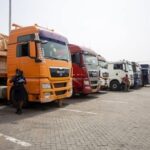
On 17 August 2026, BOST Energies Limited and the Ghana National Petroleum Tanker Drivers Union (GNPTDU) reached a negotiated agreement to suspend a three-day sit-down strike at the Kumasi Depot, one of the strategic nodes in Ghana’s downstream petroleum distribution network. The strike, declared by GNPTDU members stationed in Kumasi, was not a spontaneous grievance but the culmination of unresolved infrastructure and operational failures at a state-owned facility that sits at the heart of fuel supply chains serving Ghana’s second-largest city and the broader Ashanti region.
The specific triggers were concrete and measurable. Tanker drivers cited the deteriorated state of the truck parking yard, which became hazardous during rainfall, a malfunctioning loading arm left hanging at the depot, and persistent petroleum shortages they attributed to faulty offloading machinery. These are not minor inconveniences. They represent systemic maintenance failures within a public enterprise whose mandate is to ensure the reliable storage and distribution of petroleum products across Ghana.
Why does infrastructure at a state depot matter beyond the immediate dispute?
BOST Energies Limited, the commercial subsidiary of the Bulk Oil Storage and Transportation Company, operates critical petroleum infrastructure that functions as a backbone for fuel supply across Ghana’s interior. When depot infrastructure degrades, the consequences ripple outward. Delayed tanker turnaround times increase distribution costs, which are ultimately passed through to consumers and commercial operators. Faulty metering equipment, such as the meter-to-meter error margin that drivers flagged as a concern requiring engagement with the National Petroleum Authority (NPA), introduces measurement discrepancies that affect the commercial integrity of every transaction processed at the facility.
The Kumasi Depot’s dysfunction is therefore a governance question as much as a maintenance question. Public enterprises in Ghana operate under a dual mandate: commercial viability and public service delivery. When either dimension fails, the institutional credibility of state-owned enterprises suffers, and with it, investor and operator confidence in the reliability of Ghana’s energy infrastructure.
What does this reveal about public enterprise maintenance standards?
The deterioration documented by GNPTDU members points to a pattern familiar across West African state-owned energy enterprises: capital investment in original construction is not matched by sustained maintenance budgets. The Kumasi Depot’s parking yard resurfacing, which was ultimately assigned to the union’s own Kumasi executives as an immediate remedial measure under the agreement, should ordinarily fall within BOST’s operational maintenance responsibilities. That the resolution required union executives to coordinate the resurfacing themselves signals a breakdown in routine asset management within the enterprise.
BOST’s disclosure that a contract had already been awarded for a new car park in Kumasi, with details to follow “in due course,” raises a further governance question: why was industrial action necessary to surface this information, and what accountability mechanisms exist to ensure contracted works are delivered on schedule and within specification?
How does the NPA’s role in this dispute reflect Ghana’s regulatory architecture?
The agreement’s provision for a joint engagement with the National Petroleum Authority in September 2026 over meter-to-meter error margins is significant. The NPA is Ghana’s downstream petroleum sector regulator, responsible for licensing, pricing oversight, and technical standards enforcement. The fact that metering discrepancies at a BOST depot require a separately scheduled regulatory engagement, rather than an existing enforcement mechanism, suggests that real-time compliance monitoring between BOST and the NPA may be insufficiently institutionalized.
Metering accuracy in petroleum distribution is not a peripheral concern. Systematic measurement errors at offloading points translate directly into financial losses for drivers, operators, and the state. In a sector where product theft and diversion are persistent risks across West Africa, robust metering standards and independent verification are foundational to supply chain integrity. Ghana’s NPA has the statutory mandate to enforce these standards; the Kumasi dispute suggests that mandate requires more proactive application at the facility level.
What are the regional integration implications for Ghana’s energy logistics?
Ghana’s petroleum distribution infrastructure does not operate in isolation from its regional context. As a member of ECOWAS and a signatory to the African Continental Free Trade Area (AfCFTA), Ghana’s logistics efficiency directly affects its competitiveness as a trade and transit hub. The Kumasi Depot serves not only domestic demand but also facilitates fuel supply for landlocked neighbors, including Burkina Faso and Mali, that depend on Ghana’s port and distribution infrastructure for petroleum imports.
Operational disruptions at Kumasi, even short-duration strikes, introduce uncertainty into supply chains that extend beyond Ghana’s borders. Côte d’Ivoire, Ghana’s principal regional competitor in petroleum distribution and downstream logistics, has invested consistently in depot modernization and port infrastructure at Abidjan. Persistent maintenance deficits at Ghanaian state facilities risk eroding the competitive positioning that Ghana’s geographic and infrastructural advantages should otherwise secure.
Within the ECOWAS framework, energy infrastructure reliability is increasingly recognized as a regional public good. The ECOWAS Centre for Renewable Energy and Energy Efficiency (ECREEE) and the broader ECOWAS Energy Protocol provide frameworks for regional energy cooperation, but their effectiveness depends on member states maintaining functional national infrastructure. A BOST depot requiring union-coordinated resurfacing does not project the institutional capacity that regional integration demands.
What policy pathways does this dispute open?
The 17 August 2026 agreement between BOST and GNPTDU resolves the immediate industrial action, but the structural questions it surfaces require institutional responses that go beyond the specific terms negotiated. Three policy directions merit attention from Ghana’s Ministry of Energy and the NPA.
First, BOST requires a published, time-bound asset maintenance schedule for all operational depots, subject to independent audit. The Kumasi situation demonstrates that deferred maintenance accumulates into operational crises. A transparent maintenance regime, with performance metrics reported to the Energy Commission and the NPA, would create accountability before disputes escalate to industrial action.
Second, the NPA’s technical oversight of metering standards at petroleum facilities should shift from reactive engagement to systematic inspection. The September 2026 meeting on meter-to-meter error margins should produce binding technical standards and a compliance timeline, not merely a report on outcomes. Ghana’s downstream sector regulatory credibility depends on enforcement that precedes, rather than follows, worker grievances.
Third, the governance of BOST Energies as a commercial subsidiary of a state enterprise warrants scrutiny. The company’s board and management must be held accountable for maintenance budgets and capital project delivery timelines. The award of a contract for a new Kumasi car park, disclosed only during strike negotiations, raises questions about how infrastructure investment decisions are communicated to operational stakeholders and whether procurement processes meet the transparency standards Ghana’s Public Procurement Authority requires.
The Kumasi depot strike is a small incident by national standards. But it encodes a larger institutional challenge: Ghana’s state-owned energy enterprises must demonstrate the operational discipline and regulatory accountability that a functioning petroleum sector, and a credible ECOWAS member state, requires.