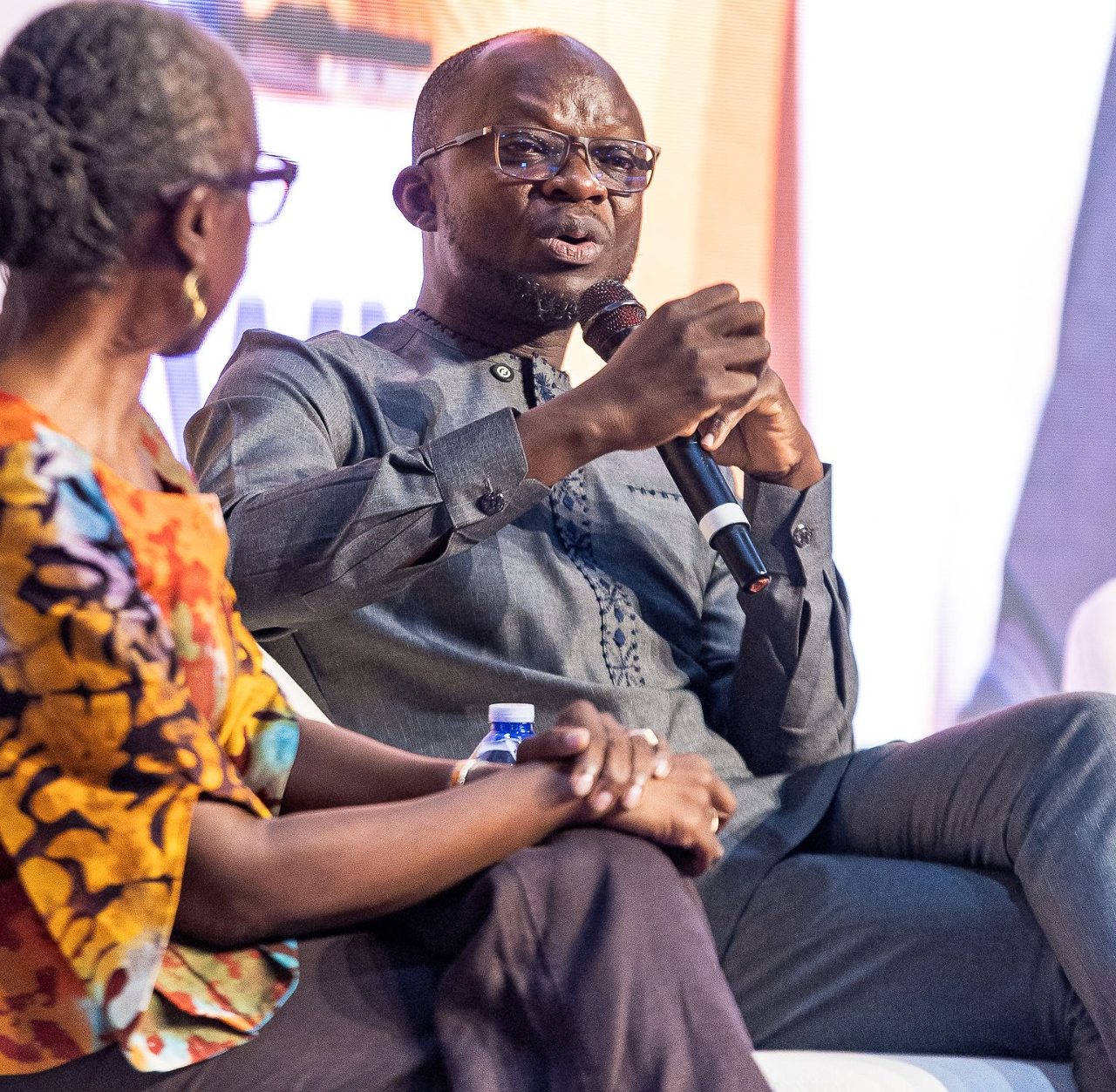
When Telecel Ghana’s External Affairs Director, Komla Buami, took the panel stage at the Executive Women’s Network’s tenth anniversary conference in Accra, the moment crystallised a question that sits at the heart of corporate governance across West Africa: does private sector commitment to gender inclusion constitute genuine institutional transformation, or does it remain a reputational exercise dressed in the language of equity? The EWN@10 Conference and Expo, held under the theme “A Decade of Leadership, A Future Toward Holistic Impact,” provided a rare public forum in which that distinction was tested against concrete organisational practice.
The Executive Women’s Network, a Ghanaian non-governmental organisation founded to advance women holding senior management and executive positions, has spent a decade constructing one of the continent’s more substantive platforms for professional development, mentorship, and cross-sector connection among female executives. Its tenth anniversary edition brought together policymakers, entrepreneurs, and corporate leaders from across the continent, organising its programme around three thematic pillars — self and family, career, and legacy — that together chart a governance-inflected roadmap for the next decade of female leadership in Africa. That framing matters: it positions women’s advancement not as a social welfare question but as an institutional design challenge, one requiring accountability mechanisms, measurable targets, and embedded processes rather than goodwill alone.
Buami’s contribution to the panel discussion, moderated by broadcaster Bernard Avle and themed “Beyond Good Intentions: What Moves and Sustains Women in Leadership,” articulated precisely this institutional logic. His central argument — that sustainable progress requires gender inclusion to be embedded within organisational systems rather than dependent on individual champions — reflects a governance standard that development economists and human capital researchers have long identified as the difference between symbolic and structural change. Alongside fellow panellists Sheila Minka-Premo and Mavis Owusu-Gyamfi, Buami pointed to Telecel Ghana’s internal architecture as evidence that the telecommunications sector can operationalise inclusion beyond the level of aspiration.
From Aspiration to Architecture: What Institutional Embedding Actually Requires
The mechanisms Telecel Ghana cited — female representation targets, the Female Engineering Student Scholarship Programme (FESSP), and the Telecel Reconnect Programme designed to facilitate workforce re-entry after career breaks — are worth examining as governance instruments rather than public relations assets. Representation targets, when tied to succession planning and performance accountability, function as a form of internal regulation: they create a measurable standard against which leadership pipelines can be audited. The FESSP addresses a structural bottleneck that afflicts telecommunications and technology sectors across West Africa, where female enrolment in engineering disciplines remains disproportionately low relative to overall university participation. Ghana’s own tertiary education data consistently shows that women represent fewer than 25 percent of engineering graduates, a supply-side constraint that no amount of managerial goodwill can resolve without upstream investment. Scholarship programmes of this nature, when sustained over multiple cohorts, function as a form of human capital infrastructure with measurable downstream effects on sectoral diversity.
The Reconnect Programme addresses a different but equally structural problem: the career discontinuity penalty that disproportionately affects women who take breaks for caregiving or family responsibilities. Across ECOWAS member states, labour market data reveals that women who exit formal employment for more than twelve months face significantly reduced prospects of re-entering at equivalent seniority levels. Organisations that build deliberate re-entry pathways — with structured onboarding, mentorship bridges, and seniority recognition protocols — are, in effect, correcting a market failure that standard hiring processes systematically reproduce. Whether Telecel Ghana’s Reconnect Programme operates at sufficient scale and with sufficient institutional rigour to produce measurable outcomes is a question the company’s governance reporting should be able to answer, and one that peer firms in Ivory Coast’s telecoms sector, or Nigeria’s increasingly competitive digital economy, might scrutinise as a competitive differentiator in talent acquisition.
The regional dimension of this conversation carries weight that a single corporate panel cannot fully resolve. Within the ECOWAS framework, gender parity in economic participation is formally embedded in the ECOWAS Gender Policy and the Supplementary Act on Equality of Rights between Women and Men, instruments that bind member states to legislative and institutional action. The African Union’s Agenda 2063 similarly positions gender equality as a structural development objective, not a peripheral social goal. Yet the translation of these continental commitments into enforceable private sector standards remains incomplete. West Africa has no equivalent to the European Union’s binding corporate sustainability reporting directives, which compel large firms to disclose gender pay gap data and board composition metrics. In the absence of such mandatory disclosure frameworks, corporate participation in forums like EWN@10, however substantive, operates largely in the domain of voluntary commitment — valuable, but insufficient as a governance mechanism on its own.
Ghana’s position within this regional landscape is instructive. The country has enacted the Affirmative Action (Gender Equality) Bill — legislation that has moved through parliamentary cycles for years without achieving final passage — which would impose specific quotas on public institutions and create regulatory pressure on private sector actors. Its continued stalling in the legislature represents a governance failure with direct consequences for the pace at which institutional change can occur. Senegal and Rwanda, by contrast, have advanced constitutional and legislative gender provisions that have produced measurably different outcomes in public sector leadership composition. Rwanda’s parliament remains the world’s highest in female representation; Senegal’s parity law has reshaped its National Assembly. Ghana’s private sector, including its telecommunications firms, operates in a governance environment where the legislative architecture for enforced inclusion remains incomplete, making voluntary corporate action simultaneously more visible and more fragile.
What the EWN@10 conference ultimately demonstrated is that the institutional conversation about women’s leadership in West Africa has matured beyond the motivational register. The questions now are technical and governance-oriented: how are targets set, monitored, and reported? What accountability structures govern diversity commitments when leadership changes? How do firms ensure that re-entry programmes survive budget cycles and strategic pivots? Telecel Ghana’s public positioning at this forum signals an awareness that these are the right questions. Whether its internal governance architecture is sufficiently robust to answer them consistently — across leadership transitions, ownership changes, and market pressures — is the standard against which its institutional credibility on gender inclusion will ultimately be measured. For the broader West African private sector, that standard is not merely aspirational; it is the threshold at which corporate governance and continental development commitments begin to converge.