What is Ghana actually demanding, and why now?
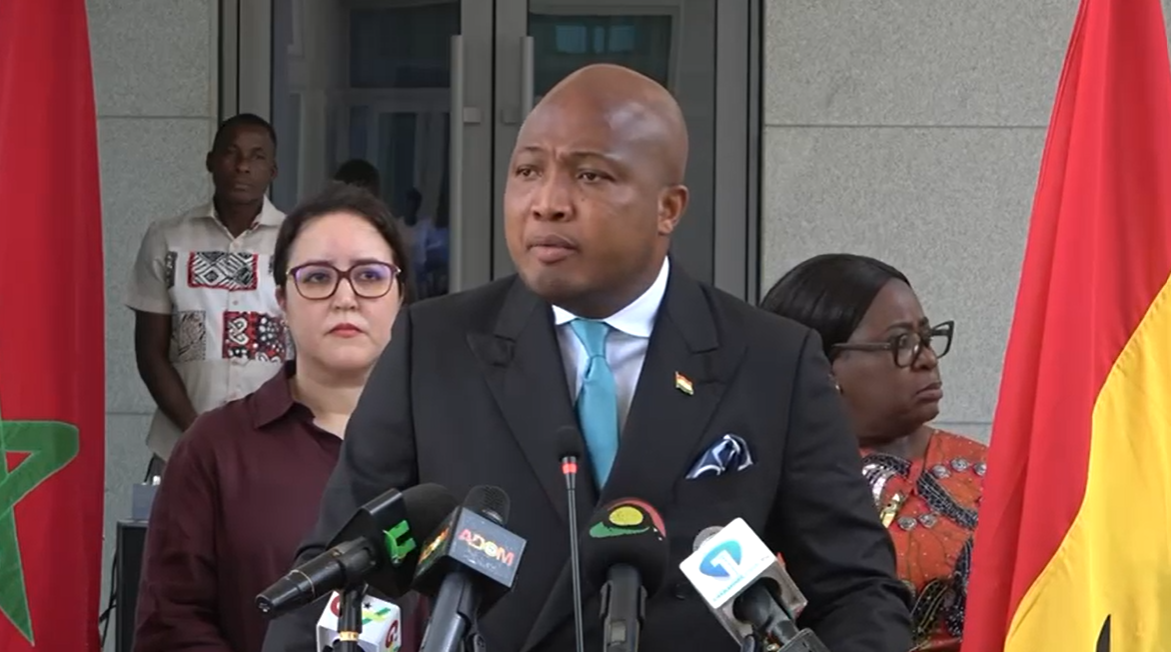
At a high-level side event in New York focused on international cooperation for the return of cultural property, Ghana’s Foreign Affairs Minister Samuel Okudzeto Ablakwa placed restitution squarely within the framework of sovereign rights and continental identity. His argument was precise: African nations are owed the return of cultural artefacts held in foreign museums and private collections, on the same legal and moral grounds that the United States has now applied to Jewish cultural property. This is not a new demand, but Ablakwa’s invocation of a specific legislative precedent gives it renewed institutional traction.
The minister situated his remarks within the “Accra Next Steps” commitments, a multilateral framework that lists restitution as one of 19 priority pillars for African cultural diplomacy. That framing matters: it signals that Ghana is not advancing a bilateral grievance, but rather a coordinated, continent-wide position with structured follow-through. The question is whether that position can be converted into binding international obligations.
What is the US law that Ablakwa is citing, and does it actually apply?
The legislation Ablakwa referenced is a law signed by US President Donald Trump mandating the return of artefacts belonging to Jewish communities, regardless of whether those objects are held by public institutions or private collectors, and irrespective of the duration of possession. The law’s reach is notable precisely because it overrides the customary defences that museums and private holders typically invoke, including statutes of limitations and good-faith acquisition claims.
Ablakwa’s argument is that the principle embedded in this law, namely that cultural property has an inalienable connection to its community of origin that supersedes the legal claims of current holders, is universally applicable. “That principle can apply so beautifully,” he said, “and we are also deserving of the same principle.” The political logic is clear: if the world’s largest economy can legislate restitution for one group, it cannot coherently refuse the same framework to others without exposing a hierarchy of cultural rights that is difficult to defend.
Whether the law’s jurisdiction extends to African artefacts held in the United States is a separate legal question. Most analysts would note that the legislation was drafted with a specific community in mind, and extending its scope would require either new legislation or a reinterpretation of its mandate. But Ablakwa is not making a strictly legal argument; he is making a normative one, using the US law as a benchmark to pressure other governments and international bodies into alignment.
Where does Europe stand, and what does that tell us about the restitution landscape?
France, Germany, and the Netherlands have each made public commitments to return African artefacts in their collections, a development Ablakwa acknowledged and welcomed. France’s 2021 restitution of 26 royal treasures to Benin, facilitated through legislation that temporarily waived the principle of inalienability of public collections, set a significant precedent. Germany has engaged in negotiations over the Benin Bronzes, and the Netherlands returned objects to Indonesia and Sri Lanka, signalling a broader European shift in institutional posture.
Yet these returns have been selective, slow, and largely dependent on bilateral diplomatic relationships rather than enforceable multilateral frameworks. The Benin Bronzes case, which involves objects looted during the 1897 British punitive expedition and now dispersed across dozens of institutions in Europe and North America, illustrates the limits of goodwill diplomacy. The British Museum, operating under UK legislation that prohibits permanent deaccessioning, has not returned a single bronze, despite years of negotiation. This is the governance gap that Ablakwa’s push is trying to close.
How does this connect to West African regional frameworks and continental governance?
The African Union’s 2015 agenda for cultural heritage, reinforced by subsequent summits, identifies restitution as a governance and development issue, not merely a cultural one. Looted artefacts represent lost economic assets in the form of cultural tourism, educational infrastructure, and soft-power capital. Countries like Ghana, Senegal, and Nigeria, which have invested significantly in heritage tourism as a pillar of economic diversification, have a direct material interest in recovering objects that anchor their national narratives.
Within ECOWAS, there is no binding regional instrument specifically on cultural property restitution, though the AU’s broader frameworks on cultural policy provide a normative foundation. The “Accra Next Steps” document, which Ablakwa cited, represents an attempt to build a coordinated West African and pan-African negotiating position that could eventually feed into AU-level diplomatic pressure on the G7 and other groupings. That kind of institutional scaffolding is what distinguishes a sustained policy campaign from a series of individual ministerial speeches.
Ghana’s position within this architecture is strategically significant. As a relatively stable democracy with strong diaspora ties to the United States and the United Kingdom, and as the host of the “Year of Return” initiative that drew substantial international attention in 2019, Ghana has both the credibility and the diplomatic network to lead on this issue in ways that larger but more diplomatically constrained states like Nigeria cannot always do.
What policy pathways exist, and what would it take to make restitution enforceable?
The 1970 UNESCO Convention on the Means of Prohibiting and Preventing the Illicit Import, Export and Transfer of Ownership of Cultural Property remains the primary international instrument in this space, but it applies prospectively and does not cover colonial-era looting. The 1995 UNIDROIT Convention on Stolen or Illegally Exported Cultural Objects goes further but has limited ratification among major holding states. These institutional gaps are precisely why advocates like Ablakwa are turning to domestic legislation in holding countries as a lever.
A credible multilateral pathway would require the AU to formally adopt a restitution protocol that member states could use as the basis for bilateral and multilateral negotiations, combined with pressure on UNESCO to expand its mandate and enforcement mechanisms. Simultaneously, African governments need to invest in provenance research capacity, legal expertise, and diplomatic infrastructure dedicated to heritage recovery. Senegal’s model, which has developed institutional capacity for cultural diplomacy within its foreign ministry, offers a comparative reference point.
For investors and development finance institutions operating in West Africa, the restitution debate is also a signal about the direction of African governance priorities. A continent that asserts sovereignty over its cultural assets with increasing legal sophistication is one that will apply similar rigor to natural resource governance, intellectual property, and data sovereignty. The principle Ablakwa is advancing in New York is, at its core, a governance principle: that African states have the authority and the legitimacy to reclaim what belongs to them, and that international law must evolve to reflect that authority rather than entrench the asymmetries of the colonial order.