When Parliament approved the transfer of the Damang Mine to a special purpose vehicle linked to the President’s brother, it passed on a concrete opportunity to renegotiate Ghana’s equity stake upward. That decision now sits at the center of a pointed governance debate.
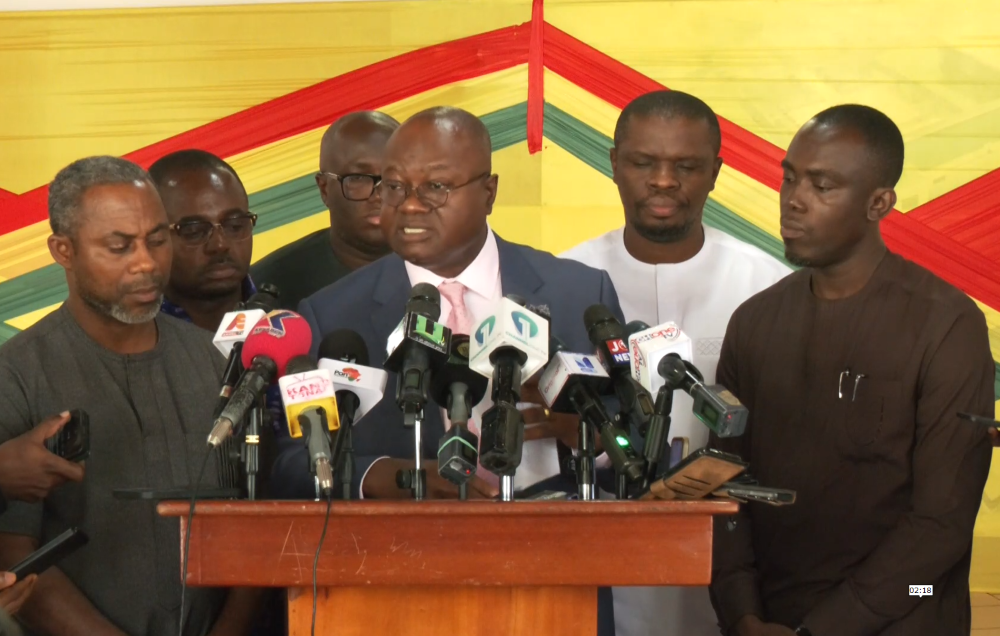
The Minority in Parliament, through Ranking Member on the Lands and Natural Resources Committee Kwaku Ampratwum-Sarpong, has made the case that the transaction warranted far more than a procedural stamp of approval. At stake is a question that extends well beyond this single concession: does Ghana have the institutional mechanisms to extract maximum value from its mineral assets at the precise moment those assets change hands?
The Damang case is not an isolated procurement dispute. It reflects a structural weakness in how Ghana manages the intersection of extractive asset governance, parliamentary oversight, and conflict-of-interest protocols. Ownership transitions in producing mines are among the highest-value moments for states to reassert equity terms. Ghana let this one pass at 10 percent.
Regional Integration and the Governance Standard Ghana Cannot Afford to Undercut
Within the ECOWAS framework, member states have committed to harmonized principles on natural resource governance, transparency, and benefit-sharing. The African Continental Free Trade Area’s investment protocol, still being operationalized, places additional pressure on signatory states to demonstrate credible, rules-based frameworks for extractive sector management. Investors watching the Damang transfer are not only assessing Ghana. They are benchmarking the entire sub-region.
Ghana’s Extractive Industries Transparency Initiative (EITI) membership requires disclosure of beneficial ownership and contract terms. If Parliament approved a mining transfer without reviewing all material information, as the Minority contends, that process sits uncomfortably against Ghana’s own EITI commitments. The Minerals Commission and the Ministry of Lands and Natural Resources now carry the burden of demonstrating that the terms approved reflect competitive market value and genuine state interest, not administrative convenience.
Ampratwum-Sarpong’s call for a 20 to 30 percent equity stake is not radical by continental standards. It is, in fact, conservative relative to what several African jurisdictions have secured in renegotiated mining agreements over the past decade. Tanzania revised its mining laws in 2017 to mandate a minimum 16 percent free-carried interest for the state, with options for additional participation. Zambia has experimented with majority state ownership in copper. Ghana, by contrast, has allowed a producing gold asset to transfer at a 10 percent state share, with no reported attempt to renegotiate upward.
The political economy here matters. Gold remains Ghana’s single largest export commodity, and Damang sits within the country’s most productive mining belt. The long-term fiscal implications of a 10 percent versus a 30 percent stake, compounded over the remaining mine life and against current gold prices above US$2,300 per ounce, are substantial. That arithmetic should have been placed before Parliament before the vote, not after.
The path forward is institutional, not rhetorical. Ghana’s Parliament should establish a standing protocol requiring independent valuation and full disclosure of beneficial ownership structures before approving any mining concession transfer above a defined production threshold. The Minerals Commission needs a clear mandate to initiate equity renegotiation at every ownership transition in producing assets. And the Office of the Special Prosecutor should confirm, publicly, whether the conflict-of-interest dimensions of this transaction fall within its review scope. Transparency on that question alone would restore a measure of institutional credibility to a process that has, for now, generated more questions than answers.