
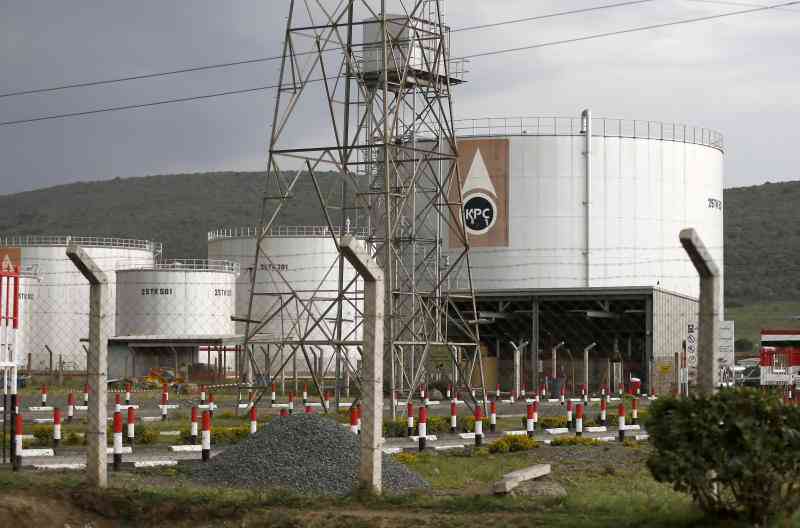
On 28 July, two of Uganda’s most senior technocrats — Dr Ramathan Ggoobi, Permanent Secretary at the Ministry of Finance, and Irene Bateebe, Permanent Secretary at the Ministry of Energy — formally joined the board of Kenya Pipeline Company (KPC), the state-owned enterprise that manages the arterial infrastructure through which petroleum products flow from Mombasa’s port into the East African interior. Their appointments were not ceremonial. Under the terms of the bilateral arrangement that brought them there, Uganda secured not only those two board seats but effective veto power over the appointment and removal of KPC’s chief executive, granting Kampala structural authority over an institution that Kenya has long regarded as a sovereign energy asset.
The arrangement demands serious institutional scrutiny — not because bilateral cooperation in infrastructure is inherently problematic, but because the specific governance architecture it creates blurs the line between partnership and subordination. When a foreign government’s permanent secretaries hold decisive influence over the leadership of another country’s state enterprise, the question is no longer one of diplomacy. It becomes a question of regulatory sovereignty, fiduciary accountability, and the integrity of public institutions.
Kenya Pipeline Company is not a peripheral utility. It operates approximately 1,700 kilometres of pipeline, manages strategic petroleum reserves, and serves as the logistical backbone for fuel supply across Kenya, Uganda, Rwanda, and parts of South Sudan and the Democratic Republic of Congo. Its operational decisions carry direct consequences for fuel prices, national security, and the fiscal health of landlocked neighbours who depend entirely on the Mombasa corridor for their petroleum imports. Uganda, which has no coastline and whose own oil production remains in development, has a legitimate and substantial interest in the reliability of that corridor. That interest, however, does not straightforwardly translate into a right to govern the institution that manages it.
The distinction matters because infrastructure governance across East and West Africa has repeatedly demonstrated that ownership structures determine benefit distribution. Across the continent, arrangements that present themselves as integration-enabling partnerships have, in practice, transferred institutional control in ways that constrain the host country’s policy flexibility for years. The KPC deal invites the same scrutiny. Uganda’s veto over CEO appointments means that Kampala can block the installation of leadership it considers unfavourable to its interests — a power that no bilateral trade relationship, however close, conventionally confers on one party over the other’s domestic institutions.
Within the East African Community framework, member states have committed to deepening integration through harmonised regulatory standards, shared infrastructure, and coordinated energy policy. The spirit of that commitment is sound: landlocked states need reliable, affordable access to port infrastructure, and coastal states benefit from the transit revenues and regional goodwill that come with providing it. But genuine integration is built on institutional reciprocity and transparent governance compacts, not on asymmetric board arrangements negotiated outside the scrutiny of regional regulatory bodies. There is no publicly available evidence that the KPC governance restructuring was reviewed by the East African Community Secretariat, subjected to parliamentary oversight in either Nairobi or Kampala, or benchmarked against the infrastructure governance standards that the African Union’s Programme for Infrastructure Development in Africa has sought to establish.
That opacity is itself a governance failure. Public infrastructure institutions derive their legitimacy from the accountability structures that surround them — parliamentary oversight, independent audit, transparent appointment processes, and clearly defined mandates. When those structures are bypassed or diluted through bilateral executive arrangements, the institution’s credibility with investors, multilateral lenders, and the public it serves is placed at risk. KPC has, in recent years, been a target of significant capital investment interest, including from development finance institutions seeking to fund pipeline expansion to serve Uganda’s anticipated oil export needs once production begins. Investors conducting governance due diligence will now need to assess whether KPC’s board composition creates conflicts of interest between Uganda’s role as a transit-dependent customer and its new role as a governance stakeholder.
The conflict is not hypothetical. Uganda’s government has a direct financial interest in keeping transit tariffs low, since those tariffs affect the landed cost of fuel in Kampala and will eventually affect the economics of its oil export pipeline. KPC’s board, meanwhile, is expected to act in the commercial interest of the Kenyan state and the sustainability of the pipeline system. Placing Uganda’s most senior finance and energy technocrats in positions of board authority over that institution does not resolve that tension — it institutionalises it. No governance framework functions well when the same actors sit on both sides of a commercial negotiation with fiduciary duties to different principals.
Comparisons with West Africa are instructive. The West African Gas Pipeline, which carries Nigerian gas through Benin and Togo to Ghana, is governed by a multinational authority with defined shareholding structures, independent regulatory oversight, and dispute resolution mechanisms anchored in ECOWAS frameworks. Imperfect as that arrangement has proven in practice, it at least establishes a formal institutional architecture that distributes governance rights in proportion to ownership stakes and subjects decisions to multilateral scrutiny. The KPC arrangement, as reported, lacks that architecture. It appears to have been negotiated bilaterally, at the executive level, without the kind of structured governance compact that would clarify decision-making authority, conflict-of-interest protocols, and accountability to the broader community of pipeline-dependent states.
Rwanda, South Sudan, and the eastern DRC — all of which depend on the Mombasa-Nairobi-Kampala corridor — have no reported representation in this new governance structure, despite having as much operational interest in KPC’s management quality as Uganda does. Their absence from the arrangement, while Uganda secures board seats and veto rights, suggests that the deal reflects bilateral bargaining power rather than a principled regional governance framework. That is precisely the kind of outcome that continental integration architecture is designed to prevent.
What the KPC episode ultimately reveals is a gap between the rhetoric of African integration and the governance disciplines required to make it real. Bilateral infrastructure deals will continue to be struck — they are often faster and more politically tractable than multilateral processes. But speed and political convenience cannot substitute for institutional rigour. The East African Community, the African Union Development Agency, and the relevant national parliaments have both the mandate and the obligation to review arrangements of this kind, establish transparent governance standards for shared infrastructure, and ensure that integration serves the public interest rather than executive convenience. The pipeline will keep flowing. The question is who it flows for, and who gets to decide.