Kenya’s State Department for Foreign Affairs has announced a sweeping institutional reform agenda that positions economic diplomacy, digital transformation and governance accountability as the principal levers of its 2026/27 strategic cycle. The central question this agenda raises is not whether Kenya’s diplomatic ambitions are credible, but whether the institutional machinery being built can convert bilateral engagements and multilateral memberships into durable, measurable development outcomes for a country still navigating significant fiscal and structural pressures.
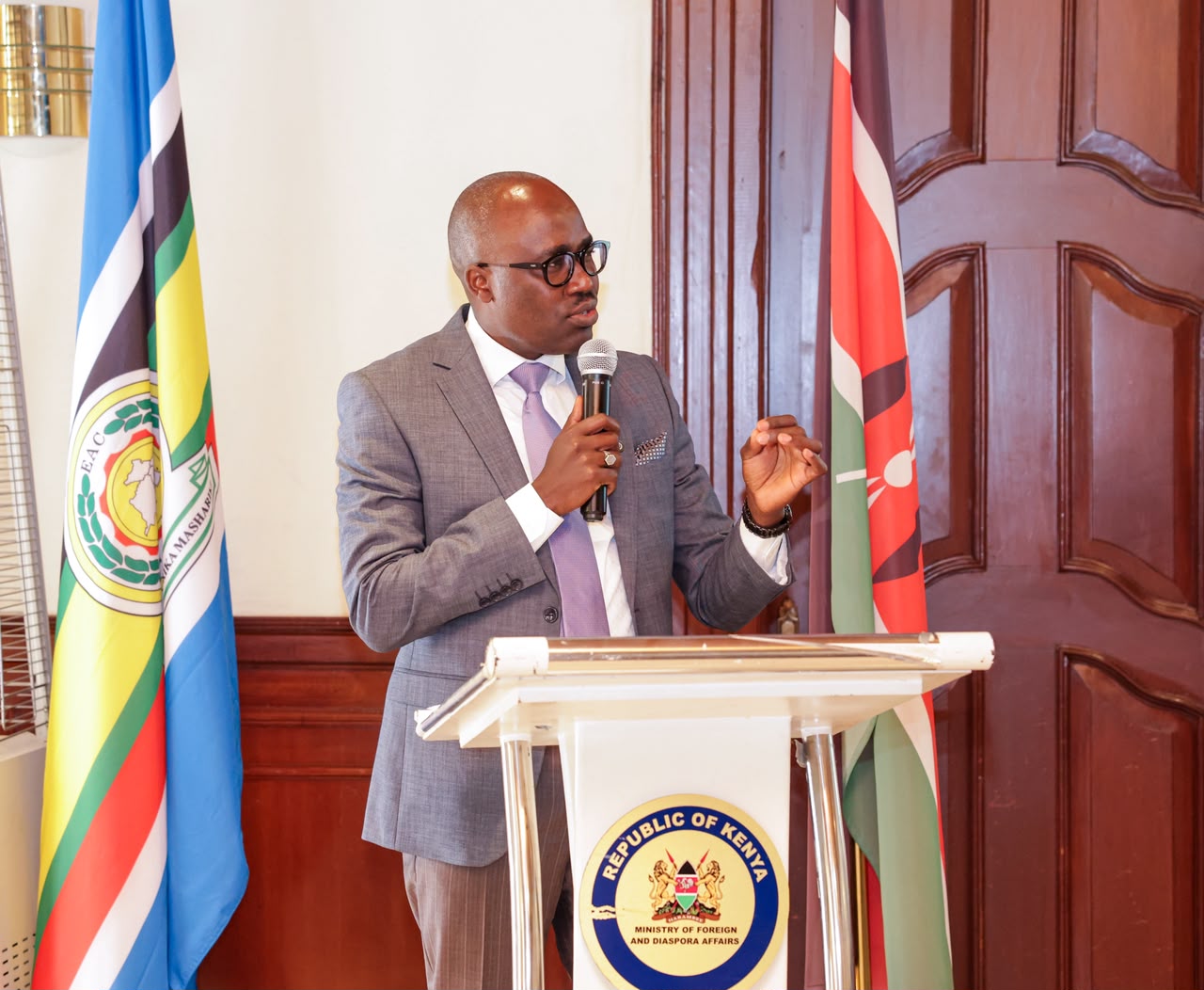
Principal Secretary Dr. Korir Sing’Oei unveiled the roadmap at the State Department’s Strategic Leadership Retreat, a three-day convening of senior diplomats, directors and departmental heads tasked with reviewing performance and recalibrating priorities. The timing matters. Kenya has recently hosted the Africa Forward Summit, participated in the G7 Leaders’ Summit and deepened partnerships under the Forum on China-Africa Cooperation (FOCAC) and the African Growth and Opportunity Act (AGOA). These are not marginal engagements. They represent Kenya’s active positioning as an emerging middle power within a contested global order, and they generate expectations of economic returns that the Foreign Service is now explicitly charged with delivering.
The thesis underlying the reform package is straightforward and defensible: diplomatic activity that does not translate into expanded export markets, inward investment or technology transfer is activity that fails the Kenyan public. Dr. Sing’Oei articulated this directly. “The true measure of economic diplomacy is no longer the number of engagements we undertake, but the opportunities created for Kenyan businesses, investors, entrepreneurs and workers.” This reframing is significant. It shifts the performance benchmark from process metrics, summits attended, agreements signed, communiqués issued, toward outcome metrics that are harder to manufacture and harder to obscure. Whether the institutional architecture being assembled can sustain that accountability standard is the reform’s real test.
The governance dimension of the reform is where the stakes are sharpest. Dr. Sing’Oei’s public acknowledgment of recurring audit queries, procurement weaknesses and financial management lapses at both headquarters and missions abroad is an unusually candid admission for a senior official. His reference to a recent appearance before Parliament’s Public Accounts Committee, and his explicit call for a zero-tolerance posture toward administrative inefficiency, signals that the reform is not purely aspirational. The State Department was ranked the second-best performing ministry in Kenya’s Government Performance Evaluation for the 2024/25 Financial Year, which is a credible institutional baseline. But that ranking coexists with the audit vulnerabilities he described, which suggests that performance metrics and financial governance have not been advancing in lockstep. Closing that gap is a precondition for the broader agenda, not an afterthought.
The workforce dimension deserves analytical attention. The promotion of 37 Directors, 33 Assistant Directors and 16 Principal Foreign Service Officers, framed within a structured succession planning strategy supported by Career Progression Guidelines and mentorship programmes, represents a deliberate institutional investment in human capital. Foreign services that neglect career architecture tend to hemorrhage mid-career talent to international organisations and the private sector, and Kenya is not immune to that dynamic. The explicit emphasis on women’s leadership within the service is also notable, not as a symbolic gesture, but because evidence from comparable diplomatic services in Senegal and South Africa suggests that gender-diverse leadership correlates with more consistent multilateral engagement and stronger development-finance outcomes.
Kenya’s reform agenda carries clear implications for its regional positioning. Within the East African Community (EAC) and the broader African Union framework, Kenya already exercises disproportionate diplomatic weight relative to its GDP. The institutionalisation of dedicated trade and investment divisions within the Foreign Service, aligned with AfCFTA implementation priorities, could strengthen Kenya’s capacity to act as a trade facilitation hub for landlocked neighbours including Uganda, Rwanda and South Sudan. That is a structural role, not merely a diplomatic one, and it requires the kind of internal coordination between the Foreign Service, the Kenya Revenue Authority and the Kenya Trade Network Agency that the proposed reforms gesture toward but do not yet fully specify.
The seven strategic priorities announced for 2026/27 consolidating global influence, aligning foreign policy with national development, building a digitally enabled service, strengthening accountability, investing in leadership, expanding diaspora and private sector partnerships, and modernising diplomatic infrastructure including a new headquarters are coherent as a portfolio. The risk is sequencing. Modernising infrastructure without first resolving procurement governance creates new surfaces for the same weaknesses Dr. Sing’Oei identified. Expanding diaspora partnerships without clear legal and financial frameworks for remittance channeling and investment vehicles risks generating goodwill without capital flows. The reform’s credibility will ultimately rest on whether the State Department publishes measurable targets against each priority and submits them to parliamentary and public scrutiny on a defined schedule. What is not measured, to adapt the PS’s own observation about communication, is often perceived as not having been done.