A quiet notice on the U.S. Department of the Treasury’s website last week rewrote, at least partially, the diplomatic ledger between Washington and Asmara. The Trump administration’s decision to remove sanctions against the Eritrean Defense Forces marks a deliberate recalibration of American strategic interests in the Horn of Africa, one driven less by any measurable improvement in Eritrea’s human rights record or regional conduct than by the expanding gravitational pull of Red Sea geopolitics.
The sanctions in question were imposed in 2021 by President Joe Biden’s administration, targeting Eritrea’s ruling party, its military leadership, and senior government officials. The legal basis was explicit: Eritrean forces had crossed into northern Ethiopia to support federal troops fighting the Tigray People’s Liberation Front in a conflict that killed an estimated 300,000 to 500,000 people and displaced millions across the region. Atrocities documented by the United Nations and human rights organizations implicated Eritrean soldiers in mass killings, sexual violence, and the systematic destruction of civilian infrastructure in Tigray. The sanctions were not incidental; they were a direct institutional response to conduct that violated international humanitarian law.
That legal and moral architecture has now been set aside. Eritrea’s Information Minister Yemane Gebremeskel welcomed the decision, telling Reuters that the Biden-era measures had inflicted “incalculable damage” on the country and were “not warranted by any metrics.” His framing inverts the documented evidentiary record, but it reflects the confidence of a government that has successfully waited out international pressure without making any substantive concessions on governance, accountability, or troop withdrawal from Ethiopian territory.
What explains Washington’s reversal is not Asmara’s conduct but Asmara’s geography. Eritrea holds approximately 2,234 kilometers of Red Sea coastline, positioned directly opposite Saudi Arabia at one of the world’s most strategically sensitive maritime corridors. Since the outbreak of the Gaza conflict and the subsequent Houthi campaign of missile and drone attacks against commercial shipping in the Red Sea, the corridor has become a focal point of great-power military attention. The United States, which leads a multinational naval coalition operating in the area, has a direct operational interest in the posture of every state along that coastline. Eritrea’s port of Massawa and its potential utility as a logistics or intelligence node are not abstract assets in this environment.
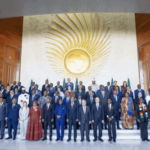
For the African Union and IGAD, the regional body mandated to manage peace and security in the Horn, the U.S. decision introduces a complicating variable into already fragile post-war diplomacy. The Pretoria Agreement signed in November 2022 between the Ethiopian federal government and the TPLF formally ended the Tigray war, but it made no binding provision for the withdrawal of Eritrean forces, who remain present in parts of northern Ethiopia. Accountability mechanisms for atrocities committed during the conflict have stalled. The AU’s own transitional justice framework for the Horn has produced little measurable progress. Against that backdrop, the removal of one of the few external pressure instruments that existed sends an institutional signal: that strategic utility, not compliance with governance or humanitarian standards, determines Western engagement with the region’s governments.
The implications extend beyond the Horn. West African governments and regional institutions watching this episode will note the lesson with precision. ECOWAS, which has spent considerable political capital since 2021 defending the principle that sanctions regimes must be anchored in rule-of-law frameworks and applied consistently, now operates in a global environment where a major power has demonstrated that those frameworks are negotiable when strategic interests shift. The credibility of any multilateral sanctions architecture, including those ECOWAS has deployed against military juntas in Mali, Burkina Faso, and Niger, depends in part on the consistency with which larger powers uphold similar instruments. When Washington abandons its own sanctions on the basis of geopolitical convenience, it weakens the normative foundation on which regional bodies like ECOWAS rely when they argue that sanctions are governance tools, not political weapons.
For investors and development finance institutions operating across the Horn and East Africa, the recalibration carries a different kind of signal. Eritrea remains one of the most closed economies on the continent, with no functioning IMF program, no World Bank active lending portfolio, and a governance environment ranked among the most restrictive globally by every major index. The removal of U.S. sanctions does not change that structural reality. It does, however, open a narrow channel for American commercial and security engagement that was previously blocked. Whether that channel produces any developmental benefit for Eritrean citizens, rather than simply consolidating the position of the ruling People’s Front for Democracy and Justice, depends on conditionalities that Washington has not publicly articulated.
Eritrea’s President Isaias Afwerki has governed the country without a constitution, legislature, or independent judiciary since independence in 1993. The country operates a system of indefinite national service that functions, by most independent assessments, as a form of forced labor. It has no free press. It has ratified neither the African Charter on Democracy, Elections and Governance nor submitted to the AU’s African Peer Review Mechanism. These are not peripheral governance details; they are the structural conditions under which any U.S. re-engagement will operate, and they define the limits of what that re-engagement can plausibly achieve for ordinary Eritreans.
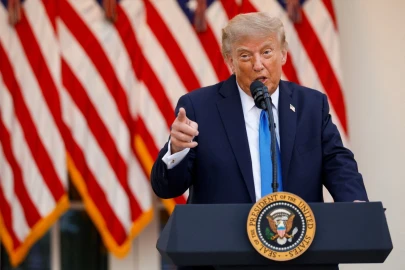
The Trump administration’s move was anticipated. Reuters reported ahead of the official announcement that an internal government document outlined the planned removal, suggesting the decision had been deliberated at the policy level rather than improvised. That deliberateness makes the absence of any accompanying conditionality, on troop presence in Ethiopia, on accountability for Tigray, on domestic governance reform, more conspicuous. Washington has chosen to normalize relations with Asmara on Asmara’s terms, not on terms that would require the Eritrean government to demonstrate any movement toward the rule-of-law standards that the original sanctions were designed to incentivize.
What the AU Peace and Security Council, IGAD, and the broader continental governance community do with this development matters. The Pretoria Agreement’s implementation remains incomplete. Tigray’s reconstruction is underfunded and politically contested. The accountability gap for one of the Horn’s deadliest conflicts in decades remains open. If African institutions allow Washington’s recalibration to pass without a formal institutional response, they signal their own acquiescence to a framework in which great-power strategic interests set the terms for accountability in African conflicts. If, alternatively, the AU uses this moment to press for a renewed and binding mechanism on Eritrean troop withdrawal and transitional justice, it asserts a form of institutional agency that the moment demands. The architecture of regional governance in the Horn is not determined solely in Washington. It is also determined by what African institutions choose to insist upon.