Ethiopia’s 2025 Election: Abiy’s Prosperity Party Consolidates Power Amid Opposition Boycotts and Regional Exclusions
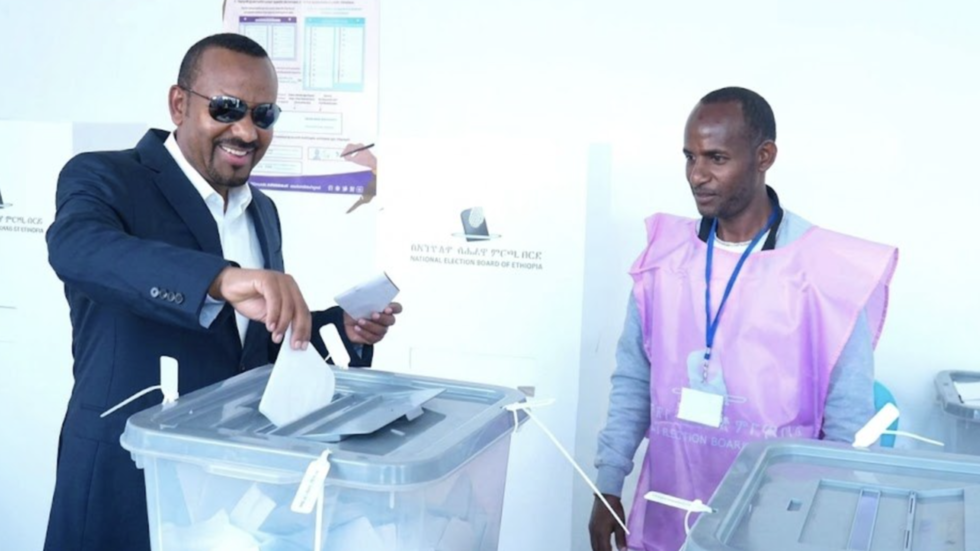
Ethiopia’s ruling Prosperity Party has secured 438 of 547 seats in the country’s federal parliament following the 1 June 2025 general election, cementing Prime Minister Abiy Ahmed‘s grip on the legislature and guaranteeing his continuation in government. The results, announced by the National Election Board of Ethiopia on Sunday, raise pointed questions about democratic consolidation in Africa’s second most populous nation and its implications for continental governance standards.
A Dominant Majority, a Fractured Electoral Map
The Prosperity Party’s 438-seat haul represents roughly 80% of the 547-seat House of Peoples’ Representatives, a margin that leaves formal parliamentary opposition structurally marginal. Of the 42 parties that contested the election, only 17 secured any parliamentary representation.
The National Election Board reported voter turnout of approximately 94% from a registered electorate exceeding 50 million. That figure, however, requires significant contextual qualification: voting did not take place in the Tigray region, which remains outside national electoral processes following the 2020-2022 federal-TPLF war. Additionally, 143 polling stations across Oromia and Amhara regions failed to open due to active insecurity, according to local media reports.
The geographic exclusions are not administrative footnotes. Tigray, Oromia, and Amhara together account for a substantial share of Ethiopia’s estimated 126 million citizens. An election that cannot operate in these territories produces a parliamentary map that does not reflect the country’s full political geography.
Opposition Parties Reject the Process
Three of Ethiopia’s most significant opposition formations, the Oromo Federalist Congress, Ethiopian Citizens for Social Justice, and the National Movement of Amhara, formally rejected the electoral process before and after polling day. Their objections centered on documented patterns of intimidation against opposition candidates, severely constrained campaign access, and the exclusion of prominent political figures from participation.
These are not isolated complaints. International electoral observation frameworks, including the African Union’s own democratic governance instruments, require that elections meet minimum standards of competitive pluralism, freedom of expression, and equal access to civic space. When multiple credible parties simultaneously reject a process, the legitimacy deficit is institutional, not merely partisan.
The AU Election Observation Mission, led by former Kenyan President Uhuru Kenyatta, reported that election day itself was “generally calm” and conducted in an orderly manner at observed stations. That assessment, while technically accurate in scope, does not address the structural conditions preceding polling day that the opposition parties identified as disqualifying.
Abiy Ahmed’s Governance Record: Reforms and Conflicts in Tension
Abiy Ahmed has governed Ethiopia since April 2018, initially succeeding to the premiership through internal restructuring within the Ethiopian People’s Revolutionary Democratic Front. He subsequently dissolved that coalition in 2019, forming the Prosperity Party through the merger of several regional parties, a move that critics argued concentrated political authority rather than decentralizing it.
His administration has pursued significant economic liberalisation, including partial privatisation of state enterprises and reforms to the telecoms sector. Ethiopia’s GDP growth has remained among the highest on the continent in nominal terms. Abiy was awarded the Nobel Peace Prize in 2019, primarily for the peace agreement with Eritrea.
That record, however, sits alongside the 2020-2022 Tigray war, described by UN investigators as involving atrocity crimes by multiple parties, as well as persistent armed conflict in Oromia and Amhara that has displaced millions and disrupted economic activity. The 2022 Pretoria Peace Agreement formally ended the Tigray war, but implementation has been incomplete, and Tigray’s exclusion from the 2025 election signals that political reintegration remains unfinished.
Continental Governance Benchmarks and AU Institutional Credibility
Ethiopia’s election outcome presents a specific governance challenge for the African Union, headquartered in Addis Ababa. The AU’s African Charter on Democracy, Elections and Governance, ratified by Ethiopia, obligates member states to conduct elections that are free, fair, transparent, and inclusive. The charter explicitly prohibits the use of state resources to disadvantage opposition parties and requires that all citizens have the right to participate in governance without discrimination.
When the AU observation mission validates an election’s procedural conduct without substantively engaging with opposition exclusion claims or the geographic disenfranchisement of Tigray, it risks undermining the credibility of its own democratic governance instruments. This tension is not unique to Ethiopia; AU observation missions have faced similar criticism in Guinea, Mali, and Zimbabwe. However, Ethiopia’s symbolic weight as the AU’s host nation makes the stakes particularly high for institutional coherence.
For the Intergovernmental Authority on Development (IGAD), the Horn of Africa’s regional bloc, Ethiopia’s domestic stability remains a foundational variable. Persistent internal conflict and democratic deficits in Addis Ababa complicate IGAD’s capacity to mediate in Sudan, Somalia, and South Sudan, where Ethiopian diplomatic leverage depends in part on its own governance legitimacy.
Economic Governance and Investment Implications
The Prosperity Party’s post-election statement pledged “inclusive economic growth” and expanded employment. Ethiopia’s economic trajectory will be watched closely by investors and development finance institutions, many of which have conditioned expanded engagement on governance improvements.
Ethiopia concluded a US$3.4 billion IMF Extended Credit Facility arrangement in 2023, part of a broader debt restructuring process under the G20 Common Framework. Continued disbursement is linked to fiscal reform benchmarks. A parliament dominated by a single party with weakened oversight capacity creates institutional risks for fiscal accountability, a concern that multilateral creditors and bilateral investors weigh in sovereign risk assessments.
Foreign direct investment in Ethiopia, which had grown substantially before 2020, contracted during the Tigray conflict. Reconstruction in the north and renewed stability in Amhara and Oromia are prerequisites for a recovery in investor confidence. The election result, and the opposition rejection that accompanied it, does not resolve those underlying uncertainties.
What Institutional Consolidation Means for the Next Government
As a parliamentary republic, Ethiopia’s government formation follows directly from the parliamentary composition. The Prosperity Party’s supermajority means Abiy Ahmed will form the next government without coalition negotiation, and parliamentary scrutiny of executive action will be structurally limited.
For governance to function as a development driver rather than a constraint, Ethiopia’s institutions, including the judiciary, the electoral board, and parliament itself, require demonstrated independence from executive dominance. The 2025 election result does not preclude institutional strengthening, but it narrows the structural incentives for it.
The AU, IGAD, and Ethiopia’s bilateral partners retain policy instruments to encourage accountability: conditional budget support, diplomatic engagement on Tigray reintegration, and sustained pressure for the implementation of the Pretoria Agreement. Whether those instruments are deployed with sufficient consistency will determine whether Ethiopia’s democratic governance trajectory stabilises or continues to diverge from the continental standards its government has formally endorsed.