On 2 November 2026, Ethiopia declared six Sudanese consular staff in Asosa, in the Benishangul region, persona non grata and gave them 48 hours to leave its territory. Within days, Khartoum responded in kind, ordering Ethiopian diplomats out of the consulate in Gedaref, a city that sits close to the porous border the two countries share. The mutual expulsions, confirmed to AFP by senior Sudanese government officials speaking on condition of anonymity, marked a formal rupture in bilateral relations between two of the Horn of Africa’s most consequential states, and raised immediate questions about the African Union’s capacity to contain a conflict that is rapidly acquiring a regional dimension.
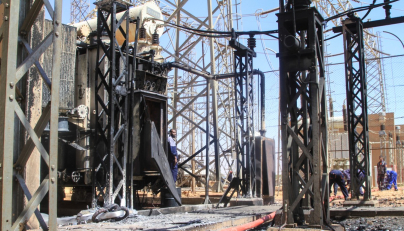
The immediate trigger was a report issued on Sunday by Sudan’s ruling Transitional Sovereignty Council, which claimed to have documented 70 attacks originating from inside Ethiopian territory this year, carried out by the paramilitary Rapid Support Forces (RSF). The RSF has been locked in a devastating civil war against Sudan’s army-aligned government since April 2023, a conflict that has already produced one of the world’s worst humanitarian crises. The Sovereignty Council’s report alleged that 187 one-way attack drones were launched from Ethiopian soil, killing and injuring nearly 500 civilians, and cited the destruction of the Al-Markhiyat power station north of Omdurman on 28 October 2026 as a prominent example. Sudan subsequently filed formal complaints against Ethiopia at both the UN Security Council and the African Union, elevating what had been a bilateral accusation into a matter of multilateral diplomatic record.
Ethiopia denied the accusations categorically. Addis Ababa did not respond to AFP’s immediate request for comment following the expulsions, but its government has consistently rejected Khartoum’s claims that it permits or facilitates RSF operations from Ethiopian territory. In a posture of counter-accusation that has defined this bilateral relationship for years, Ethiopia alleged that Sudan’s army has been backing rebels linked to the Tigray People’s Liberation Front (TPLF), a charge Khartoum rejects with equal firmness. This mutual pattern of denial and counter-allegation has effectively paralysed any bilateral diplomatic mechanism that might otherwise de-escalate tensions, leaving the field open for proxy dynamics to deepen.
A Bilateral Crisis with Continental Consequences
The expulsions did not emerge from a vacuum. Ethiopia and Sudan have traded accusations of supporting armed groups in each other’s territory for years, a dynamic rooted in overlapping ethnic communities, contested borderlands, and the unresolved Al-Fashaga agricultural dispute, where Ethiopian farmers cultivate land Sudan claims as sovereign territory. What changed in 2026 was the alleged introduction of drone warfare as a cross-border instrument, a technological escalation that transforms a political disagreement into a direct military confrontation by proxy. If Sudan’s documented claims are even partially accurate, the use of Ethiopian territory as a launchpad for one-way attack drones against Sudanese cities represents a qualitative shift in the regional security architecture, one that ECOWAS’s mandate does not cover but that the African Union’s Peace and Security Council is structurally obligated to address.
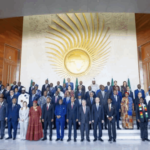
The AU’s position is particularly uncomfortable. Addis Ababa hosts the AU Commission headquarters, making Ethiopia simultaneously a founding institutional host and an accused party before the body’s own peace and security mechanisms. Sudan’s decision to file formal complaints at the AU alongside the UN Security Council was a deliberate signal: Khartoum is internationalizing the dispute and forcing the continental body to take a position on the conduct of its own host nation. The AU’s Peace and Security Council has convened repeatedly on the Sudan civil war since 2023, but its interventions have produced no ceasefire and no durable political framework. A formal complaint naming Ethiopia as a facilitator of RSF drone strikes will test whether the AU’s institutional architecture can function when one of its most powerful member states is directly implicated.
For regional investors and trade partners, the diplomatic rupture carries concrete economic costs. The Gedaref corridor is a significant agricultural and transit route connecting Sudan to Ethiopia and onward to Djibouti’s port infrastructure. Disruption to consular services in Gedaref affects cross-border traders, trucking operators, and the informal economies that sustain livelihoods on both sides of the frontier. Ethiopia’s own economic position is already fragile: the country concluded an IMF-supported debt restructuring in 2024 and is attempting to attract foreign direct investment into its manufacturing sector. A deteriorating security reputation and an open diplomatic conflict with a neighboring state complicate that investment narrative directly.
Sudan’s economic situation is, by any measure, catastrophic. The civil war has collapsed formal GDP, displaced more than ten million people internally, and destroyed critical infrastructure including power generation assets like the Al-Markhiyat station. If drone strikes from Ethiopian territory are indeed targeting civilian infrastructure, the humanitarian and reconstruction cost compounds an already impossible fiscal position for any post-war Sudanese government. The complaint to the UN Security Council also signals that Khartoum’s army-aligned administration is seeking international legal cover for potential retaliatory options, a path that carries obvious escalation risks given Ethiopia’s own internal fragilities following the Tigray conflict.
What the tit-for-tat expulsions ultimately reveal is the absence of a functioning bilateral security mechanism between Addis Ababa and Khartoum, and the AU’s persistent inability to translate its institutional mandate into coercive mediation. Both states have legitimate grievances, documented or alleged, but neither has a forum in which those grievances can be adjudicated with binding authority. The AU’s Panel of the Wise and its Border Programme exist precisely for this category of dispute, yet neither instrument has been visibly activated in this case. For the AU to preserve institutional credibility, its Peace and Security Council must convene an emergency session that places both the RSF drone allegations and the TPLF-linkage counter-claims on the table simultaneously, with a clear timeline for independent verification and a structured bilateral dialogue. Absent that, the Horn of Africa’s two most populous states will continue to manage a proxy war through consular expulsions and competing press releases, while civilians on both sides absorb the cost.