In a modest church hall on the outskirts of Nairobi, a pastor listens. A woman sits across from her, voice low, recounting what happened in her home the night before. The pastor is not a police officer, a social worker, or a government official. She holds no statutory authority, commands no budget line, and appears in no national GBV registry. Yet in this moment, she is the entire system, the first responder, the counsellor, the advocate, and often the last line of institutional trust between a survivor and silence. Across Kenya, and indeed across much of Sub-Saharan Africa, this scene repeats itself daily, quietly exposing a structural gap that formal governance frameworks have yet to close.
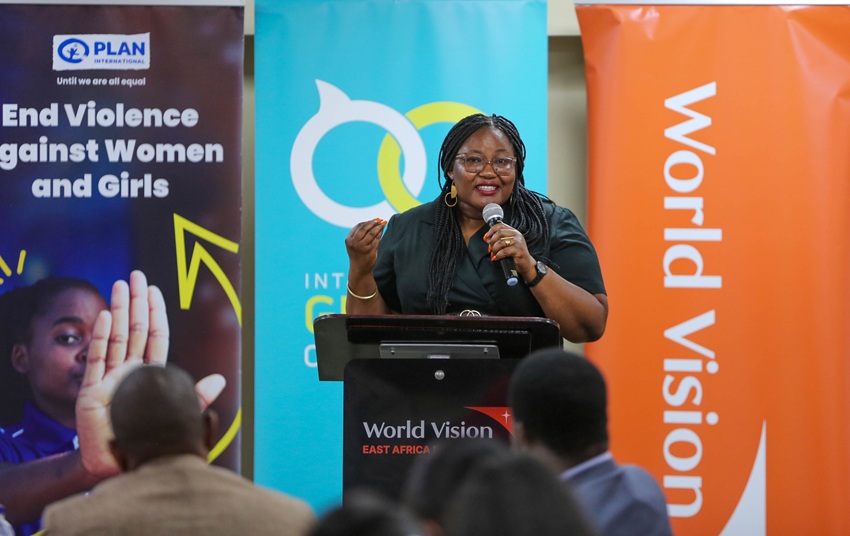
That gap moved to the centre of a high-level forum held in Nairobi, convened under the theme “Elevating Female Faith Leaders’ Voices in Ending Gender-Based Violence.” Organised by the International Gender Champions (IGC) Nairobi Hub in partnership with World Vision East Africa Regional Office and Plan International, the dialogue brought together religious leaders, gender advocates, and development partners to interrogate a specific institutional question: why are female faith leaders, despite their demonstrated reach and community legitimacy, systematically excluded from the policy architecture designed to protect the very communities they serve?
The data framing this question is stark. The World Health Organization estimates that nearly one in three women globally, approximately 840 million women and girls, have experienced physical or sexual violence in their lifetime. In Sub-Saharan Africa, the figures carry particular institutional weight: around 34 per cent of girls are affected by child marriage, and more than 144 million women and girls have undergone female genital mutilation (FGM). These are not abstract statistics. They represent a governance failure of considerable magnitude, one that no single ministry, donor programme, or legislative reform has yet resolved in isolation.
Against this backdrop, the Africa Gender Index 2023 offers a sobering institutional audit. The continent has achieved only 50.3 per cent of the progress required to reach gender equality, while women’s economic parity declined from 61 per cent in 2019 to 58.2 per cent in 2023. These are structural regressions, not cyclical dips, and they signal that the existing architecture of GBV prevention and gender policy is producing insufficient returns. “These figures show that we still have a long way to go,” said Reverend Dr. Linda Ochola, Senior Coordinator for Church Partnerships at the International Justice Mission. “We need to do more to ensure women have a stronger voice in shaping the decisions that affect their lives and communities. We also need to separate matters which require arbitration from GBV issues which are criminal in nature so they receive the appropriate justice needed.” That distinction, between community mediation and criminal accountability, is precisely the kind of governance clarity that formal institutions frequently blur, and which female faith leaders, operating at the intersection of both domains, are uniquely positioned to navigate.
What makes female faith leaders a distinct governance resource, rather than simply a social welfare asset, is the nature of their institutional embeddedness. As pastors, counsellors, teachers, mentors, and caregivers, they operate within the relational infrastructure of families and communities in ways that state actors rarely achieve. Lilian Dodzo, Regional Leader and Vice President of World Vision International for the East Africa Region, articulated the cumulative institutional logic at stake: “Every time a woman finds the courage to speak, it is because someone believed in her and was willing to sit down and listen. Every time a girl stays in school instead of becoming a child bride, every time a survivor finds healing instead of shame, and every time a family chooses respect over violence, we change more than one life. We change the trajectory of generations.” The policy implication is direct: institutions that fail to formally integrate these actors into GBV response frameworks are leaving a significant portion of their implementation capacity on the table.
The forum’s participants were equally direct about the structural barriers within faith institutions themselves. Dr. Sheikh Hasan Kenyomari, Chairman of Muslim Persons of Africa, named the problem with unusual candour for an internal religious governance conversation: “We must move beyond simply having a woman’s name on a committee or leadership structure and ensure women have a meaningful voice in decision-making. Women should be given opportunities to serve in positions of leadership, including as Kadis and in mosque committees, because they understand and can speak to issues that directly affect women. We cannot continue to make decisions for women without having women at the table.” This is not a peripheral concern. Across ECOWAS member states and the broader African Union governance architecture, the question of whether religious institutions function as accountability-enhancing or accountability-suppressing forces in GBV prevention is a live policy debate, and one that the AU Convention on Ending Violence Against Women and Girls (AU CEVAWG) directly engages.
The continental dimension matters here. The forum was held ahead of Pan-African Women’s Day on 31 July, a timing that positions the Nairobi dialogue within a broader AU institutional moment. The AU CEVAWG, still in the process of ratification across member states, represents the continent’s most ambitious legal framework for addressing gender-based violence at the structural level. Its effective implementation, however, depends on subnational and community-level actors who can translate legal norms into behavioural change, and that is precisely where female faith leaders hold comparative advantage over state institutions. World Vision International has operationalised this logic through its Channels of Hope and Becoming One programmes across East Africa, working with faith communities to challenge harmful social norms, promote positive masculinity, and build accountability frameworks grounded in dignity and mutual respect. These are not soft interventions. They are governance mechanisms operating at the community scale, and their integration into national GBV strategies would strengthen both reach and legitimacy.
The demographic argument reinforces the institutional one. Approximately 60 per cent of Africa’s population is under the age of 25, a generational cohort whose values, attitudes toward gender, and tolerance for violence are still being formed. Hajir Maalim, Regional Director for Middle East, Eastern and Southern Africa at Plan International, framed the stakes clearly: “The values young people develop today will shape the Africa we live in tomorrow. We need to ensure they have positive role models who can help them understand that respect and equality are not optional, and that violence has no place in our families or communities. Female faith leaders can be powerful voices in that conversation, particularly for young people who look to them for guidance.” For policymakers designing GBV prevention frameworks, this is a distribution problem as much as a values problem: how do you reach 60 per cent of a continent’s population with consistent, credible messaging about gender norms? Female faith leaders, embedded in local communities and trusted by young people, offer a cost-effective and institutionally legitimate answer.
The forum also pressed faith institutions to undertake concrete internal reforms, specifically the creation of confidential reporting mechanisms for survivors, the establishment of referral pathways to legal and psychosocial services, and the formal inclusion of survivor voices in shaping institutional GBV policies. These are governance asks, not pastoral ones, and they signal a maturation in how civil society and development partners are engaging faith institutions: not as moral auxiliaries to the state, but as accountable actors within a broader rights and protection architecture. Back in that church hall on the edge of Nairobi, the pastor finishes listening. She knows a lawyer who works with a legal aid clinic two neighbourhoods over. She knows which police station has a gender desk that actually functions. She knows, from years of quiet institutional learning, which pathways lead to safety and which lead back to the same room. Whether the policy systems built in Nairobi and Addis Ababa ever formally recognise what she knows is the governance question this forum placed, with considerable urgency, on the table.