The number arrived with the full weight of Davos behind it.
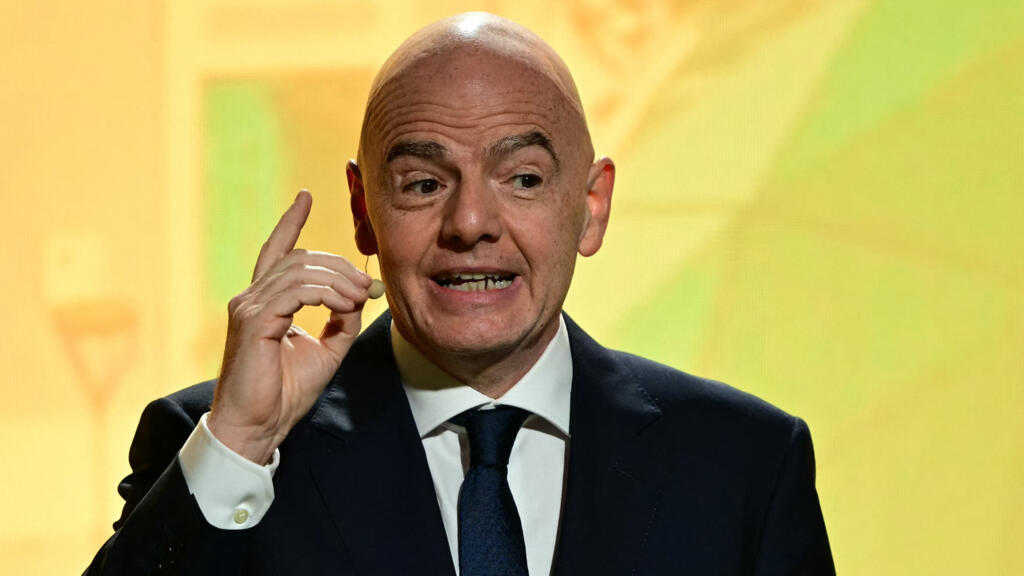
Standing before the World Economic Forum in January, FIFA President Gianni Infantino announced that the 2026 FIFA World Cup would generate $80 billion in global economic output, a figure he attributed not to FIFA’s own analysts but to the World Trade Organization. It was a carefully calibrated rhetorical move: by anchoring the projection to a multilateral institution, Infantino lent the estimate a credibility that FIFA’s own promotional material could never command. What he did not dwell on was that FIFA itself co-commissioned the study that produced the number.
The report originates from OpenEconomics, a consultancy engaged through a joint FIFA-WTO initiative. OpenEconomics is not a neutral actor in this debate. The firm has previously produced economic analyses underpinning Infantino’s most ambitious proposals, including the push for a biennial World Cup format and the expanded Club World Cup. FIFA’s co-sponsorship of the research creates a structural conflict of interest that any serious governance review would flag immediately, yet the headline figure has circulated widely across government briefings, investment prospectuses and diplomatic communiqués without that caveat attached.
For West African governments and regional institutions currently weighing the costs and benefits of hosting major international tournaments, the mechanics of how these projections are built matter enormously. The report claims the United States alone would absorb a $17.2 billion GDP boost and approximately 185,000 full-time equivalent jobs. Those projections rest on specific behavioral assumptions: international visitors staying an average of ten days and spending roughly $500 per day. Strip out those assumptions, or stress-test them against the actual absorptive capacity of host city infrastructure, and the model’s foundations begin to shift.
The deeper methodological problem is one that economists have debated for decades in the context of mega-events. Hotels, airports, transit networks and hospitality venues operate with finite capacity. When demand spikes sharply over a compressed period, the primary market response is price inflation, not genuine output expansion. A hotel room that costs US$150 on an ordinary June night in Los Angeles may command US$600 during a World Cup quarterfinal week. The revenue registers as economic activity in the model, but it represents a transfer of wealth from visitor to vendor, not net new production. Temporary employment compounds the distortion: businesses managing a six-week demand surge overwhelmingly reach for overtime contracts and seasonal hires rather than creating the durable employment relationships that underpin structural labor market improvement.
OpenEconomics also deploys a methodology called Social Return on Investment, which attempts to assign monetary values to diffuse outcomes such as improved population wellbeing, healthier lifestyle choices and stronger community cohesion. The intent is not without merit; social infrastructure does carry economic weight. But the technique is notoriously sensitive to the assumptions embedded in its conversion ratios. Assign a slightly different monetary value to “increased community engagement” and the aggregate figure shifts by billions. Without transparent, independently audited input parameters, such estimates cannot be meaningfully compared across contexts or used as the basis for sovereign fiscal planning.
Then there is the phenomenon economists describe as “crowding out.” Major sporting events generate intense global attention, but that attention does not always translate into net visitor growth. Business travelers, leisure tourists and conference delegates who might otherwise visit a host city during the tournament window frequently reschedule or redirect their trips to avoid inflated prices and logistical congestion. A portion of the spending the model attributes to World Cup visitors therefore replaces expenditure that would have materialized anyway under normal market conditions, producing a smaller increment of genuinely additive economic activity than the headline figure implies.
Independent research sharpens the critique. Analysis conducted by German economist Matthias Fett for Der Spiegel suggests that once opportunity costs, public infrastructure expenditure and displaced regular tourism are factored into a long-run accounting, the United States could register a net economic loss from hosting. Long-run projections carry their own uncertainty, but Fett’s framework at least attempts to hold the full ledger open, rather than counting only the inflows.
None of this is to suggest that the 2026 World Cup will be economically inconsequential. FIFA projects tournament-cycle revenues of approximately $11 billion for the organization itself, and the broadcast rights, sponsorship architecture and commercial licensing ecosystem surrounding the event are genuinely vast. The distributional question, however, is who captures that value. FIFA’s financial architecture is designed to maximize the organization’s own revenue position; the contractual obligations imposed on host governments, including infrastructure guarantees, tax exemptions for FIFA commercial partners and security expenditure, systematically transfer costs onto public balance sheets while concentrating returns in Zurich.
For ECOWAS member states and African Union institutions developing frameworks for evaluating major event bids, the governance lesson embedded in this episode is structural. When the entity that benefits most from a positive economic assessment also funds the research producing that assessment, the resulting figure is a lobbying instrument, not an independent forecast. Procurement of economic impact studies for public infrastructure decisions, stadium investments or tournament bids requires the same institutional safeguards applied to any other commissioned research: transparent methodology disclosure, independent peer review, and clear separation between the commissioning authority and the entity whose interests the findings serve.
Morocco’s successful bid for the 2030 World Cup, co-hosted with Spain and Portugal, will test these dynamics in an African context. Moroccan authorities have cited transformative infrastructure benefits and tourism multipliers in language that echoes FIFA’s own promotional register. The Bank of Morocco and the Ministry of Economy will ultimately bear responsibility for validating those projections against observable fiscal outcomes. Regional development banks, including the African Development Bank, carry institutional standing to conduct that independent verification function, and their credibility depends on exercising it.
Across the Atlantic, in the stadiums of New York, Los Angeles and Dallas, the 2026 tournament will eventually produce a real economic outcome. That outcome will be measured in hotel occupancy rates, tax receipts, labor market data and infrastructure utilization figures compiled long after Infantino’s Davos speech has faded. Whether it resembles the $80 billion promise is a question that deserves a rigorous, independent answer, built on transparent data and free from the structural conflicts that shaped the original claim.