When the Bank of Ghana stopped financing the national budget, it marked more than a technical adjustment in public accounting. It signalled a structural reorientation of how Ghana manages the relationship between its central bank and its treasury, a relationship whose dysfunction had, for years, fed the very inflationary spiral that eventually forced Accra into the arms of the International Monetary Fund in 2023. That the country can now point to a period of sustained macroeconomic stabilisation is, in no small part, a consequence of that single institutional boundary being enforced with consistency.
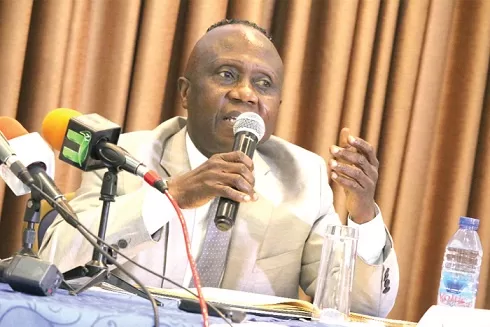
Dr. John Kwabena Kwakye, an advisor at the Bank of Ghana, articulated this dynamic with unusual directness during an appearance on the Citi Breakfast Show on 23 July 2025. “One thing we have observed in the past one and a half years is the alignment between fiscal policy and monetary policy and that has helped us to achieve the kind of stability that we have had,” he said. “Fiscal discipline and monetary discipline have been strong.” The observation is deceptively simple. Behind it lies a governance architecture that West African economies, several of which face analogous tensions between revenue-constrained governments and politically pressured central banks, would do well to examine closely.
Ghana’s recent trajectory offers a case study in what happens when institutional boundaries are allowed to function as designed. Under the current IMF programme, the Bank of Ghana has ceased all direct budget financing, a practice that, in earlier fiscal cycles, had contributed to monetary expansion and currency depreciation. The fiscal data that Dr. Kwakye cited sharpens the picture considerably: government revenue has fallen approximately 5 percent short of its target, a shortfall that, in a less disciplined environment, would typically trigger supplementary central bank lending to cover the gap. Instead, the government has compressed expenditure to 20 percent below the original budget envelope, deploying the resulting space as a deliberate strategy to rebuild foreign exchange reserves rather than to sustain consumption-driven spending.
This compression is not painless. A 20 percent reduction in expenditure against budget carries real social costs, particularly in a country where public sector wages, health financing, and infrastructure investment compete for a constrained fiscal envelope. The governance question is not whether austerity is desirable in the abstract, but whether the institutional mechanisms that enforce it are transparent, accountable, and sequenced in ways that protect the most vulnerable. Ghana’s record on this dimension remains contested, and the IMF programme’s conditionalities, while structurally sound, have drawn criticism from domestic civil society organisations that argue the adjustment burden has fallen disproportionately on public sector workers and social services.
The regional context matters enormously here. Ghana operates within ECOWAS, a community whose long-deferred monetary integration project, anchored in the proposed Eco currency, has repeatedly stalled over precisely the kind of fiscal convergence criteria that Accra is now, belatedly, attempting to meet. The ECOWAS convergence framework requires member states to maintain single-digit inflation, limit fiscal deficits to 3 percent of GDP, and hold central bank financing of deficits to zero. Ghana breached all three criteria during its 2021-2022 economic crisis. Its current adjustment, if sustained, brings it closer to the institutional benchmarks that would make meaningful monetary integration with neighbours such as Nigeria, Ivory Coast, and Senegal technically feasible. That is not a trivial contribution to the regional integration project, even if it arrives through the coercive mechanism of an IMF programme rather than through proactive domestic governance reform.
The contrast with WAEMU countries is instructive. The eight-member West African Economic and Monetary Union, anchored by the CFA franc and governed by the Banque Centrale des États de l’Afrique de l’Ouest, operates under a framework that constitutionally prohibits direct central bank financing of member state deficits, a rule that Ghana’s own central bank legislation technically contained but which was routinely circumvented through quasi-fiscal operations and Ways and Means advances. WAEMU members such as Ivory Coast and Senegal have, as a result, maintained lower inflation and more stable exchange rate environments, which has translated into lower sovereign borrowing costs and more predictable investment climates. Ghana’s post-crisis adjustment is, in effect, an attempt to replicate through programme conditionality what WAEMU countries achieve through supranational institutional architecture. The deeper question is whether Ghana can institutionalise these disciplines beyond the life of the current IMF programme, or whether the incentive structure reverts once external pressure lifts.
For investors and regional partners, the signals from the current period of fiscal-monetary alignment are broadly positive, but they come with a durability caveat that no honest analysis can ignore. Ghana has been through IMF programmes before. The 2015-2019 Extended Credit Facility produced a period of stabilisation that was subsequently unwound by pre-election fiscal expansion in 2020 and 2021. The institutional memory of that cycle is not lost on sovereign bond markets, where Ghana’s Eurobond restructuring process, still incomplete as of mid-2025, continues to weigh on the country’s re-entry into international capital markets. Restoring full market access will require not just the technical metrics of fiscal balance but a credible demonstration that the political economy of election-year spending has been structurally addressed, through independent fiscal councils, strengthened parliamentary budget oversight, or binding medium-term expenditure frameworks with real enforcement teeth.
Dr. Kwakye’s framing of the current moment as a product of “alignment” between fiscal and monetary authorities is accurate, but alignment achieved under external conditionality is categorically different from alignment produced by robust domestic institutions. The Bank of Ghana’s operational independence, guaranteed under the Bank of Ghana Act of 2002, was effectively compromised during the period of aggressive Ways and Means financing between 2020 and 2022. Restoring that independence on a durable basis requires legislative reinforcement, transparent reporting mechanisms, and a political culture that treats central bank autonomy as a national asset rather than an obstacle to short-term fiscal convenience. These are governance reforms that no IMF programme can legislate into existence; they require domestic political will and institutional investment that extends well beyond the current programme’s 2026 expiry horizon.
What Ghana demonstrates, at this particular juncture, is that macroeconomic stabilisation is achievable even from a position of severe fiscal stress, provided that the institutional boundaries between monetary and fiscal policy are enforced rather than negotiated away. The reserves rebuilding strategy that Dr. Kwakye described, funded by expenditure compression rather than by monetary financing, is textbook central banking orthodoxy. Its value lies not in its novelty but in its execution within a political environment where such discipline has historically proven difficult to sustain. Whether Accra can convert a programme-induced correction into a self-reinforcing institutional settlement is the governance question that will determine not only Ghana’s own economic trajectory, but also its capacity to serve as a credible anchor in the broader West African integration architecture that ECOWAS has spent decades attempting to construct.