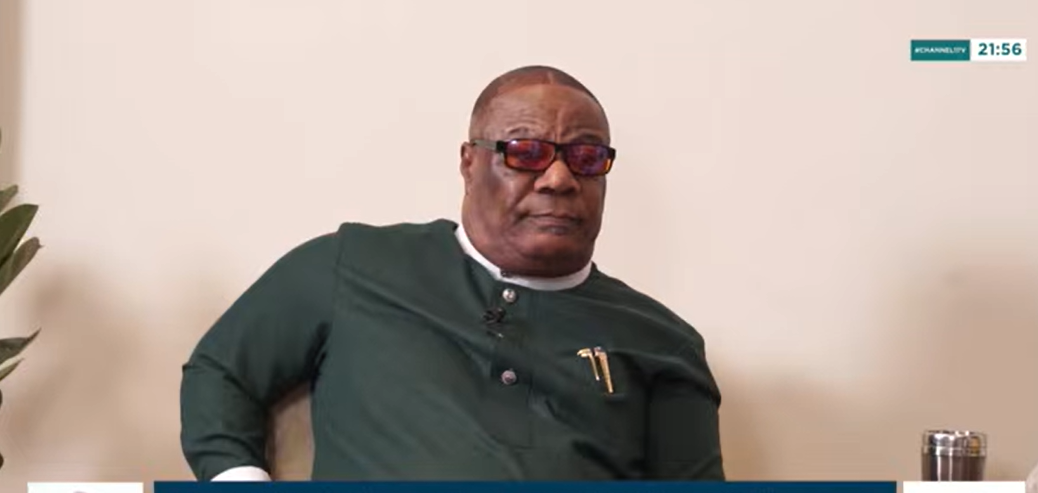
Archbishop Nicholas Duncan-Williams, founder and General Overseer of Action Chapel International, issued a stark warning on 16 August that Ghana’s failure to enforce laws against illegal artisanal mining, widely known as galamsey, is systematically destroying the water bodies and agricultural land on which future generations depend, with political interference in regulatory enforcement identified as a central driver of the crisis.
Speaking at a Sunday church service, Duncan-Williams framed the galamsey problem not as an isolated environmental concern but as a governance failure with compounding intergenerational costs. “I take time to study history a lot, and some things are bothering me and one of them is how we are managing the future of our children and our grandchildren when it comes to our water bodies, when it comes to the land that produces crops and the food we eat,” he said. “We are poisoning the land.”
Ghana ranks among West Africa’s largest gold producers, but the artisanal and small-scale mining sector has expanded with largely unchecked environmental consequences. The Water Resources Commission of Ghana has documented widespread contamination of river systems, including the Pra, Offin, and Ankobra basins, with mercury and sediment runoff directly attributed to illegal mining operations. Agricultural output in affected regions has declined measurably, compressing rural livelihoods and food security in communities that depend on smallholder farming.
Duncan-Williams directed pointed criticism at the political economy sustaining the galamsey sector. He argued that elected officials, fearful of electoral backlash in constituencies where illegal mining provides income, have repeatedly shielded operators from legal accountability. “If anybody tries to make it work and enforce the law, we turn everything to politics,” he said, adding that “because people don’t want to lose their seat in parliament, or they don’t want their party to lose, they give in and allow lawlessness to continue.”
The pattern he describes is well-documented in Ghanaian governance literature. Multiple administrations, spanning both the New Patriotic Party and the National Democratic Congress, have launched anti-galamsey task forces, including the high-profile Operation Vanguard in 2017 and the Galamsey Fight Back initiative, only to see enforcement collapse under political pressure or elite capture of the regulatory apparatus. The Minerals Commission of Ghana has faced persistent criticism for licensing irregularities that blur the boundary between legal small-scale mining and criminal operations.
The governance failure carries direct implications for Ghana’s positioning within regional integration frameworks. As a signatory to the African Continental Free Trade Area (AfCFTA) and a member of ECOWAS, Ghana’s agricultural competitiveness and export capacity depend on the productive integrity of its land and water systems. Contaminated farmland and degraded river basins reduce the country’s capacity to meet phytosanitary standards for agricultural exports, a prerequisite for meaningful participation in intra-African trade under AfCFTA protocols.
Compared with regional peers, Ghana’s enforcement record is notably inconsistent. Côte d’Ivoire has deployed military units to enforce mining exclusion zones in protected forest areas, a measure credited with reducing illegal encroachment in the Comoé and Taï National Parks. Senegal has invested in formalisation programmes that bring artisanal miners into a regulated licensing framework, reducing the incentive for illegal operation. Ghana, by contrast, has cycled through enforcement campaigns without resolving the structural political incentives that Duncan-Williams identified.
The financial stakes are considerable. Ghana’s cocoa sector, managed by COCOBOD and a cornerstone of the country’s export earnings, is directly vulnerable to soil and water degradation in the forest belt where galamsey activity is most concentrated. The Ghana Cocoa Board reported yield pressures in affected districts, and international buyers operating under sustainability certification requirements, including Fairtrade and Rainforest Alliance standards, have flagged contamination risks as a sourcing concern. This exposure translates into a real threat to foreign exchange earnings at a moment when Ghana is managing a demanding International Monetary Fund (IMF) programme following its 2022 sovereign debt default.
Duncan-Williams called for sustained intercessory prayer for Ghana, signalling his intention to prioritise the issue in his ministry. While the intervention is pastoral in character, it reflects a broader pattern in which civil society voices, including religious leaders, have stepped into the accountability vacuum left by weakened institutional enforcement. Ghana’s Commission on Human Rights and Administrative Justice (CHRAJ) and the Office of the Special Prosecutor have both flagged corruption in the mining sector as a systemic concern, but prosecutorial outcomes remain limited.
The policy pathway out of the galamsey crisis requires more than renewed enforcement campaigns. Independent analysts and governance researchers have consistently argued that durable reform depends on three interlocking mechanisms: transparent licensing administered by an insulated regulatory body, community benefit-sharing structures that reduce local tolerance for illegal operations, and cross-border coordination with Burkina Faso and Côte d’Ivoire, whose shared river basins and porous borders allow illegal operators to evade jurisdiction by crossing frontiers. Without institutional insulation from electoral politics, Ghana’s anti-galamsey architecture will continue to function as a periodic signal rather than a structural constraint.