The Infrastructure Deficit Beneath the Policy Ambition
Ghana cannot industrialise on rhetoric alone.
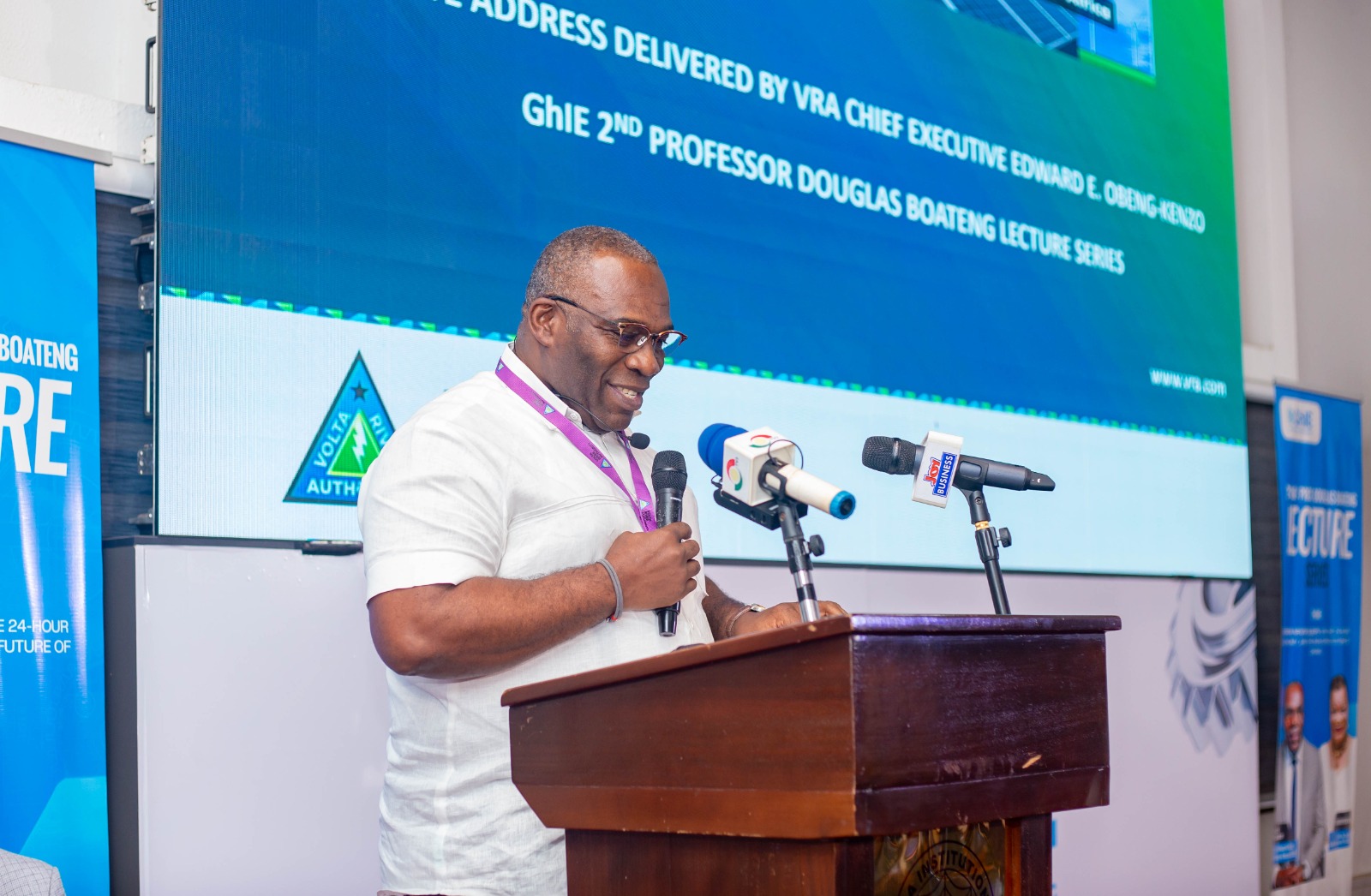
At the 2nd Ghana Institution of Engineering (GhIE)–Professor Douglas Boateng Lecture Series held in Accra, Ing Edward E. Obeng-Kenzo, Chief Executive of the Volta River Authority (VRA), issued a pointed assessment: the government’s 24-Hour Economy agenda will succeed or fail on the quality of its engineering infrastructure, not its political packaging. The core institutional question he raised, though not always in those terms, is whether Ghana’s regulatory and professional engineering frameworks are structured to drive industrial transformation, or whether they remain reactive, underfunded, and politically subordinate.
That question carries weight far beyond Accra. Within ECOWAS, Ghana occupies a pivotal position, a mid-sized economy with a relatively diversified export base, an established financial sector, and ambitions to serve as a regional manufacturing and services hub. Yet its chronic power sector instability, aging transmission infrastructure, and persistent technical losses in the electricity grid have repeatedly undermined investor confidence and constrained industrial output. The 24-Hour Economy, which envisions round-the-clock industrial and commercial activity, demands precisely the kind of reliable, resilient energy infrastructure that Ghana has not yet consistently delivered.
Engineering Governance as a Development Mechanism
Ing Obeng-Kenzo’s address reframed the role of professional engineering bodies in ways that matter for governance analysis. He urged the Ghana Institution of Engineering to position itself as the nation’s foremost engineering think tank, producing evidence-based policy advice, enforcing engineering standards, and establishing a long-term foresight agenda covering infrastructure planning across a 20-to-50-year horizon. This is not a ceremonial ask. It is a direct challenge to the institutional architecture of Ghana’s development planning.
Ghana’s infrastructure decisions have historically been shaped by short-term budget cycles and political imperatives rather than technical planning horizons. The result is visible in Accra’s recurring flood disasters, where inadequate drainage engineering compounds urban vulnerability year after year without systemic resolution. Ing Obeng-Kenzo explicitly called on engineers to provide practical, sustainable interventions on flooding, framing it as a test case for the profession’s capacity to influence national policy. That framing is significant: it positions engineering institutions not as service providers to government, but as authoritative actors in the governance of public infrastructure.
Professor Douglas Boateng, founder of the lecture series, reinforced this institutional logic. Engineers, he argued, must plan beyond political cycles, embedding a generational thinking discipline into their practice. In governance terms, this means insulating critical infrastructure decisions from electoral volatility, a structural reform that several West African peer economies have struggled to implement.
The Power Sector: Regional Benchmarks and Ghana’s Structural Exposure
Reliable electricity is the non-negotiable prerequisite for any 24-hour industrial model. Ing Sophia Tijani, President-Elect of the Ghana Institution of Engineering, stated this without ambiguity: “We cannot achieve a successful 24-hour economy without reliable power generation.” The VRA, as Ghana’s primary power generation authority, sits at the center of this challenge.
Ghana’s power sector has made measurable progress since the “dumsor” crisis of 2014-2016, when load shedding crippled industrial output and drove up operating costs for businesses across the country. However, structural vulnerabilities persist. Technical losses in the transmission and distribution network remain above regional best-practice thresholds. Thermal generation capacity depends heavily on gas supply arrangements that have proven fragile. And the financial health of sector utilities, including the Electricity Company of Ghana, has been a recurring concern for the IMF and World Bank, both of which have conditioned support on tariff reforms and operational improvements.
Regionally, the contrast with Côte d’Ivoire is instructive. Abidjan has positioned itself as a net electricity exporter within the West African Power Pool (WAPP), supplying power to Burkina Faso, Mali, and Ghana itself during periods of domestic shortfall. Côte d’Ivoire’s relative success reflects sustained investment in generation capacity, coherent sector regulation, and a more stable relationship between the state and private independent power producers. Ghana, by contrast, has accumulated significant arrears to IPPs, creating a governance risk that deters long-term private investment in generation infrastructure.
Nigeria, the ECOWAS hegemon, presents a cautionary parallel. Despite holding the largest generation capacity in West Africa on paper, chronic transmission infrastructure failure and distribution sector dysfunction have left Nigerian industry operating largely on expensive self-generated power. Ghana’s engineering institutions, if they are to genuinely influence policy, must engage directly with these structural failure modes rather than limiting their advocacy to capacity expansion alone.
Professional Standards, Contract Governance, and the Investment Climate
Ing Obeng-Kenzo’s call for stronger engineering ethics and improved contract management points to a governance dimension that directly affects Ghana’s investment climate. Poor contract management in infrastructure projects has been a documented source of cost overruns, delayed delivery, and public resource misallocation across West Africa. In Ghana, high-profile infrastructure projects have periodically attracted scrutiny over procurement irregularities and technical specification failures, eroding confidence among both domestic and foreign investors.
For Ghana to attract the scale of industrial investment that a 24-Hour Economy requires, its engineering governance framework must credibly signal that contracts will be honored, technical standards enforced, and project execution monitored by competent, independent professional bodies. The GhIE’s potential role here is substantive. A strengthened professional institution with genuine standard-setting authority, transparent disciplinary mechanisms, and formal advisory status in public procurement could function as a credible governance anchor, analogous to the role that bar associations play in legal sector reform or medical councils in health system accountability.
Continuous professional development, another of Ing Obeng-Kenzo’s recommendations, connects to a broader skills deficit that constrains West African industrialisation. The AfCFTA’s promise of expanded intra-African trade in manufactured goods depends on a regional workforce capable of operating and maintaining sophisticated industrial infrastructure. Ghana’s engineering institutions, in partnership with regional counterparts through the ECOWAS technical harmonisation framework, could contribute to a continent-wide skills architecture rather than operating in national isolation.
From Professional Advocacy to Institutional Authority
The GhIE–Professor Douglas Boateng Lecture Series has established a platform. The harder task is converting professional consensus into durable institutional authority.
Three specific policy pathways emerge from the Accra deliberations. First, the Ghanaian parliament should formally legislate an advisory role for the GhIE in major infrastructure procurement decisions, giving the institution statutory standing rather than discretionary access. Second, the Ministry of Finance and the Ministry of Energy must align the 24-Hour Economy’s infrastructure requirements with a multi-year capital expenditure plan that is insulated from annual budget volatility, precisely the kind of long-term planning horizon that Ing Obeng-Kenzo and Professor Boateng both emphasized. Third, the VRA and the GhIE should jointly develop a technical loss reduction roadmap, with measurable targets, independent verification, and public reporting, that links engineering performance directly to the reliability standards the 24-Hour Economy demands.
Ghana’s industrial ambitions are real. So are its infrastructure constraints. The engineers gathered in Accra have diagnosed the problem with clarity. Whether their institutions can translate that diagnosis into binding policy commitments, and whether Ghana’s governance architecture will accommodate their authority, is the test that actually matters.