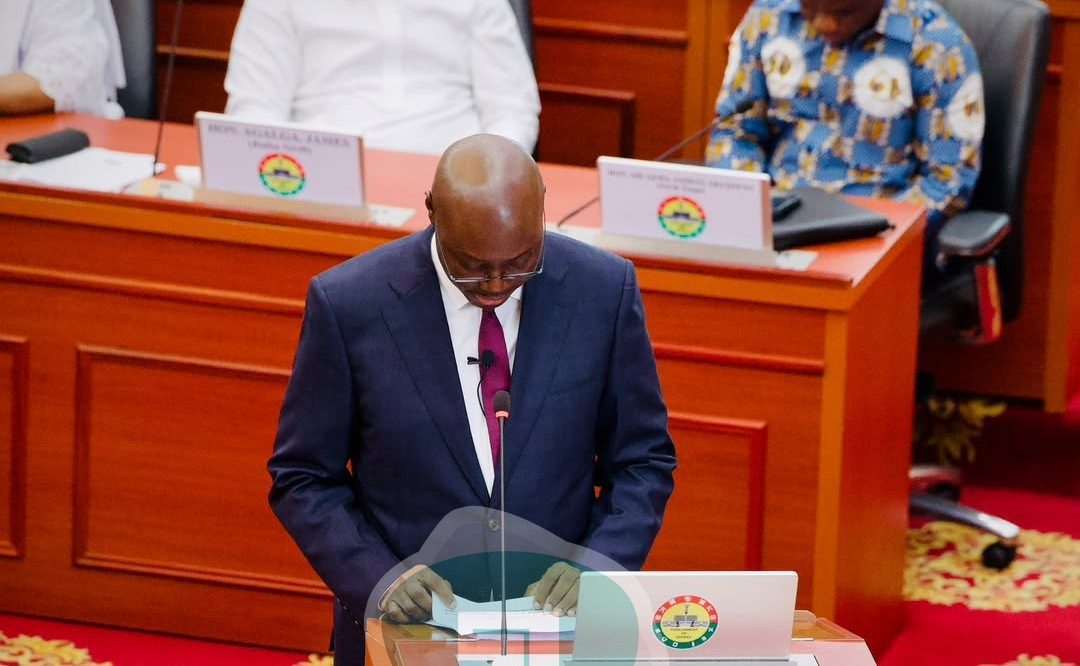
The money, Finance Minister Cassiel Ato Forson told Parliament, is already there.
On 12 November 2026, presenting Ghana’s 2027 Budget Statement and Economic Policy, Forson declared that US$2.2 billion and GH¢9 billion, together valued at approximately US$3 billion, sat in a dedicated project account at the Bank of Ghana, ring-fenced for the construction of the proposed Accra–Kumasi Expressway. “The money is in the safe custody of the Bank of Ghana,” he said. “Promise made, promise fulfilled.” It was a striking claim, delivered with deliberate finality, and it immediately raised a more consequential question than the one it answered: what happens next?
A Corridor That Defines Ghana’s Economic Geography
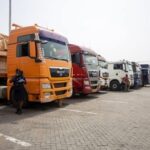
The Accra–Kumasi corridor is not simply a road. It is the economic spine of Ghana. Stretching roughly 250 kilometres between the capital and the Ashanti regional hub, this route carries the bulk of commercial freight, passenger transport and agricultural produce moving between the country’s two largest cities. Kumasi functions as the trading gateway to Ghana’s cocoa belt and the broader forest region, while Accra anchors the country’s financial, administrative and port infrastructure. The existing highway, burdened by decades of deferred maintenance, heavy truck traffic and rapid urbanisation at both ends, routinely reduces what should be a four-hour journey to an eight-hour ordeal.
The expressway project, conceived as a modern, multi-lane alternative, promises to compress that journey and, more structurally, to reduce logistics costs that currently inflate the price of goods across the corridor. For a country where road freight dominates domestic trade, the economic case is not difficult to make. Ghana’s transport costs as a share of final goods prices remain among the higher in the sub-region, a structural disadvantage that weakens the country’s competitiveness within the ECOWAS single market and, increasingly, within the framework of the African Continental Free Trade Area.
Financing Architecture and Institutional Custody
The decision to place project funds in a dedicated Bank of Ghana account before construction begins is institutionally significant, and deserves scrutiny beyond the headline figure. Ghana’s infrastructure financing history is littered with projects that stalled not because money was unavailable at announcement, but because disbursement mechanisms were poorly designed, procurement timelines slipped, or foreign currency components evaporated against a weakening cedi. The 2022 debt restructuring, which forced Ghana to negotiate with bilateral and commercial creditors under an IMF-supported programme, was itself partly a consequence of infrastructure and energy-sector liabilities that accumulated faster than the revenue base could absorb them.
Forson’s framing, that funds are pre-positioned at the central bank rather than pledged through a future drawdown mechanism, suggests an attempt to address that credibility deficit directly. The Bank of Ghana’s custodial role provides a degree of institutional insulation from discretionary spending pressures, though it does not, on its own, resolve questions about procurement governance, contractor selection or environmental and social impact frameworks. Parliament’s Public Accounts Committee and the Public Procurement Authority will need to be active participants in the project’s oversight architecture if the institutional credibility of the announcement is to be sustained through execution.
Regional Integration and the AfCFTA Dividend
Viewed through the lens of West African regional integration, the Accra–Kumasi Expressway carries implications that extend well beyond Ghana’s domestic logistics market. The corridor connects to routes that feed northward into Burkina Faso and southward to Tema Port, one of the busiest container terminals on the Gulf of Guinea. Tema’s capacity and connectivity directly affect the competitiveness of landlocked ECOWAS members, including Mali and Niger, whose trade routes through Ghana depend on the efficiency of exactly this kind of trunk infrastructure.
Under AfCFTA’s protocol on trade in goods, reducing non-tariff barriers, of which poor road infrastructure is among the most economically damaging, is as important as tariff liberalisation itself. The World Bank has estimated that improving transport connectivity across African corridors could increase intra-African trade by as much as 30 percent over a decade. Ghana’s expressway, if delivered on schedule and with genuine connectivity to regional trunk roads, could position the country as a more credible logistics hub within the ECOWAS space, a role it competes for directly with Côte d’Ivoire, whose Abidjan–Yamoussoukro corridor has benefited from sustained French development finance and more consistent infrastructure maintenance.
The Governance Test Ahead
The political economy of large infrastructure projects in Ghana has historically produced a familiar pattern: high-profile announcements, contested procurement processes, cost overruns and, in some cases, outright abandonment. The Sinohydro bauxite-for-infrastructure deal of 2018 was intended to unlock road construction financing through a resource-backed arrangement, but its implementation remained slow and opaque years after the original agreement. The Pwalugu multipurpose dam, announced with similar fanfare, has seen repeated delays. These are not uniquely Ghanaian failures, but they establish the institutional baseline against which Forson’s announcement must be measured.
What distinguishes the current moment is the specific claim of pre-positioned financing, combined with a post-IMF-programme context in which Ghana’s fiscal credibility is being rebuilt, slowly, under external surveillance. The IMF’s fourth review of Ghana’s Extended Credit Facility programme, completed earlier in 2026, noted improvements in revenue mobilisation and public financial management, but flagged continued vulnerabilities in contingent liabilities and state-owned enterprise governance. A $3 billion infrastructure project, if not governed through transparent procurement and independent oversight, carries the potential to reintroduce exactly the kind of fiscal risk that the restructuring programme was designed to contain.
The expressway’s construction will also require sustained attention to land acquisition, resettlement and environmental clearance along a corridor that passes through densely populated peri-urban zones around both Accra and Kumasi. These processes, when mismanaged, generate litigation, community resistance and project delays that no amount of pre-positioned financing can resolve. Ghana’s Environmental Protection Agency and the relevant district assemblies will need to be adequately resourced and genuinely empowered, not bypassed in the name of speed.
For Ghanaian businesses, farmers and transport operators who move goods along this corridor daily, the announcement represents a long-deferred possibility. The institutional architecture built around it in the coming months will determine whether that possibility becomes a road.