Ghana’s Anti-LGBTQ+ Bill Tests Constitutional Guardrails as Mahama Signals Executive Review
Ghana’s presidency has placed the country’s newly passed anti-LGBTQ+ legislation under executive scrutiny, raising fundamental questions about the constitutional review process, the separation of powers, and the governance implications of criminalising identity in a state bound by both domestic rights protections and international human rights frameworks.
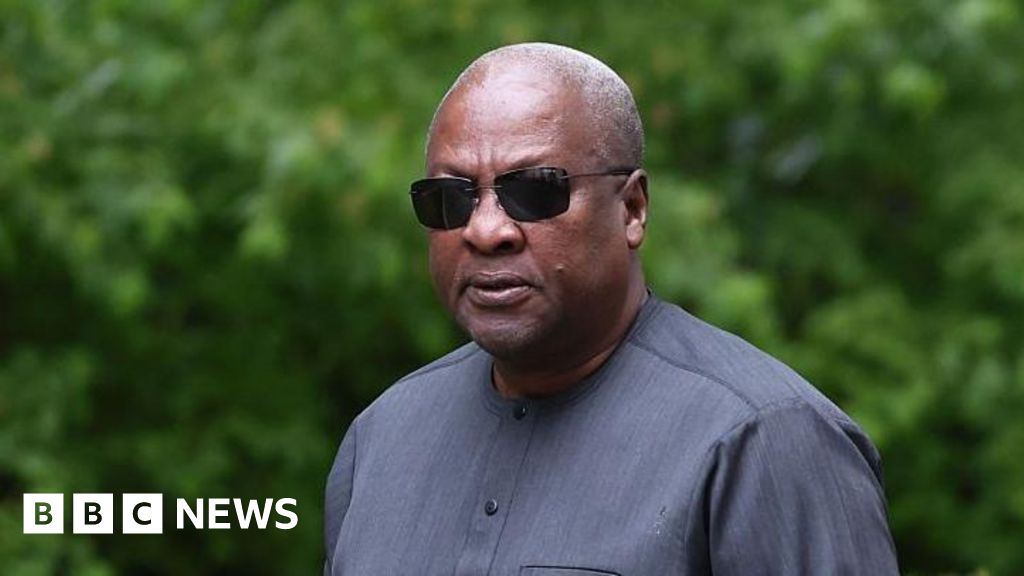
President John Mahama, speaking at Chatham House in London on 19 May 2025, confirmed that his legal counsel and attorney general would examine the bill before any presidential assent is granted. “We will look at it and make sure that everything is in order,” Mahama said, noting that the legislation would be referred to the Council of State if procedural or constitutional concerns emerged.
A Private Members’ Bill With Constitutional Consequences
The bill, passed by Ghana’s parliament on Friday 16 May 2025, proposes up to three years’ imprisonment for individuals identifying as lesbian, gay, bisexual, transgender, or queer. It also introduces a “duty to report” provision, requiring citizens to notify police of prohibited acts, a clause that legal analysts argue places an extraordinary surveillance burden on civil society.
Mahama’s framing of the bill as “a private members’ motion… not a government bill” is legally significant. Under Ghana’s constitutional architecture, the executive retains discretionary power to withhold assent, refer legislation to the Council of State, or challenge provisions before the Supreme Court. The president’s public hesitation signals that the bill’s passage does not automatically translate into enacted law.
Mahama also acknowledged procedural lapses in the bill’s parliamentary passage, which the Speaker of Parliament is now addressing. These procedural irregularities compound existing constitutional vulnerabilities: a near-identical 2024 version of the bill faced multiple Supreme Court challenges, which former President Nana Akufo-Addo cited as justification for withholding assent before leaving office.
Legislative History Reveals Institutional Friction
This is the second iteration of the legislation to clear parliament. The original bill was introduced in August 2021 following the closure of an LGBTQ+ resource centre in Accra. After its 2024 passage, it was stalled by judicial challenges and executive inaction before lapsing with the end of Akufo-Addo’s term.
The current version, reintroduced in 2025 by a cross-party group of MPs, contains notable amendments relative to its predecessor. Legal, healthcare, and media professionals are now exempted from punishment when providing medical treatment or reporting on LGBTQ+ issues. However, individuals identifying as “allies” of LGBTQ+ people remain subject to criminal penalties.
Ghana’s parliamentary minority has pushed back against these amendments, arguing the revisions have weakened the legislation’s deterrent effect. Minority spokesperson John Ntim Forjour stated: “The bill appears, and not only appears, substantially has lost the force and the bite and the thrust, the deterrence, the efficacy that it contained and carried in 2024.” The intra-parliamentary disagreement reflects the difficulty of legislating on socially contested terrain while maintaining legal coherence.
Rights Frameworks and International Obligations
Human Rights Watch formally recommended the bill’s abandonment in a submission to Ghana’s constitutional and legal affairs committee, arguing that the legislation violates protections for sexual minorities enshrined in Ghana’s 1992 Constitution and under international conventions to which Ghana is a signatory, including the African Charter on Human and Peoples’ Rights.
The African Commission on Human and Peoples’ Rights has, in prior resolutions, called on AU member states to end violence and discrimination based on sexual orientation. Ghana’s bill, if enacted in its current form, would place Accra in direct tension with these continental human rights commitments, creating a governance contradiction that complicates Ghana’s positioning as a rule-of-law anchor in West Africa.
Ghana’s existing criminal code already prohibits same-sex relationships under statutes inherited from British colonial legislation. Advocates of the new bill argue it reinforces Ghanaian family values and responds to domestic social pressures. Since assuming office, Mahama has faced sustained lobbying from religious leaders to strengthen anti-gay measures, a dynamic that illustrates the political economy of legislating on identity in democratic systems with strong faith-based constituencies.
Regional Pattern: West African States Tighten LGBTQ+ Laws
Ghana’s legislative trajectory is not isolated. Senegal’s parliament approved comparable legislation in March 2025, prescribing a maximum prison term of 10 years for same-sex acts and criminalising the “promotion” of homosexuality. Uganda enacted a law in 2023 introducing the death penalty for certain same-sex acts, drawing international sanctions and investor concern.
The regional pattern carries measurable governance costs. Uganda’s 2023 Anti-Homosexuality Act triggered the suspension of World Bank financing for new public projects in the country, a precedent that investors and multilateral lenders are watching closely in the Ghanaian context. Ghana, currently engaged in an active IMF programme and seeking to rebuild investor confidence following its 2022 debt restructuring, operates in a more constrained fiscal environment than Uganda did when Kampala absorbed those penalties.
For ECOWAS, the proliferation of such legislation across member states raises questions about the bloc’s capacity to uphold the human rights standards embedded in its founding protocols. ECOWAS’s 1993 revised treaty commits member states to the promotion and protection of human and peoples’ rights, provisions that regional civil society organisations are increasingly invoking in response to legislative trends across the bloc.
Executive Review as a Governance Mechanism
Mahama’s stated intent to subject the bill to executive legal review before assent represents a legitimate constitutional exercise. Ghana’s Council of State, a consultative body comprising former presidents, regional representatives, and presidential nominees, provides an additional layer of deliberation before legislation becomes law. Its involvement would extend the review timeline and potentially surface constitutional objections that redirect or delay enactment.
The Supreme Court remains the ultimate arbiter. Given that the 2024 version of the bill was already under judicial challenge when it lapsed, legal challenges to the 2025 version are widely anticipated. Ghana’s judiciary has demonstrated institutional independence on high-profile constitutional questions, and the Court’s prior engagement with this legislation establishes a precedent for substantive review rather than procedural dismissal.
For Ghana’s governance credibility, the manner in which the executive and judiciary handle this bill carries weight beyond the specific provisions at stake. A transparent, constitutionally grounded review process, one that engages legal experts, civil society, and Ghana’s international obligations, would reinforce the institutional legitimacy that underpins Accra’s standing as a regional governance reference point. A rushed or politically driven assent, by contrast, would signal that executive accountability mechanisms bend under social pressure, a precedent with implications well beyond LGBTQ+ rights.
Ghana’s partners across West Africa, multilateral creditors, and regional institutions will be watching whether the country’s constitutional architecture delivers the deliberative governance it was designed to provide.