A targeted diplomatic intervention by Accra has unlocked a bilateral agricultural trade dispute with Ouagadougou, restoring egg exports and tomato imports while setting in motion a formal governance architecture for managing future commercial frictions.
A Quiet Disruption Along a Critical Corridor
The trouble began when Burkina Faso’s authorities imposed restrictions on egg imports from Ghana, citing quality concerns linked to exporting countries across the region. The measure hit producers in the Dormaa area particularly hard. Dormaa, situated in Ghana’s Bono Region near the Burkinabè border, functions as a key node in the informal and formal poultry trade that flows northward into landlocked Burkina Faso. For smallholder egg exporters operating on thin margins, the abrupt closure of that market was not a regulatory inconvenience but a direct blow to livelihoods.
The restrictions also curtailed Ghanaian importers’ access to Burkinabè tomatoes, disrupting a flow of agricultural produce that Ghanaian consumers and processors depend on seasonally. What appeared at first as a bilateral irritant quickly exposed a structural vulnerability: the absence of a standing dispute-resolution mechanism between two neighbours whose trade relationship had been growing steadily.
A High-Level Delegation Moves Quickly
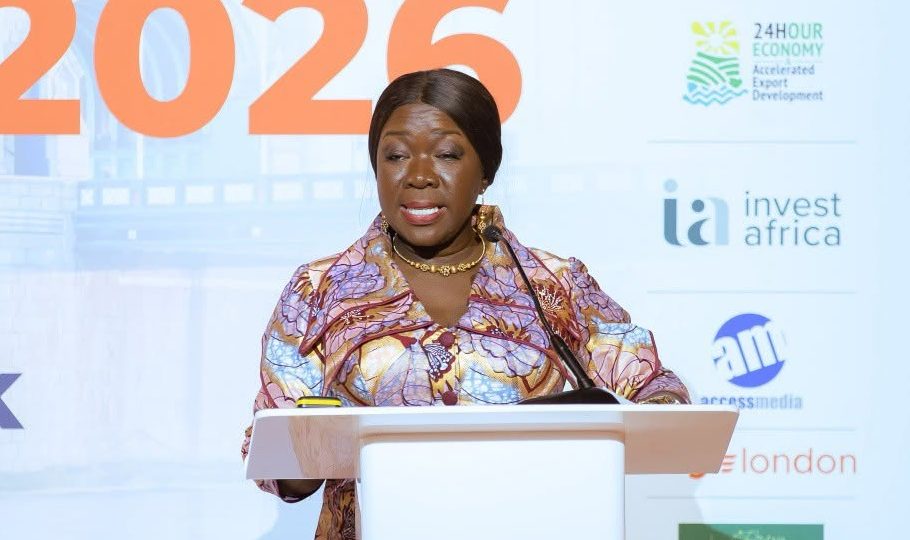
Accra moved to address the impasse on 17 July 2025, when a high-level Ghanaian delegation traveled to Ouagadougou for direct negotiations. The delegation was led jointly by Minister for Trade, Agribusiness and Industry Elizabeth Ofosu-Adjare and Minister for Food and Agriculture Eric Opoku, a pairing that signaled the cross-sectoral nature of the dispute. Ghana’s Ambassador to Burkina Faso, H.E. Sem Kenneth Akibate, anchored the diplomatic dimension, while technical representatives from the Ministry of Trade and private-sector actors, including egg exporter associations, provided the commercial intelligence that gave the talks operational grounding.
By the end of that Friday session, both sides had agreed to lift the restrictions. Ghanaian eggs would return to Burkinabè markets; Burkinabè tomatoes would resume flowing south. The speed of the resolution reflected both the political will on each side and the economic urgency that had built up since the restrictions were first imposed.
Building Institutions to Prevent the Next Disruption
The more consequential outcome of the 17 July talks was not the immediate trade restoration but the institutional commitments that accompanied it. Ghana and Burkina Faso agreed to establish a Joint Technical Committee mandated to monitor trade flows, identify emerging frictions, and resolve disputes before they escalate into market closures. This kind of standing bilateral mechanism is precisely what ECOWAS’s trade liberalization architecture envisions at the national implementation level, yet it has historically been absent or dormant between many member states.
Beyond the committee, the two governments committed to negotiating a formal Bilateral Trade Agreement designed to reduce barriers, expand market access, and provide a legal framework for goods and services exchange. If concluded, such an agreement would complement Ghana’s obligations under the African Continental Free Trade Area (AfCFTA), which entered its operational phase in 2021 and explicitly encourages member states to deepen bilateral and regional trade arrangements consistent with its protocols. Burkina Faso, despite the political turbulence it has experienced since the 2022 coup, remains an AfCFTA signatory and a full ECOWAS member state, giving any bilateral framework a recognized multilateral anchor.
The Trade Numbers Behind the Diplomacy
The diplomatic energy invested in this resolution is proportionate to the commercial stakes. Ghana’s exports to Burkina Faso grew from US$573 million in 2024 to US$637 million in 2025, according to figures released by the Ministry of Trade, Agribusiness and Industry. That trajectory, an increase of roughly 11 percent year-on-year, positions Burkina Faso as a significant and expanding destination for Ghanaian goods, particularly processed agricultural products and manufactured consumer items.
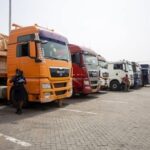
Burkina Faso’s landlocked geography makes it structurally dependent on coastal neighbors like Ghana for import access and export corridors. Ghana’s port infrastructure at Tema, connected to Ouagadougou via the N1 highway, serves as a primary logistics artery for Burkinabè trade. That dependency cuts both ways: it gives Accra commercial leverage but also means that any sustained disruption in bilateral trade imposes real costs on Ghanaian exporters and transporters whose supply chains run north.
The engagement also touched on Ghana’s participation in Burkina Faso’s International Arts and Crafts Trade Fair, known as SIAO. Minister Ofosu-Adjare confirmed that Ghana would send a high-level delegation to showcase locally manufactured products and services, a soft-power commercial move that reinforces the broader bilateral relationship beyond purely agricultural trade.
Regional Governance Implications
The Ghana-Burkina Faso episode carries lessons that extend beyond the two countries. Across West Africa, bilateral trade disputes routinely fester because member states lack the institutional plumbing to manage them: no standing committees, no agreed sanitary and phytosanitary protocols, no fast-track diplomatic channels for commercial grievances. ECOWAS’s Trade Liberalization Scheme has been in place since 1990, yet non-tariff barriers, including unilateral quality-based restrictions of the kind Burkina Faso applied, continue to fragment the regional market.
Ghana’s response model here is instructive. Rather than escalating through formal ECOWAS dispute channels, which are slow and politically cumbersome, Accra deployed a cabinet-level bilateral mission with private-sector representation, achieved a rapid resolution, and used the momentum to negotiate a longer-term governance architecture. That sequencing, immediate relief followed by institutional consolidation, reflects a pragmatic approach to regional trade governance that other ECOWAS pairs could replicate.
For investors and agribusiness operators active in the Ghana-Burkina Faso corridor, the establishment of the Joint Technical Committee and the prospect of a formal Bilateral Trade Agreement represent a meaningful reduction in policy risk. Predictable dispute resolution lowers the cost of cross-border investment and encourages the kind of supply-chain integration that AfCFTA’s architects designed the agreement to catalyze. Whether the committee becomes operational and the bilateral agreement reaches signature will test whether the political commitment expressed in Ouagadougou on 17 July 2025 translates into durable institutional practice.