The fatal shooting of a Ghanaian citizen in Cape Town on 29 June 2026 has produced a pointed institutional disagreement between South African law enforcement and Ghana’s Ministry of Foreign Affairs, raising substantive questions about how West African governments gather and verify information before issuing diplomatic statements on crimes against their nationals abroad.
South African Police Service (SAPS) in the Western Cape confirmed that 35-year-old Kwabena Boagen was shot and killed at approximately 3:45 p.m. at the Nyanga Terminus in Cape Town, in front of the NTG Hair Salon and Shoe Repairs. Unidentified gunmen opened fire on Mr. Boagen before fleeing the scene; Emergency Medical Services pronounced him dead on arrival. SAPS has since opened a murder investigation, with detectives from the Nyanga unit leading the inquiry. A post-mortem examination is underway, conducted by South Africa’s Department of Health in accordance with domestic legal procedures.
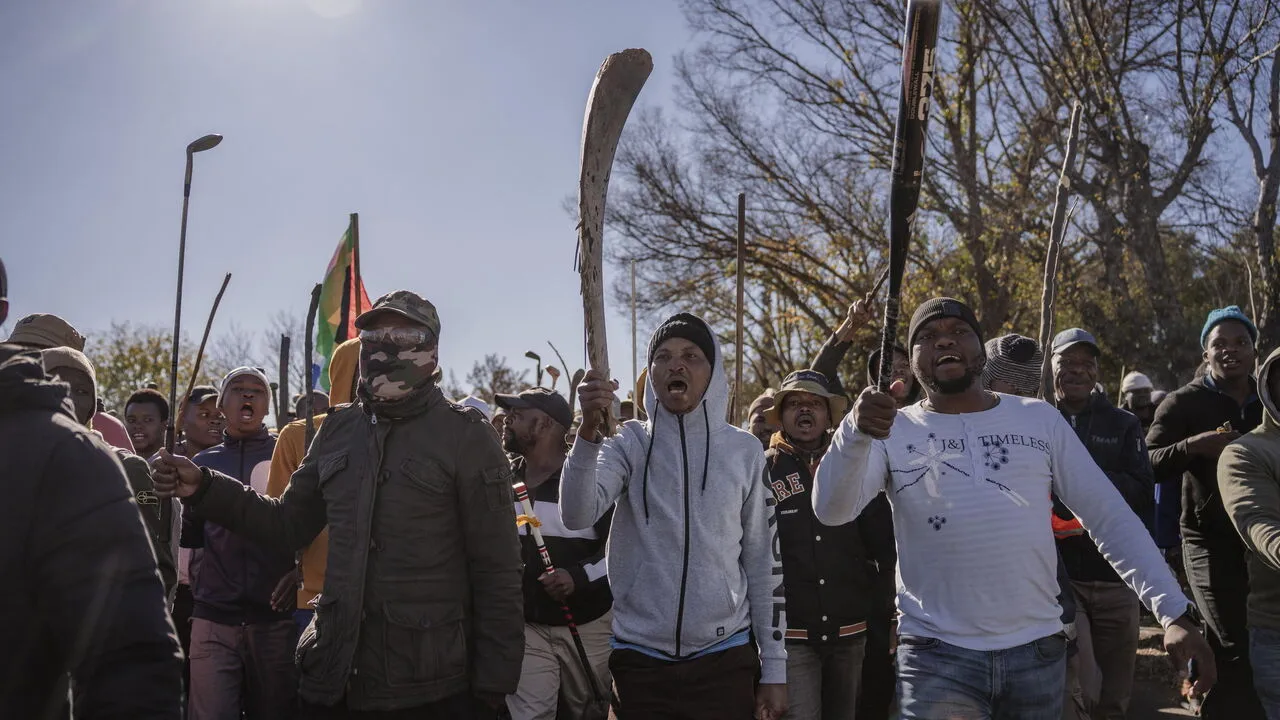
The institutional friction emerged when Ghana’s Ministry of Foreign Affairs issued a public condemnation characterising the killing as connected to anti-immigrant demonstrations and xenophobic attacks in Khayelitsha, the township where Mr. Boagen resided. SAPS directly contradicted that framing, stating it holds no official record of any such incident occurring in Khayelitsha, and that its own preliminary crime scene findings point to extortion as the probable motive. Mr. Boagen lived in Khayelitsha but was killed in the adjacent Nyanga district, where he worked.
A Consular Intelligence Deficit With Regional Implications
The divergence between Accra’s characterisation and SAPS’s operational account is not merely a matter of semantics. When a sovereign government publicly attributes a citizen’s death to xenophobic violence without verified forensic or investigative grounding, it risks inflaming bilateral relations, generating misinformation within diaspora communities, and, critically, obscuring the actual criminal networks that may have targeted the victim. Extortion-linked killings in South African townships frequently involve organised syndicates that prey specifically on foreign-owned businesses and traders, a pattern documented by the Global Initiative Against Transnational Organised Crime in its assessments of informal economy criminality in the Western Cape.
Ghana’s diplomatic network in South Africa operates through its High Commission in Pretoria and a Consulate-General in Johannesburg. The speed with which the Ministry of Foreign Affairs in Accra issued its statement, apparently without coordinating with SAPS or confirming the precise location of the incident, points to a structural weakness in real-time consular intelligence. For a country whose diaspora in South Africa numbers in the tens of thousands and whose nationals remain economically active in Cape Town’s informal sector, that gap carries real costs.
The episode invites comparison with the consular frameworks maintained by Senegal and Nigeria, both of which have invested in dedicated diaspora protection units with direct liaison functions to host-country law enforcement. Nigeria’s consular response architecture in South Africa was substantially reformed following the 2019 xenophobic violence episodes that displaced hundreds of West African traders; Abuja’s subsequent engagement with Pretoria produced a bilateral rapid-response protocol, however imperfectly implemented. Ghana has no equivalent publicly documented mechanism.
South Africa’s Extortion Economy and Its West African Victims
The SAPS framing of extortion as the probable motive situates Mr. Boagen’s killing within a well-documented and expanding criminal economy in Cape Town’s townships. Nyanga has consistently recorded among the highest murder rates of any South African suburb, driven substantially by gang activity, protection rackets targeting informal traders, and inter-syndicate violence. Foreign nationals, including Ghanaians, Nigerians, Zimbabweans, and Ethiopians, disproportionately operate small retail and service businesses in these zones, making them structurally vulnerable to extortion demands.
This is a governance failure with a specific institutional address: South Africa’s capacity to police informal township economies and protect non-citizen residents remains chronically under-resourced, a point the South African Human Rights Commission has raised repeatedly in its annual reports. SAPS’s confirmation that detectives have contacted a relative of the deceased and conveyed condolences reflects procedural compliance, but the absence of any arrest at this stage, combined with the broader pattern of impunity for extortion-related killings in Nyanga, suggests the investigative challenge is significant.
For West African governments and ECOWAS as a regional body, the vulnerability of diaspora traders in South Africa’s informal economy represents a governance concern that extends beyond bilateral diplomacy. ECOWAS’s free movement protocols apply within the fifteen-member bloc, but the organisation has no formal framework governing the protection of West African nationals in third countries. The African Union’s Agenda 2063 envisions a continental passport and expanded mobility architecture, yet the institutional infrastructure to protect African migrants in non-AU-member states remains underdeveloped.
What the Nyanga killing makes concrete is the need for Ghana, and West African states more broadly, to build verifiable, real-time consular intelligence systems rather than reactive public communications that risk diplomatic embarrassment and, more importantly, fail the nationals they are meant to protect. The policy pathway is specific: structured liaison agreements between West African high commissions and host-country police services, standardised incident verification protocols before ministerial statements are issued, and dedicated diaspora protection officers with operational rather than ceremonial mandates. These are institutional design questions, and they have institutional answers.