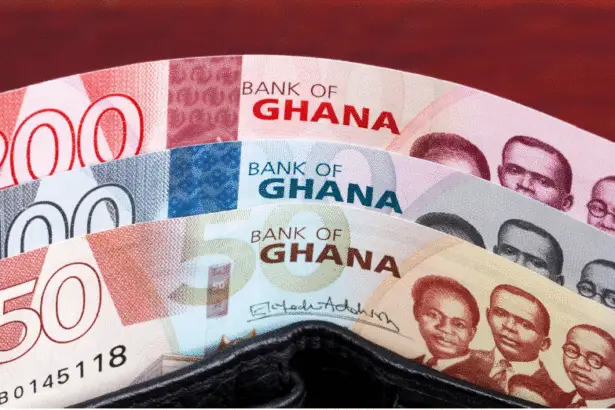
When the World Bank’s October 2026 Africa Economic Update ranked the Ghana cedi as the worst-performing currency among all African currencies it monitors during the second quarter of 2026, the finding was not merely a statistical footnote. It was a precise institutional signal about the fragility of Ghana’s external position, and about the governance mechanisms, or the absence of them, that determine how a frontier economy weathers global shocks.
Between March and June 2026, the cedi weakened by nearly 10 percent, the steepest maximum depreciation recorded across the 22 non-CFA franc currencies tracked in the World Bank’s survey, which examined exchange-rate movements following the escalation of the conflict in the Middle East. Lesotho, Namibia, South Africa, and Eswatini each recorded maximum weakening of roughly 7 percent, followed by the Seychelles rupee at close to 7 percent, and the currencies of the Democratic Republic of Congo and Uganda at approximately 6 percent and 5 percent respectively. Botswana, Zambia, and Mauritius registered comparatively contained depreciations, generally between 3 and 5 percent. Ghana stood apart at the extreme end of this distribution.
The World Bank’s causal framework is instructive. The sharp increase in oil and energy prices following the Middle East escalation raised import bills across net energy-importing economies, intensifying demand for US dollars and depleting foreign exchange buffers. Simultaneously, heightened geopolitical uncertainty triggered a flight to safety in global financial markets, redirecting capital away from emerging and frontier economies. For countries carrying significant external debt in US dollars, the compound effect was severe: currency depreciation simultaneously inflated the local-currency cost of debt servicing, tightening fiscal space precisely when governments needed room to absorb the external shock.
Ghana sits squarely at the intersection of all three vulnerabilities. It is a net energy importer despite its offshore oil production, which has historically underdelivered on revenue projections. Its external debt-to-GDP ratio, elevated by successive years of fiscal deficits and a restructuring process that only concluded in 2024 under the IMF’s Extended Credit Facility, leaves the sovereign acutely sensitive to exchange-rate movements. And its foreign exchange reserves, while recovering from critically low levels, remain insufficient to provide the kind of buffer that allowed more resilient African economies to absorb the Q2 2026 shock without comparable currency damage.
The contrast with commodity-exporting peers is analytically sharp. Angola and Nigeria, both oil exporters, benefited from higher crude prices during the same period, converting geopolitical disruption into export revenue gains that cushioned their exchange rates. South Africa, despite its own structural challenges, drew support from stronger global demand for gold and platinum, providing foreign currency inflows that partially offset risk-aversion pressures. Ghana’s commodity export base, anchored in gold, cocoa, and oil, did not deliver equivalent insulation, pointing to questions about how effectively export earnings are intermediated into the domestic foreign exchange market and whether the Bank of Ghana’s reserve management framework is calibrated to absorb asymmetric shocks of this nature.
This is where the governance dimension becomes central. The Bank of Ghana’s capacity to defend the cedi during external shocks depends on the adequacy of its gross international reserves, the credibility of its monetary policy framework, and the degree to which fiscal discipline reduces the sovereign’s call on foreign exchange for debt servicing. All three dimensions were under strain in Q2 2026. The IMF program, while providing a structural anchor, does not eliminate the underlying vulnerabilities; it manages them. A 10 percent maximum depreciation, even if partially reversed, signals that the management framework was insufficient to absorb a shock of this magnitude without material exchange-rate pass-through into domestic inflation and import costs.
By August 2026, the cedi had recovered some ground. The World Bank notes that pressure across African currencies had broadly eased by end-August, with only 10 of the 22 monitored currencies remaining weaker than their end-February levels. Ghana was among them, meaning the cedi had not fully recovered its pre-shock value even after several months. This persistence matters: it suggests that the depreciation was not purely speculative or sentiment-driven, which can reverse quickly, but was at least partially anchored in fundamental imbalances in Ghana’s balance of payments and reserve position.
Within the ECOWAS monetary integration framework, Ghana’s exchange-rate volatility carries implications beyond its own borders. The ECOWAS single currency project, the eco, has been repeatedly deferred, but its eventual architecture will require member states to demonstrate exchange-rate stability and fiscal convergence as preconditions for monetary union. Ghana, as one of ECOWAS’s larger non-WAEMU economies alongside Nigeria, is central to that convergence process. Persistent cedi depreciation widens the gap between Ghana’s monetary conditions and those of the WAEMU zone, where the CFA franc’s peg to the euro provides a structurally different and notably more stable exchange-rate environment. Côte d’Ivoire and Senegal, Ghana’s immediate regional competitors for investment and trade flows, operate within that more stable monetary framework, giving them a predictability advantage that Ghana’s exchange-rate volatility actively erodes.
For investors and trade partners operating under the AfCFTA framework, currency instability introduces transaction costs and hedging requirements that reduce the effective competitiveness of Ghanaian exports and increase the risk premium attached to Ghanaian assets. The AfCFTA’s promise of expanded intra-African trade depends, in part, on monetary predictability that allows businesses to plan cross-border transactions without absorbing excessive currency risk. A cedi that depreciates 10 percent in a single quarter, even if it recovers partially, complicates that calculus in ways that aggregate trade data may not immediately capture but that individual business decisions reflect in real time.
The policy pathway runs through institutional discipline on multiple fronts simultaneously. The Bank of Ghana must rebuild and maintain reserves at levels that provide genuine shock absorption capacity, not merely compliance with IMF program benchmarks. The Ministry of Finance must sustain fiscal consolidation in a manner that reduces the sovereign’s structural demand for foreign exchange, breaking the cycle in which fiscal deficits feed currency pressure and currency pressure inflates debt-servicing costs. And Ghana’s trade and investment policy must accelerate the diversification of its export base, reducing dependence on a narrow set of commodities whose prices are determined by global markets entirely beyond Accra’s control.
The World Bank’s ranking is a data point, but it is also a governance audit. It measures not only what happened to the cedi between March and June 2026, but what the architecture of Ghana’s economic institutions permitted to happen. Reversing that ranking in future quarters requires more than favorable commodity prices or a de-escalation of Middle East tensions. It requires the kind of sustained institutional reform, in reserve management, fiscal governance, and monetary credibility, that transforms a frontier economy’s vulnerability profile over time, not just in the next quarterly survey.