The arrest of four officers from the Customs Division of the Ghana Revenue Authority (GRA) in connection with a nearly 3.9-tonne cocaine shipment intercepted by French authorities reveals a governance failure that extends well beyond Ghana’s borders. At stake is not merely a narcotics enforcement question, but the structural integrity of the port institutions that underpin West African trade under the African Continental Free Trade Area (AfCFTA) framework.
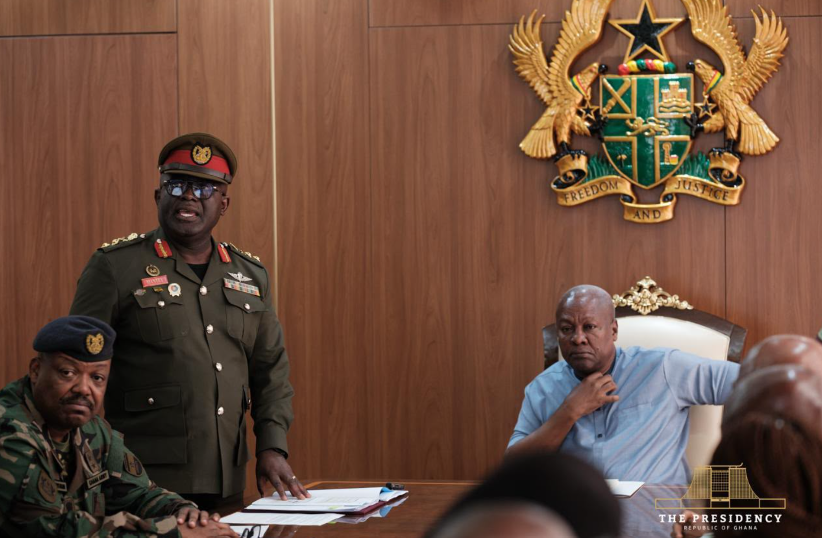
President John Dramani Mahama convened an urgent security meeting on 17 September with senior security chiefs, ordering the formation of an inter-agency task force mandated to produce a detailed counter-narcotics roadmap within two weeks. The speed of the presidential response signals political seriousness. Whether it translates into durable institutional reform is the harder question.
Customs Capture and the Structural Vulnerability of Ghana’s Ports
The cocaine shipment, which departed from Tema Port before French customs authorities intercepted the container, did not pass through Ghana’s borders undetected by accident. The involvement of GRA customs officers points to a pattern that anti-corruption analysts describe as “regulatory capture at the port level,” where enforcement personnel become embedded in the trafficking networks they are supposed to disrupt. Ten individuals are currently in detention as investigations proceed, with six already denied bail.
Tema Port is Ghana’s primary maritime gateway and one of the busiest container terminals in West Africa, handling a significant share of landlocked ECOWAS member states’ imports and exports. Its strategic position makes it both an asset for regional trade and a high-value target for transnational criminal networks. The United Nations Office on Drugs and Crime (UNODC) has documented a steady increase in cocaine transshipment through West African ports over the past decade, with traffickers systematically exploiting gaps in scanner coverage, manifest verification, and inter-agency data sharing.
Ghana has invested in port modernisation infrastructure, including scanning equipment and electronic cargo tracking systems. Yet the Tema seizure demonstrates that technology alone cannot substitute for institutional integrity. When customs officers themselves facilitate shipments, scanner logs can be manipulated, container selections can be redirected, and manifest discrepancies can be buried. The governance failure here is not a gap in hardware; it is a gap in accountability architecture.
Regional Credibility and the AfCFTA Dividend at Risk
Ghana’s positioning as a hub for AfCFTA implementation relies directly on the credibility of its trade facilitation institutions. Accra hosts the AfCFTA Secretariat, a fact that carries both symbolic and practical weight: Ghana is expected to model the governance standards that continental free trade requires. A port environment compromised by narcotics trafficking and customs corruption sends a damaging signal to regional trading partners and foreign investors evaluating supply chain reliability.
The reputational stakes are concrete. Ivory Coast, Ghana’s most direct regional competitor for trade hub status, has invested heavily in port infrastructure at Abidjan and San Pedro, and its customs administration operates under the WAEMU zone’s harmonised regulatory framework. Nigeria’s Apapa Port, despite its well-documented congestion and governance problems, continues to dominate by volume. Senegal’s Dakar Port is positioning itself aggressively for Atlantic trade flows. Ghana cannot afford for Tema to become associated with narcotics transshipment in the risk assessments of multinational logistics firms and development finance institutions.
Beyond reputational damage, there is a direct regulatory dimension. The European Union, which intercepted the shipment through French customs, maintains import controls and supply chain due diligence requirements that could trigger enhanced scrutiny of Ghanaian export containers. Such scrutiny, if formalised into systematic checks, would add time and cost to legitimate Ghanaian exports, effectively penalising compliant traders for the failures of compromised officials.
The Inter-Agency Task Force: Institutional Design Determines Outcomes
Presidential task forces are a familiar instrument in Ghanaian governance, and their record is mixed. The critical variable is institutional design: which agencies are represented, what enforcement authority the task force commands, whether its recommendations are binding on line ministries, and what accountability mechanism ensures the two-week roadmap is implemented rather than filed.
The meeting reviewed both recent trafficking cases and the existing security structures at Ghana’s ports. This dual focus matters. Effective counter-narcotics governance requires simultaneous action on three distinct levels: criminal prosecution of individuals already implicated, structural reform of port oversight systems, and interoperability between the GRA Customs Division, the Ghana Police Service, the Ghana National Intelligence Bureau, and the Narcotics Control Commission (NACOC). Without formal data-sharing protocols and joint operational authority, inter-agency task forces tend to produce coordination on paper while preserving jurisdictional silos in practice.
Ghana’s NACOC was restructured under the Narcotics Control Commission Act of 2020, giving it broader investigative and prosecutorial powers. Whether the task force will be anchored within NACOC’s mandate or operate as a parallel presidential structure will determine whether its outputs integrate into existing institutional frameworks or generate a separate bureaucratic layer.
Policy Pathways: What Durable Reform Requires
The two-week roadmap deadline creates political momentum, but sustainable port governance reform operates on a longer institutional cycle. Three policy directions deserve priority consideration.
First, Ghana should pursue structured engagement with INTERPOL’s Project COCAIR and UNODC’s CRIMJUST programme, both of which provide technical assistance specifically designed for West African port environments. Regional intelligence-sharing with ECOWAS member states, particularly Nigeria, Togo, and Benin, whose ports also face transshipment pressure, would reduce the information asymmetries that trafficking networks exploit.
Second, the GRA Customs Division requires a governance audit that goes beyond the current criminal investigation. Asset declaration requirements for customs officers, randomised assignment of container inspection duties, and independent oversight of scanner operation logs are standard anti-corruption tools deployed by peer institutions in Senegal and Ivory Coast. Ghana’s customs reform agenda should benchmark against WAEMU harmonisation standards even where Ghana, as a non-WAEMU member, is not formally bound by them.
Third, the prosecutorial process for the ten individuals currently in detention will itself function as a governance signal. Transparent, expedited proceedings that result in meaningful accountability, including for any officials above the operational level who enabled the trafficking network, will do more for institutional credibility than any task force roadmap. Conversely, if prosecutions stall or charges are reduced under political pressure, the message to port-level officers across the region is that systemic risk remains low.
Ghana built its regional governance reputation on democratic resilience and institutional reform. Tema Port’s vulnerability to narcotics capture is a test of whether that reputation extends to the unglamorous but economically critical domain of customs integrity. The task force’s roadmap will be judged not by what it recommends, but by what it changes.