
When French customs officers at the Port of Dunkirk intercepted nearly 3.9 tonnes of cocaine on 10 September 2026, concealed within a container of plastic waste that had departed Ghana, they did more than disrupt a single narcotics shipment. They exposed a rupture in the institutional fabric of one of West Africa’s most scrutinised trade hubs, and raised a question that extends well beyond Ghana’s borders: how deeply have criminal networks penetrated the customs infrastructure that underpins regional commerce?
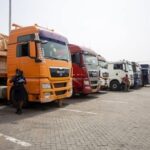
The cocaine, valued by French authorities at approximately €225 million, arrived at Dunkirk through Tema Port, Ghana’s principal commercial gateway and one of the busiest container terminals in the Gulf of Guinea. Four of the ten individuals currently held in connection with the alleged export are officers of the Customs Division of the Ghana Revenue Authority (GRA). The Kwabenya Circuit Court denied bail to six suspects on 17 September 2026 as investigations continued. These are not peripheral actors. Their alleged involvement in the customs scanning process at Tema Port points to a systemic failure, not a peripheral lapse.
Sammi Awuku, Member of Parliament for Akuapem North, was among the first legislators to frame the incident in institutional terms. Writing on Facebook on 18 September 2026, he argued that the seizures should not be treated as isolated incidents, insisting that “the growing concern about Ghana being used as a transit point for illicit drugs is too serious for us to treat it as an optics exercise.” His earlier intervention had already prompted a consequential administrative correction: after questioning the initial exclusion of the Ministers for the Interior and Transport from a high-level border-security review convened by President John Dramani Mahama, the government revised the invitation list to include both ministers. A small detail, but a revealing one. It suggests that the institutional response, at least initially, was being shaped more by optics than by operational logic.
President Mahama has since directed the formation of an inter-agency task force, given two weeks to produce a roadmap for preventing narcotics trafficking through Ghana’s borders. The mandate is urgent. Whether the timeline is adequate to address what is, in reality, a multi-layered governance failure is a different question entirely.
Ghana’s predicament cannot be assessed in isolation. West Africa has become one of the primary transit corridors for South American cocaine destined for European markets, a structural shift documented by the United Nations Office on Drugs and Crime (UNODC) over the past decade. Guinea-Bissau, once described as Africa’s first narco-state, drew international attention to the region’s vulnerability in the late 2000s. Since then, seizures linked to Senegal, Togo, Benin and Nigeria have confirmed that the trafficking networks are adaptive, well-financed and deliberately exploit weak institutional nodes. Ghana, long regarded as a regional model of democratic governance and customs modernisation, is now confronting the uncomfortable reality that institutional reputation does not confer institutional immunity.
The implications for regional integration are concrete. Ghana is a founding member of ECOWAS and a significant participant in the African Continental Free Trade Area (AfCFTA), whose secretariat is headquartered in Accra. AfCFTA’s architecture depends on the credibility of member states’ customs and trade-facilitation systems. If Tema Port, one of the designated entry points for continental trade flows, is demonstrated to be penetrable by organised criminal networks, the reputational damage extends to the AfCFTA framework itself. Investors and trading partners calibrate risk not only by country but by corridor. A compromised Tema weakens the case for routing intra-African trade through Ghana’s infrastructure.
The Minority in Parliament has called for an independent parliamentary inquiry into recent narcotics seizures linked to Ghana, a demand that reflects a broader accountability deficit. Parliamentary oversight of customs and border institutions in West Africa is chronically underfunded and episodic, activated by scandal rather than embedded in routine governance. Ghana’s Parliament has the constitutional authority and, arguably, the political incentive to conduct a genuinely independent review. The question is whether the inquiry, if convened, will examine structural mechanisms, procurement of scanning technology, staffing and vetting of customs officers, inter-agency data sharing, or confine itself to the immediate criminal allegations.
Customs integrity is not merely a law-enforcement matter. It is a trade-competitiveness variable. The World Bank’s Logistics Performance Index consistently ranks customs efficiency as a primary determinant of a country’s attractiveness as a trade hub. Ghana ranked 92nd globally in the 2023 edition, a position that reflects genuine progress but also persistent gaps. Ivory Coast, Ghana’s principal regional competitor for West African trade flows, has invested heavily in port modernisation and customs digitisation at Abidjan. A sustained perception that Tema Port is a narcotics transit node would accelerate cargo diversion toward Abidjan, with direct consequences for Ghana’s port revenues, logistics employment and its ambitions as AfCFTA’s continental trade hub.
The institutional architecture of the response matters as much as its speed. An inter-agency task force with a two-week mandate can produce recommendations. Implementing them requires something more durable: a standing oversight mechanism with prosecutorial independence, forensic audit capacity and a mandate that survives political cycles. The GRA’s Customs Division needs not only internal disciplinary proceedings but an external integrity audit, ideally conducted in partnership with the World Customs Organization (WCO), of which Ghana is a member, and potentially with technical support from INTERPOL’s Project STOP or similar frameworks targeting customs corruption.
ECOWAS, for its part, has a direct institutional interest in this outcome. The Authority of Heads of State and Government has repeatedly endorsed frameworks for cross-border security cooperation, including the ECOWAS Counter-Terrorism Framework and various maritime security protocols under the Yaoundé Architecture. Narcotics trafficking through member states’ ports is explicitly within the scope of these instruments. The bloc’s capacity to enforce collective standards remains constrained, but Ghana’s current crisis offers a practical opportunity to operationalise regional customs-integrity protocols rather than leave them as declaratory commitments.
Awuku’s warning that “Ghana cannot afford to normalise this” carries weight precisely because normalisation is the path of least institutional resistance. Investigations stall. Task forces report and dissolve. Ministers rotate. Criminal networks adapt. The 3.9 tonnes seized at Dunkirk represent, by most trafficking analysts’ estimates, a fraction of what moves undetected. The governance response to this moment will determine whether Ghana’s institutions prove capable of self-correction, or whether the country consolidates its emergence as a preferred transit node in a network that has already consumed the institutional credibility of other West African states. That is the choice embedded in this crisis. It is not abstract, and it will not wait.