A video clip, shared and reshared across WhatsApp groups and Facebook pages in Ghana’s Central Region, has landed a mid-level party operative in police custody and reopened a persistently unresolved question about where political speech ends and criminal liability begins in West Africa’s most celebrated democracy.
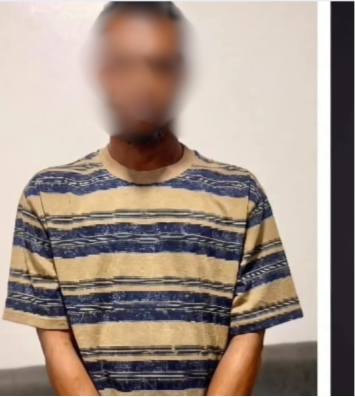
Prince Aboagye, a 38-year-old branch organiser for the National Democratic Congress (NDC) in the Agona West Constituency, was arrested by the Ghana Police Service after a video allegedly showing him accusing former Vice-President Dr Mahamudu Bawumia of murder, theft, and extramarital conduct circulated widely on social media. Dr Bawumia, who served as Vice-President under the New Patriotic Party (NPP) administration, is widely regarded as the NPP’s standard-bearer for the 2028 general election.
A Party Organiser, a Viral Video, and the Criminal Investigations Department
The Ghana Police Service confirmed that Aboagye is in custody while investigations proceed. Alex Asiedu, the Agona West Constituency Chairman of the NDC, acknowledged the arrest and noted that Aboagye had been invited by the Criminal Investigations Department (CID) in Accra to answer for the alleged misconduct. The progression from a constituency-level social media post to a CID summons in the capital signals the seriousness with which authorities are treating the matter.
Ghana’s legal framework on defamation is a patchwork of colonial-era statutes and more recent legislative updates, not all of which have kept pace with the realities of digital communication. The country repealed criminal libel provisions in 2001, a reform celebrated by press freedom advocates across the continent, yet civil defamation suits and related criminal charges under other statutes remain available instruments. Whether Aboagye’s case proceeds under civil or criminal provisions will determine both the legal stakes for him and the precedent set for future cases.
Digital Speech, Political Competition, and Institutional Guardrails
Ghana’s democratic credentials are among the strongest in West Africa, consistently ranking at or near the top of regional governance indices, including Mo Ibrahim Foundation assessments and Freedom House ratings. That reputation rests partly on a tradition of robust, often raucous political speech. The country has seen two peaceful transfers of power between the NDC and NPP since 2000, and its Electoral Commission retains credibility that many regional peers envy. Yet that democratic culture has always coexisted with legal mechanisms that can be deployed against political opponents, raising structural questions about how institutions balance protection of reputation against protection of expression.
The timing matters. With the 2028 electoral cycle beginning to take shape, Dr Bawumia’s positioning as the NPP’s presumptive flagbearer makes him a natural target for political criticism, satire, and, in cases like this one, allegations that cross into legally contested territory. The arrest of a branch-level organiser rather than a prominent figure does not diminish the governance question at stake: who decides where legitimate political criticism ends, and what institutional mechanisms govern that determination?
Regional Governance Standards and the Regulation of Online Political Speech
Across West Africa, governments are grappling with the regulation of digital political speech with varying degrees of institutional sophistication. Nigeria’s Cybercrimes Act has been invoked against journalists and activists in ways that drew sharp criticism from civil society and ECOWAS observers. Senegal saw digital communication laws tested during the political turbulence of 2023 and 2024. Côte d’Ivoire has maintained stricter controls on online expression, reflecting a different calibration between state authority and individual rights. Ghana’s approach, historically more permissive, now faces pressure to define its own standards with greater precision.
The ECOWAS Court of Justice has issued rulings affirming freedom of expression as a justiciable right under the ECOWAS Community Court’s jurisdiction, and the African Commission on Human and Peoples’ Rights has consistently held that criminal sanctions for expression must meet strict proportionality tests. Whether Ghana’s handling of the Aboagye case aligns with those regional and continental standards will not be determined by the arrest alone, but by the transparency and procedural integrity of the investigation and any subsequent proceedings.
What the Aboagye Arrest Reveals About Institutional Capacity
Beyond the immediate facts, the case exposes a structural gap in Ghana’s regulatory architecture. The country does not yet have a comprehensive digital communications law that clearly delineates the boundaries of online political speech, the standards for platform liability, or the procedural safeguards governing arrests linked to social media content. The Media Foundation for West Africa and the Ghana Journalists Association have both, in separate contexts, called for such a framework, arguing that the absence of clear rules creates space for selective enforcement that can chill legitimate political expression.
Investors and international partners monitoring Ghana’s governance environment will note that legal predictability in the digital sphere is increasingly a component of broader institutional risk assessments. The World Bank’s Doing Business indicators and the Ibrahim Index both weight rule-of-law consistency as a determinant of investment climate quality. A pattern of arrests tied to social media speech, without a transparent and consistently applied legal framework, introduces uncertainty that extends beyond the immediate political context.
For Aboagye himself, the outcome of the CID investigation will determine whether this becomes a cautionary tale about the limits of digital political expression or a test case that clarifies those limits through due process. For Ghana’s institutions, the more consequential question is whether the legal mechanisms engaged here are applied with the consistency and proportionality that democratic governance demands, and whether the country will use this moment to advance the legislative clarity that its digital public sphere urgently requires.