A Pattern That Demands Institutional Accountability
Three major cocaine interceptions in under three months, spanning three continents and implicating Ghana’s principal port, its main international airport and its domestic transport networks, constitute an institutional stress test, not a string of unrelated criminal incidents. The central governance question is not whether trafficking networks are exploiting Ghana’s infrastructure, but how deeply they have penetrated it and whether the country’s enforcement architecture is structurally equipped to respond.
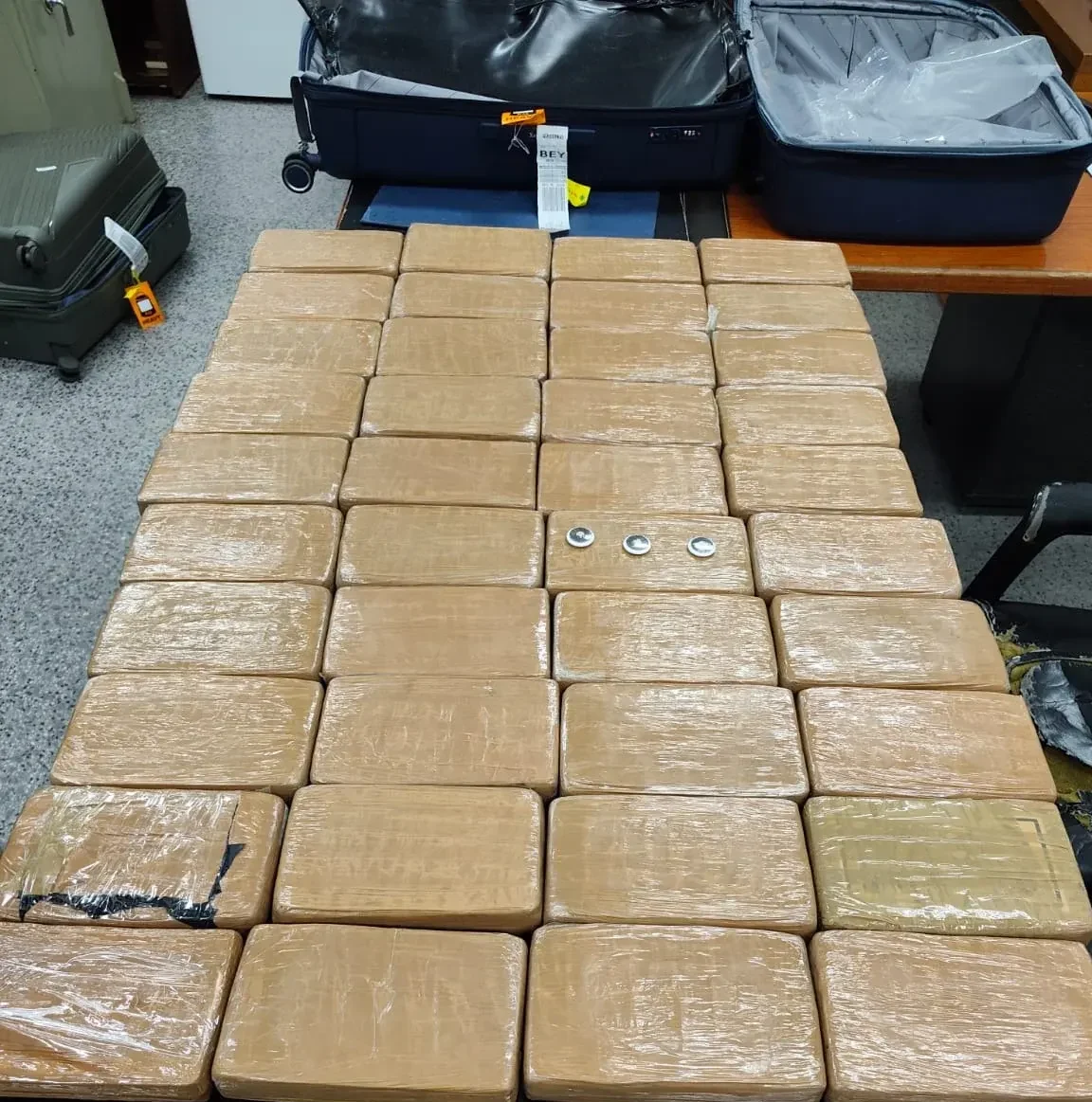
The arrest of a Syrian national at Beirut’s Rafic Hariri International Airport on 31 October 2026, after arriving from Accra carrying approximately 46.7 kilogrammes of cocaine concealed in 40 sophisticated packages fitted with electronic tracking devices, crystallised the problem. Lebanese authorities described the seizure as the largest cocaine interception in Beirut airport’s history. Ghana’s Narcotic Control Commission (NACOC) confirmed it is pursuing suspected accomplices in Accra, a disclosure that points to a domestic network operating with some degree of impunity.
Read alongside the near-four-tonne seizure at the Port of Dunkirk in France, where cocaine valued at approximately €225 million was concealed in a container declared as carrying plastic waste from Ghana, and the August 2026 interception of 866 parcels of suspected cocaine hidden in sacks of gari at a Tema Harbour warehouse, the incidents form a pattern that Ghana’s security institutions can no longer address through reactive press statements.
Tema Port and Kotoka: Infrastructure Assets or Institutional Vulnerabilities?
Ghana’s strategic geography has long positioned Tema Port as a natural gateway for West African trade. The port handles a significant share of landlocked neighbour transit cargo, and the government’s ambition to develop Ghana into a regional logistics and aviation hub has driven sustained investment in port and airport infrastructure. That same infrastructure, however, appears to be attracting a different category of user.
The Tema gari consignment, reportedly being loaded into a 40-foot container for export when police intervened, illustrates the sophistication of concealment methods. Trafficking networks embedded cocaine within a staple food commodity moving through a commercial export channel, a technique that exploits the high volume and routine nature of legitimate trade flows to evade detection. Three suspects were arrested, including a Dutch national, but the critical institutional question is how the consignment reached the point of container loading without triggering earlier detection.
The Dunkirk seizure compounds that question. A container declared as plastic waste, originating from Ghana, moved through the port system and across international shipping lanes before French authorities intercepted it. Investigations in Ghana produced arrests and court proceedings involving four accused persons, with allegations of links to Dutch fugitive Jos Leijdekkers, known as Bolle Jos, remaining subject to judicial determination. The case exposed the gap between Ghana’s declared export documentation and what its containers actually carry, a gap that reflects on both customs inspection capacity and the integrity of port personnel.
Regional Integration Stakes: What Ghana’s Reputation Means for West African Trade
Ghana’s ambition to serve as a trade and logistics hub is inseparable from its role within ECOWAS and the broader AfCFTA architecture. The African Continental Free Trade Area, which entered operational phase in 2021, depends on anchor economies maintaining credible trade facilitation systems. Ghana, as one of the AfCFTA Secretariat’s host countries, carries a particular institutional responsibility to demonstrate that its ports and logistics corridors meet international standards of security and transparency.
Repeated cocaine seizures linked to Ghanaian infrastructure generate externalities that extend well beyond national borders. Legitimate Ghanaian exporters already face the practical consequences: heightened cargo inspection regimes at European and Middle Eastern ports, extended clearance delays and elevated insurance and compliance costs. If major shipping lines or freight forwarders begin applying enhanced due diligence protocols specifically to Ghana-origin consignments, the cost burden falls disproportionately on smaller exporters operating in sectors such as cocoa, timber and non-traditional agricultural products.
The regional dimension matters equally. Ivory Coast, Ghana’s most direct competitor for West African logistics primacy, has invested heavily in Abidjan port modernisation and is actively courting the same international shipping and logistics partnerships that Ghana seeks. Senegal, buoyed by offshore oil revenues and the Dakar Agenda for economic transformation, is similarly positioning itself as a continental trade node. A sustained reputational deficit in Ghana’s port security would accelerate capital and routing decisions in favour of those alternatives.
The ECOWAS Narcotics Framework and Its Limits
ECOWAS adopted a Regional Action Plan on Drug Trafficking and Organised Crime, recognising that West Africa’s porous borders and underfunded enforcement institutions make the region structurally attractive to international trafficking networks. The plan emphasises intelligence-sharing, joint operations and harmonised legal frameworks among member states. Ghana’s bilateral cooperation with Lebanese authorities in the Beirut case demonstrates that operational coordination is possible. The deeper institutional deficit lies in whether that cooperation is systematic and data-driven or episodic and reactive.
WAEMU countries, operating under a more integrated monetary and regulatory framework, have developed somewhat more standardised customs and border management protocols. Ghana, as a non-WAEMU ECOWAS member, operates under a different regulatory environment, and the harmonisation of port security standards across the two blocs remains incomplete. That regulatory gap creates arbitrage opportunities that trafficking networks are evidently willing to exploit.
Governance Failures and the Corruption Variable
No serious analysis of drug transit through West African ports can avoid the corruption question. The UN Office on Drugs and Crime (UNODC) has consistently documented that large-scale trafficking through port infrastructure requires insider facilitation. Consignments of the scale intercepted at Tema and Dunkirk do not move through commercial export channels without some degree of complicity from personnel with access to port systems, documentation processes or inspection schedules.
Ghana’s anti-corruption institutions, including the Commission on Human Rights and Administrative Justice (CHRAJ) and the Office of the Special Prosecutor (OSP), have broad mandates but limited operational resources and track records in prosecuting cases involving organised criminal networks with international dimensions. The OSP, established in 2018 specifically to investigate corruption implicating public officials, has not yet demonstrated the capacity to pursue cases at the intersection of organised crime and state institutions.
Any credible national response must include an independent audit of security and inspection protocols at Tema Port and Kotoka International Airport, with findings made public. NACOC’s investigative capacity and budget allocation relative to the scale of the trafficking challenge it faces warrant parliamentary scrutiny. Officials found to have facilitated trafficking must face prosecution under Ghana’s Anti-Money Laundering Act and relevant narcotics legislation, with asset recovery pursued as a matter of institutional priority, not an afterthought.
Financial Intelligence and the Asset Recovery Gap
Seizures of physical cocaine, however large, address only the logistical layer of trafficking networks. The financial architecture that sustains those networks, the payment systems, beneficial ownership structures, real estate investments and trade-based money laundering mechanisms through which proceeds are laundered, remains largely intact after each interception. Ghana’s Financial Intelligence Centre (FIC) has the statutory mandate to investigate suspicious financial flows, but its operational integration with NACOC, the Ghana Revenue Authority and the OSP remains underdeveloped relative to the complexity of the networks now operating through Ghanaian infrastructure.
The Dunkirk case, with its alleged links to a European fugitive and a consignment valued at €225 million, points to a trafficking operation with substantial financial infrastructure. Following that financial trail, through international asset recovery cooperation with France and the Netherlands under mutual legal assistance treaties, represents the most durable enforcement pathway available to Ghanaian authorities. Courier arrests and warehouse raids, while operationally necessary, do not dismantle the organisations that replace couriers and warehouses within weeks.
Policy Pathways: What Institutions Must Do Now
Ghana’s enforcement response requires structural rather than episodic reform. NACOC, the Ghana Police Service, National Security, the Ghana Revenue Authority Customs Division and the Ghana Airports Company Limited must operate under a standing joint task force with a unified intelligence database, rather than coordinating on a case-by-case basis after seizures occur. That task force should report to a designated senior official with cross-institutional authority and be subject to quarterly parliamentary oversight.
Intelligence-sharing agreements with France, the Netherlands and Lebanon should be formalised into standing bilateral frameworks, with dedicated liaison officers rather than ad hoc cooperation. Ghana should also engage the UNODC’s West Africa Coast Initiative, which provides technical assistance and capacity-building specifically for port and airport interdiction, to conduct an independent assessment of current security protocols at Tema and Kotoka.
On the regulatory side, Ghana’s beneficial ownership registry, established under the Companies Act 2019, must be operationally linked to customs declaration systems to flag shell company involvement in export consignments. That linkage does not currently exist in any systematic form. Closing it would reduce the ease with which trafficking networks incorporate nominally legitimate export entities to move consignments through port systems.
Ghana’s democratic institutions, its Parliament, its judiciary and its independent media, have the legitimacy and the mandate to hold the executive accountable on this issue. The Dunkirk and Beirut cases are already in the public domain and in the courts. The institutional question is whether Ghana’s governance architecture can convert high-profile seizures into durable enforcement capacity, or whether each interception will remain an isolated event, followed by arrests, statements and eventual institutional inertia.