A senior Ghanaian lawmaker has raised a formal alarm over the country’s deepening exposure as a drug transit corridor, warning that successive large-scale narcotics seizures by foreign authorities are eroding Ghana’s international standing while domestic enforcement produces no high-profile prosecutions of those running the networks.
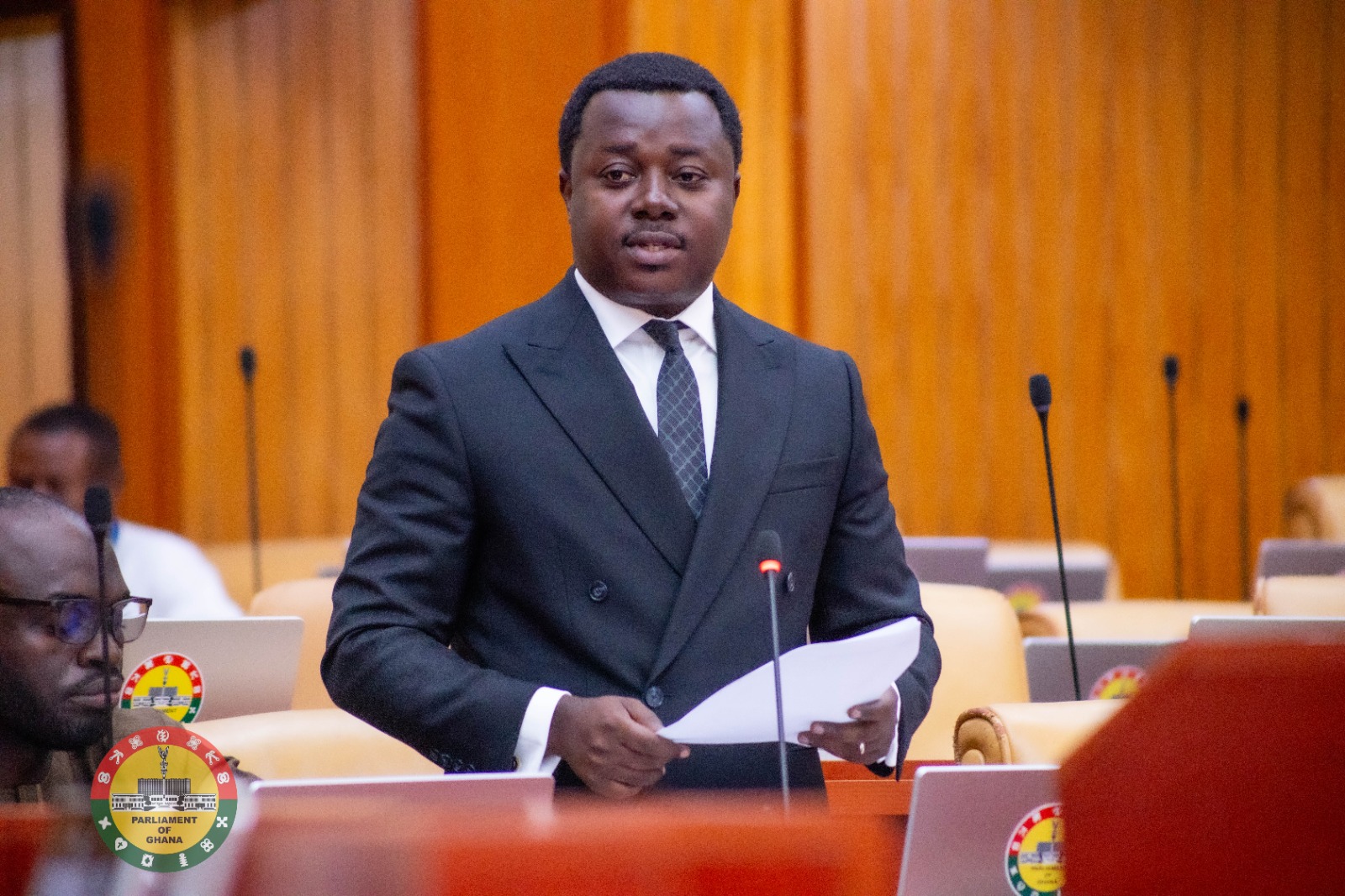
The Ranking Member on Parliament’s Defence and Interior Committee, Rev. John Ntim Fordjour, made the remarks on 11 September following confirmation that French customs authorities had intercepted nearly 3.9 tonnes of cocaine concealed in a container of plastic waste shipped from Ghana to the northern port of Dunkirk. The consignment, valued at approximately €225 million, was partly destined for Antwerp, Belgium, and French investigators are now pursuing the criminal network behind the shipment.
“It is becoming one too many. Our image is sinking,” Rev. Ntim Fordjour said in an interview on Channel One News, framing the seizure not as an isolated incident but as the latest episode in a pattern that Ghana’s institutions have failed to disrupt at source.
A Pattern of Seizures Without Domestic Accountability
Rev. Ntim Fordjour pointed to a sequence of major interceptions linked to Ghana by foreign enforcement agencies. Among these, Australian authorities intercepted a large methamphetamine shipment in April 2025 connected to Ghanaian supply chains. The Assin South MP argued that each of these cases shares a common feature: the seizure occurs abroad, the contraband is disrupted, but no significant arrest or prosecution follows on Ghanaian soil targeting the organizers of the shipments.
His critique centers on what he describes as a structural accountability gap within Ghana’s anti-narcotics architecture. The Narcotics Control Commission (NACOC) regularly publicises smaller domestic seizures, yet Rev. Ntim Fordjour contends that these operations miss the point entirely. “The least of our worries are the small quantities that NACOC puts out there,” he said, insisting that institutional energy must shift toward dismantling the logistics networks enabling multi-tonne consignments to leave Ghanaian ports.
The Dunkirk seizure is particularly significant in terms of method. The cocaine was concealed within a declared shipment of plastic waste, a technique that exploits gaps in cargo screening at the point of export. This raises direct questions about the effectiveness of Ghana’s port security protocols and the integrity of customs procedures at its maritime facilities, particularly at Tema, the country’s principal container port.
Regional Governance Stakes and West African Trade Credibility
The reputational consequences extend well beyond Ghana’s borders. As a signatory to the African Continental Free Trade Area (AfCFTA) and a member state of ECOWAS, Ghana’s ports serve as a critical gateway for regional trade flows. The use of legitimate cargo channels to move narcotics undermines the credibility of West African trade infrastructure at a moment when the region is seeking to deepen intra-continental commerce and attract foreign direct investment into its logistics and manufacturing sectors.
ECOWAS has maintained a regional drug control framework through its Action Plan on Drug Trafficking, but enforcement coordination among member states remains uneven. Countries such as Senegal and Côte d’Ivoire have invested in joint intelligence-sharing mechanisms with European partners, and Côte d’Ivoire in particular has pursued prosecutions in high-profile narcotics cases with greater visible outcomes. Ghana’s comparative record on upstream prosecution is drawing scrutiny precisely because its port infrastructure and trade volumes make it a natural transit point, a structural vulnerability that organized networks demonstrably exploit.
Nigeria, as the regional hegemon, faces its own narcotics transit challenges, but the National Drug Law Enforcement Agency (NDLEA) has in recent years conducted a series of high-profile arrests that generated international attention and signaled institutional seriousness. Ghana’s enforcement posture, by contrast, is being read by international partners as reactive rather than strategic.
For investors assessing West African logistics and trade corridors, repeated narcotics interceptions tied to a specific port of origin carry concrete consequences. Enhanced due-diligence requirements from European financial institutions, tighter cargo screening imposed by destination countries, and the reputational cost to Ghanaian exporters operating in legitimate markets are all measurable outcomes of a sustained enforcement failure. The €225 million Dunkirk seizure alone is large enough to trigger a formal review of risk classifications applied to Ghanaian-origin shipments by European customs agencies.
Rev. Ntim Fordjour’s call for greater accountability is, at its core, a demand for institutional performance. Ghana’s judiciary, its financial intelligence unit, and NACOC must demonstrate the capacity to trace financial flows, identify beneficial networks, and prosecute at the level of the organizers rather than the couriers. That requires legislative backing, prosecutorial independence, and sustained political will from the executive, none of which are guaranteed by the current institutional configuration.
French authorities have opened an investigation into the criminal network behind the Dunkirk shipment. Whether Ghanaian agencies will engage substantively with that investigation, share intelligence, and act on any leads pointing back to domestic actors will be a concrete test of the accountability that Rev. Ntim Fordjour says has been absent. The outcome will carry weight not only for Ghana’s bilateral relations with France and Belgium, but for the broader question of whether West African governance institutions can credibly police the trade corridors they are simultaneously trying to expand.