On 7 July 2026, the Speaker of Ghana’s Parliament announced that the Council of State had advised against passage of the Constitution of the Republic of Ghana (Amendment) Bill, 2025 — the legislation designed to remove constitutional restrictions barring dual citizens from public office. The advice is not binding. Article 291(2) of the Constitution requires the Council’s opinion; it does not require Parliament’s compliance. And Parliament should not comply, because the advice is wrong in law, wrong in history, and contradicted by the evidence of every serious democracy that has confronted this question — including several within West Africa itself.
What makes the Council’s position particularly striking is that it reverses itself: the same institution endorsed substantially the same reform during the Eighth Parliament. Nothing has materially changed since then — except that the case for reform has grown considerably stronger. The Supreme Court has already struck down part of the exclusionary regime as unconstitutional. The Presidency and cross-party sponsors back the bill. Diaspora remittances have reached roughly US$7.8 billion annually, dwarfing foreign direct investment and rivalling gold and cocoa as a pillar of Ghana’s external accounts. President Mahama has rightly described the diaspora as Ghana’s “17th region.” The Council of State now proposes to tell that region: your capital is welcome; your service is not. That is not a governance position — it is a contradiction.
The constitutional architecture underpinning Ghana’s exclusionary regime is already in advanced disrepair, and the Supreme Court has done much of the demolition work. The 1992 Constitution originally stripped Ghanaians of citizenship upon acquiring another nationality. The 1996 amendment through Act 527 corrected that position: Article 8(1) now permits dual citizenship. But it came with a significant rider. Article 8(2) barred dual citizens from a defined list of offices — Ambassador, Secretary to the Cabinet, Chief of Defence Staff and the Service Chiefs, Inspector-General of Police, Commissioner of Customs, Director of Immigration — while allowing Parliament to extend the list by statute. Article 94(2)(a) separately disqualifies from Parliament anyone who “owes allegiance” to another country. Parliament exercised that statutory power expansively: Section 16(2) of the Citizenship Act, 2000 (Act 591) extended the exclusion to the Chief Justice and Supreme Court Justices, Chief Directors, senior military officers, and any other office a Minister might prescribe by legislative instrument.
The courts have been dismantling this structure for over a decade. In Asare v. Attorney-General (2012), the Supreme Court struck down the requirement that dual citizens obtain a certificate before exercising their rights, with Justice Akuffo characterising the Act 591 exclusions as making a mockery of the Constitution. Then, in May 2024, the Court delivered the decisive blow: in a 6-1 decision, it struck down Parliament’s statutory additions to the excluded-offices list as violating Article 289(2) — the principle that the Constitution cannot be amended by ordinary Act. The practical consequence is now impossible to defend with any internal logic: a dual citizen may lawfully serve as Chief Justice of the Republic, the final interpreter of the Constitution itself, but may not sit as a backbench MP or serve as Director of Immigration. No coherent theory of loyalty, national security, or sovereignty explains this arrangement. It is not a security architecture; it is rubble.
The case of James Gyakye Quayson, MP for Assin North, illustrates precisely what this regime produces in practice. A born Ghanaian who renounced his Canadian citizenship spent years in litigation over the timing of that renunciation. His election was annulled; his constituents were disenfranchised; a by-election was held — which he won resoundingly — and a criminal prosecution followed. Years of judicial time and public resources were consumed not by any allegation that he betrayed Ghana, but by paperwork chronology. This is the consistent pattern wherever such rules operate: they do not catch traitors; they catch technicalities. As Professor Stephen Kwaku Asare has argued for two decades, Ghana’s governance failures have never been attributable to dual citizens — they have been driven by greed and institutional weakness, afflictions that carry no passport and respect no citizenship category. There is also a quietly discriminatory dimension that sits uneasily alongside Article 17’s non-discrimination guarantee: children of mixed ECOWAS marriages — a Ghanaian mother, a Nigerian or Togolese father — are frequently dual citizens at birth, disqualified from national service for an accident of parentage rather than any act of choice or disloyalty.
Ghana is also swimming against the regional and continental current. In May 2025, South Africa’s Constitutional Court unanimously struck down the automatic loss of citizenship upon acquiring another nationality. Kenya, Nigeria, and Rwanda have each moved toward inclusion of diaspora nationals in public life. The Council’s advice would place Ghana, long the region’s democratic pacesetter and a founding pillar of ECOWAS’s governance architecture, on the trailing edge of a reform it should be leading — a position inconsistent with the country’s own self-image and its obligations under the ECOWAS Protocol on Democracy and Good Governance.
Constitutional provisions are answers to the anxieties of their era, and Ghana’s 1992 framers wrote in the shadow of three decades of coups, in a country haemorrhaging professionals abroad, when a Ghanaian in London was functionally gone. In that world, restricting sensitive offices to sole citizens was an intelligible precaution. Every one of those premises has since collapsed. The brain drain the framers feared has matured into what development economists now call a brain bank: an estimated three million Ghanaians abroad include physicians running NHS departments, engineers at leading technology firms, professors, central bankers, and fund managers. The remittances they send are the single most reliable inflow in Ghana’s external accounts — more stable than official development assistance, more patient than portfolio capital, and structurally more significant than most bilateral investment flows.
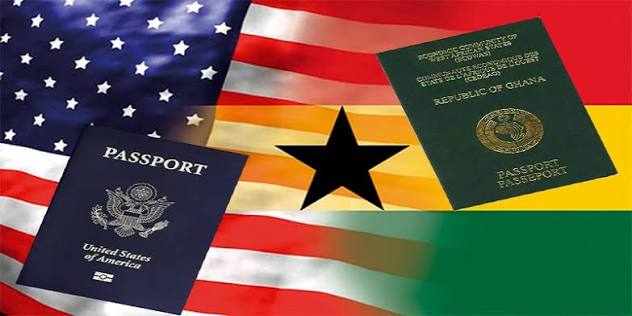
The inconsistency has become impossible to sustain. Since the Year of Return, Ghana has conferred citizenship on hundreds of African Americans and Caribbean diasporans — men and women born and raised abroad, welcomed at State House ceremonies, most of whom retain their American or other passports and are therefore dual citizens from the moment they take the oath. Yet a Ghanaian born in Kumasi, who acquires an American passport after years of work abroad, is treated as constitutionally suspect. The Republic extends the full embrace of citizenship to those with no birth tie to the soil, while withholding full civic rights from the sons and daughters of the soil itself. No coherent principle of loyalty survives that comparison, and no country can credibly invite the global African family home while telling its own children they returned with one passport too many. Ghana’s own founding history makes the point more sharply still: Nkrumah studied at Lincoln and Penn and organised in London; Danquah was called to the English bar; the Big Six were, almost to a person, formed abroad and returned. Pan-Africanism itself — the ideology on which this Republic was proclaimed — is a doctrine of the diaspora, and W.E.B. Du Bois died a citizen of Ghana.
The comparative record from functioning democracies is unambiguous, and the evidence of harm from including dual citizens in high office is essentially nil. The United Kingdom imposes no bar on MPs or ministers: Boris Johnson held United States citizenship by birth while serving as Mayor of London and into his tenure as Foreign Secretary, renouncing it in 2016 for tax reasons rather than loyalty ones. Canada entrusted the office of Governor General — commander-in-chief of the Armed Forces — to Michaëlle Jean, a dual French-Canadian citizen, and Andrew Scheer led the Official Opposition while holding US citizenship; Canada’s institutional response was, correctly, a shrug, treating performance in office rather than paperwork as the measure of commitment. The United States, the most security-intensive state on earth, permits dual citizens in Congress and Cabinet: Madeleine Albright served as Secretary of State, and Arnold Schwarzenegger governed California while retaining his Austrian citizenship throughout. Israel, operating under near-permanent security emergency, allows dual citizens in the Knesset, requiring renunciation only upon actually taking a seat — having concluded that a broad diaspora bar would amputate its greatest strategic asset rather than protect it.
Within Africa, the lesson repeats with particular relevance to Ghana’s regional context. Rwanda openly welcomed dual citizens into the government that rebuilt the country after 1994, drawing heavily on returnees from the diaspora. Nigeria bars only naturalised dual citizens from elective office — citizens by birth remain fully eligible, a distinction that Ghana’s Parliament should study carefully as it considers the bill’s scope. Liberia enacted dual citizenship in 2022 in explicit recognition that excluding its diaspora was excluding its own reconstruction capital. Against this record, the bill’s opponents can cite no example — in fifty years and across fifty countries — of a democracy where dual citizens in high office produced the espionage or divided-loyalty crisis the restriction supposedly prevents. The predicted harm has had ample time and geography in which to materialise. It has not.
The economic argument is equally concrete. A dual national is, functionally, a bridge: bank accounts, credit histories, and boardroom relationships in London, New York, and Toronto; land, family, and lifelong obligation in Accra, Kumasi, and Tamale. That combination — creditworthiness abroad, commitment at home — is among the scarcest inputs in African development finance, and no policy instrument can manufacture it artificially. The remittances are only the visible surface. Beneath them sit the diaspora-financed property market of Greater Accra; the investment surge the Year of Return unlocked in 2019; and a generation of returnee-built institutions — Databank, which helped construct Ghana’s modern capital markets, founded by young Ghanaians home from Wall Street; Ashesi University, founded by Patrick Awuah after leaving Microsoft; and the fintech and remittance corridor itself, built largely by founders who carry two passports and raise capital on both sides of the Atlantic. China’s economic transformation was seeded by overseas Chinese capital flowing into early special economic zones, and Beijing deliberately courted its diaspora home to run companies and public institutions. India answered its circulating Silicon Valley diaspora not with exclusion but with the Overseas Citizen of India regime, designed to deepen the tie. In each case, the state understood that the citizen with a foot in two worlds is not a divided asset but a doubled one. Ghana alone looks at this profile and declares it constitutionally unfit for a state title — asking diaspora Ghanaians to be Ghana’s ambassadors in every boardroom except the embassy itself.
The concerns behind the Council’s advice deserve a serious institutional response, and each can be met with instruments sharper and more effective than a blanket ban. On divided loyalty in sensitive offices: loyalty is not a function of how many passports a person holds, but of character, incentives, and oversight — which is why sole-citizen officials have perpetrated every coup and every act of grand corruption in Ghana’s history. The correct instrument is a statutory security-vetting regime under which any appointee to a designated sensitive office, dual citizen or not, undergoes graduated clearance administered by the National Security Secretariat, with foreign attachments assessed individually. This is how the United Kingdom, United States, and Canada protect their classified information — far more effectively than a passport test, which vets nothing of substance. On accountability flight — the official who loots and escapes — the answer is twofold: first, mandatory disclosure, amending Act 550 to require declaration of all nationalities, foreign residencies, and foreign assets on assumption of office, with criminal penalties for concealment; second, jurisdictional consent, requiring dual-citizen appointees to designated offices to execute a statutory undertaking submitting to Ghanaian jurisdiction and consenting to extradition, paired with extradition treaties with the principal diaspora states, which Ghana needs regardless, since sole citizens abscond as readily as dual ones.
Where genuine sensitivity exists in specific offices, a principled narrow-core model offers a workable compromise: retain a sole-allegiance or renounce-on-appointment requirement for a short, constitutionally-entrenched list — the Presidency, Chief of Defence Staff, and the intelligence chiefs — while opening every other office to security-vetted candidates. Critically, renunciation should operate at appointment, not at the point of aspiration: no Ghanaian should surrender a second citizenship merely to stand for an office they may never win. That single structural change would have spared the Republic the entire Quayson debacle and the years of judicial and public resources it consumed. Two systemic safeguards should complete the architecture: a public register of foreign interests for all covered officeholders, maintained by the Commission on Human Rights and Administrative Justice and searchable by any citizen; and a five-year statutory review requiring the Attorney-General to report to Parliament on the regime’s operation, grounding any future debate in evidence of actual harm rather than theoretical speculation.
Parliament faces a governance question of considerable clarity beneath its apparent complexity. The Supreme Court has already held the statutory scaffolding built on Article 8(2) unconstitutional. What remains produces institutional absurdity — a dual citizen may head the Judiciary but not a border post — and its most prominent achievement is the years-long prosecution of a duly elected MP over the timing of a renunciation document. The comparative record, from Ottawa to Jerusalem to Kigali, shows nations gaining talent, capital, and institutional reach by opening their governance structures to their diasporas. And the deepest argument is the Constitution’s own first principle: Article 1 declares that the sovereignty of Ghana resides in the people of Ghana, in whose name and for whose welfare the powers of government are to be exercised. It does not say some of the people. Article 17 forbids the state to sort its citizens into grades. A constitution that opens by vesting sovereignty in all the people, and then quietly maintains a class of citizens who may vote, pay taxes, and obey the law but never serve in office, is at war with itself. The Amendment Bill ends that war. The Council of State was entitled to its opinion; Article 291(2) guarantees it a voice, not a veto. The last word belongs to Parliament — and through Parliament to the sovereign people, including the voters of Assin North, who have already delivered their judgment. Twice.