Parliament Challenges Central Bank Over Undisclosed Reserve Drawdown
Ghana’s parliamentary opposition has formally demanded an explanation from the Bank of Ghana (BoG) after information gathered by the Minority caucus indicated that the country’s gross international reserves fell by approximately US$2 billion between the end of the first quarter and the end of June 2026, raising pointed questions about the central bank’s foreign exchange intervention strategy and its transparency obligations to the legislature.
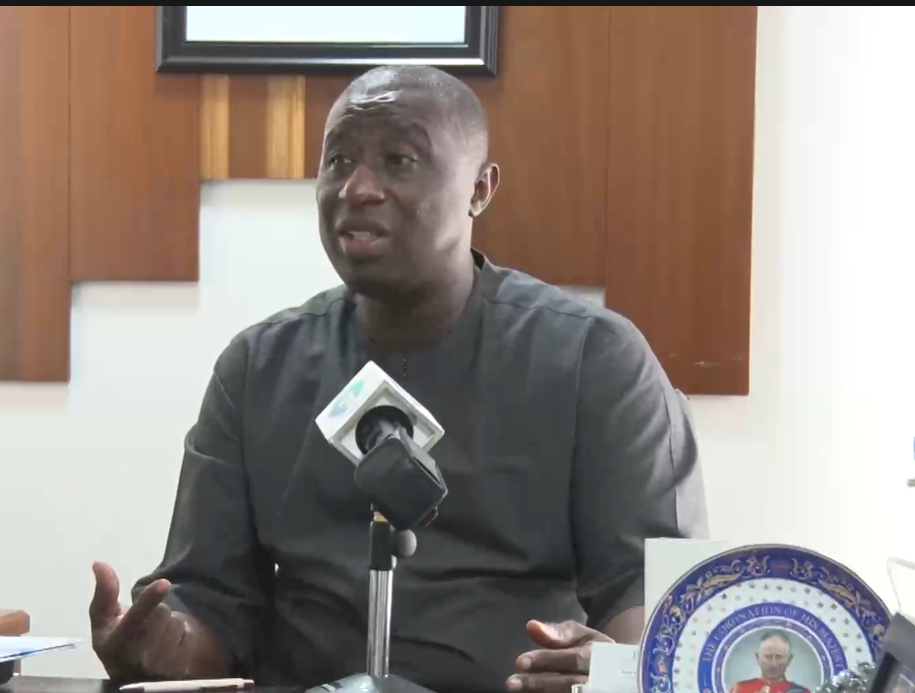
Patrick Boamah, Member of Parliament for Okaikwei Central and a spokesperson for the Minority bloc, told journalists on 15 July 2026 that the Bank of Ghana’s own Monetary Policy Committee (MPC) report for May 2026 placed gross reserves at US$14.2 billion as of 31 March 2026. According to data independently gathered by the Minority caucus, that figure had declined to approximately US$12 billion by 30 June 2026, representing a drawdown of roughly US$2 billion within a single quarter.
“We want to find out from the Governor, or we are asking him to confirm, whether he used the $2 billion for market interventions,” Boamah stated, directing his demand squarely at the Bank of Ghana’s leadership.
Cedi Pressure and the Cost of Forex Stabilisation
The Minority’s concern centres on whether the Bank of Ghana deployed a significant portion of its reserve buffer to defend the Ghana Cedi (GHS) against sustained foreign exchange pressures, a practice known as reserve-backed market intervention. While central banks routinely intervene in currency markets, the scale, frequency, and disclosure of such interventions are subject to governance standards that bear directly on investor confidence and Ghana’s obligations under its ongoing International Monetary Fund (IMF) programme.
Ghana has been operating under an IMF Extended Credit Facility since 2023, a programme that carries specific reserve adequacy benchmarks. A US$2 billion drawdown in a single quarter, if confirmed, would raise immediate questions about whether Ghana remains comfortably within those benchmarks, and whether the Bank of Ghana communicated the intervention strategy to the Fund and to parliament in a timely manner.
The opacity surrounding the reserve movement is itself a governance concern. Gross international reserves are a primary indicator of a country’s external financial resilience, and their management is a core function of central bank accountability. When reserve levels shift materially without accompanying public explanation, the institutional credibility of the central bank is at stake.
A Regional Benchmark for Reserve Transparency
Ghana’s situation draws an instructive contrast with West African peers operating within the West African Economic and Monetary Union (WAEMU), whose member states, including Côte d’Ivoire and Senegal, operate under the shared reserve management framework of the Banque Centrale des États de l’Afrique de l’Ouest (BCEAO). That institutional architecture, while constraining national monetary autonomy, provides a degree of reserve transparency and pooled credibility that individual central banks in the region, including the Bank of Ghana, have historically struggled to match.
Nigeria’s Central Bank, the other major monetary authority in the sub-region, has faced similar parliamentary scrutiny over reserve management and forex intervention in recent years, suggesting that the governance gap between reserve policy and legislative oversight is a structural weakness across West Africa’s non-WAEMU economies. For Ghana, which has positioned itself as a regional hub for financial services and a gateway for foreign direct investment, this credibility gap carries tangible costs.
Institutional Accountability and the BoG’s Disclosure Obligations
The Bank of Ghana Act grants the central bank operational independence, but that independence is conditioned on transparency and accountability to parliament. The Minority’s demand is not merely political theatre. It reflects a legitimate constitutional function: legislative oversight of a public institution managing sovereign assets on behalf of Ghanaian citizens and the state.
If the Bank of Ghana did deploy US$2 billion in reserve assets to stabilise the cedi, the policy rationale may be defensible. Currency stabilisation protects import-dependent businesses, reduces inflation pass-through, and signals monetary discipline to external creditors. But the absence of proactive disclosure transforms a potentially sound policy decision into a governance failure.
Boamah’s call for the BoG Governor to “confirm” the intervention reflects a disclosure gap that the central bank must close. Publishing a detailed account of reserve movements, intervention volumes, and the policy framework guiding those decisions would align the Bank of Ghana with best practices observed at comparable institutions, including the South African Reserve Bank and the Central Bank of Kenya, both of which provide structured communication around forex operations.
Implications for Investor Confidence and Regional Integration
For investors and trading partners operating within the African Continental Free Trade Area (AfCFTA) framework, reserve adequacy is a direct proxy for Ghana’s capacity to honour cross-border payment obligations and maintain a stable trading environment. A US$2 billion reserve decline, unaccompanied by explanation, generates uncertainty that rational investors price into risk premiums, raising the cost of capital precisely when Ghana needs to attract private financing for infrastructure and industrial development.
Within the ECOWAS monetary cooperation agenda, Ghana’s reserve management also carries regional significance. Discussions around a prospective ECOWAS single currency, the ECO, have long stalled partly due to the divergent macroeconomic trajectories of member states. Ghana’s fiscal and monetary credibility is a variable in that equation. A central bank perceived as managing reserves without adequate transparency weakens the case for deeper monetary integration and undermines the institutional trust that regional cooperation requires.
The Bank of Ghana now faces a straightforward institutional choice: provide a full, public account of reserve movements during the second quarter of 2026, including the scale and rationale of any forex interventions, or allow the information vacuum to deepen parliamentary suspicion and erode the market confidence that Ghana’s post-debt-restructuring recovery depends upon. Transparency is not a concession to political pressure. It is the operating condition of a credible central bank.