A projected double-digit increase in diesel prices, set to take effect on 17 September 2026, has thrown into sharp relief the structural vulnerability of Ghana’s petroleum pricing framework — and, by extension, the broader challenge facing West African governments that manage fuel costs through administrative intervention rather than market-anchored fiscal policy.
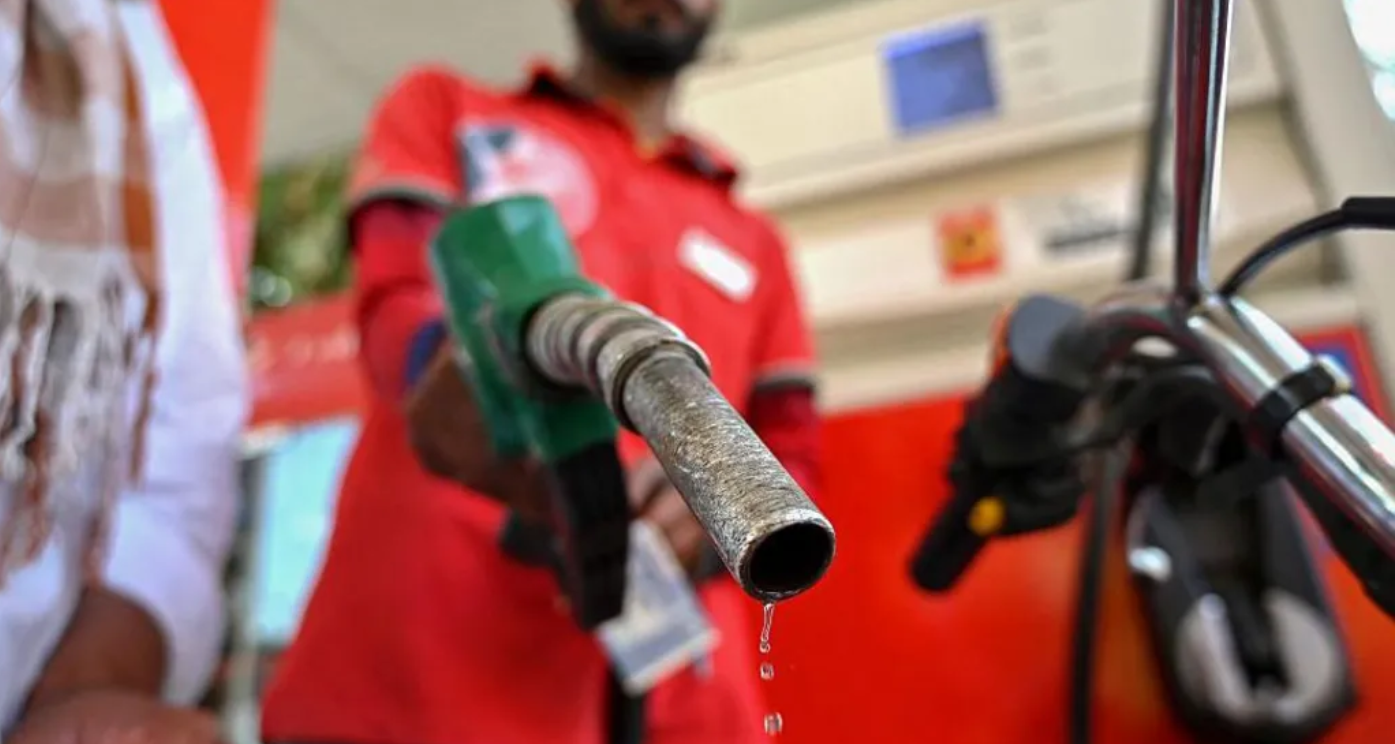
The Chamber of Petroleum Consumers (COPEC), in a statement dated 13 September 2026, projected that diesel would rise by 10.23% to GH¢19.07 per litre, while petrol would increase by 4.24% to GH¢16.26 per litre. Liquefied Petroleum Gas (LPG) faces the steepest international price movement, with its Free on Board (FOB) price climbing 16.45% to US$712.43 per metric tonne, translating to a projected retail price of GH¢15.32 per kilogramme. Accounting for its standard ±5% margin, COPEC places the expected retail band for diesel between GH¢18.12 and GH¢20.02 per litre, and for petrol between GH¢15.44 and GH¢17.08 per litre.
The proximate cause is unambiguous: a sharp movement in global crude oil markets, where benchmark prices rose from US$89.30 to US$103.07 per barrel within the pricing window. The FOB price of petrol climbed 10.08%, from US$1,136.50 to US$1,251.07 per metric tonne, while diesel’s FOB price rose 12.33%, from US$1,250.50 to US$1,404.73 per metric tonne. A marginal appreciation of the Ghana Cedi against the US dollar — 0.29%, with the average interbank rate moving from GH¢11.5166 to GH¢11.4830 — offered only negligible relief against the scale of the international price shock.
What the numbers reveal is not merely a pricing event, but a governance question: how should a liberalising economy like Ghana absorb external commodity shocks without either entrenching fiscal dependency through open-ended subsidies, or transferring the full burden of global market volatility onto consumers and productive sectors?
The Subsidy Mechanism Under Strain
Ghana’s National Petroleum Authority (NPA) had already raised the price floors for petroleum products in the 1–15 September pricing window, signalling that the automatic pricing mechanism — designed to track international prices and exchange rate movements — was functioning as intended. The architecture, modelled on the principle that retail fuel prices should reflect import parity, represents a decade-long institutional effort to eliminate the fiscal haemorrhage associated with blanket fuel subsidies.
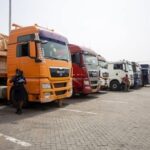
Yet COPEC’s latest call for government intervention complicates that picture. The group has appealed for a continuation of the GH¢2 per litre diesel support and a GH¢1 per litre reduction in petrol prices, urging the government to extend its subsidy intervention beyond the first pricing window of September. The appeal is politically intelligible — diesel underpins Ghana’s freight and logistics sector, and LPG price spikes carry direct consequences for household energy access — but it also exposes the tension between short-term consumer protection and the longer-term institutional credibility of a deregulated pricing regime.
Ghana is not alone in navigating this tension. Across West Africa, governments have historically used fuel subsidies as a blunt instrument of social policy, with consequences that fiscal economists have documented extensively. Nigeria spent an estimated US$10 billion on petrol subsidies in 2022 alone before the Tinubu administration moved to remove them in 2023 — a reform that triggered immediate price shocks but was broadly endorsed by the International Monetary Fund and regional development partners as necessary for fiscal sustainability. Senegal and Côte d’Ivoire have maintained partial price controls, calibrated through periodic adjustments, while WAEMU’s monetary framework has provided a degree of exchange rate stability that insulates member states from the cedi’s specific vulnerabilities.
Exchange Rate Architecture and Regional Divergence
The cedi’s marginal appreciation during this pricing window — while welcome — highlights a structural asymmetry within West Africa’s monetary landscape. WAEMU member states, operating under the CFA franc pegged to the euro, face a fundamentally different transmission mechanism for oil price shocks. Their exposure is concentrated in the international commodity price itself, not compounded by exchange rate depreciation. Ghana, operating an independent floating currency, absorbs both vectors simultaneously.
This divergence has concrete implications for regional competitiveness. Ghanaian transporters and manufacturers face input costs that can shift materially within a 15-day pricing window, a level of volatility that WAEMU-based competitors do not encounter to the same degree. For Ghana’s ambitions under the African Continental Free Trade Area (AfCFTA) — where Accra hosts the Secretariat — cost predictability in logistics and production is not an abstract concern. It directly affects the competitiveness of Ghanaian exporters seeking to build regional value chains.
ECOWAS has long identified energy pricing harmonisation as a component of deeper regional integration, but progress has been uneven. The ECOWAS Energy Protocol and subsequent frameworks have articulated principles of market-based pricing and cross-border energy trade, yet national subsidy regimes — maintained for domestic political reasons — continue to distort the regional playing field. A Ghanaian trucker hauling goods to Burkina Faso or Togo operates in a pricing environment shaped by Accra’s subsidy decisions, while a competitor from Abidjan benefits from Côte d’Ivoire’s distinct fiscal calculus.
Institutional Credibility and the NPA’s Role
At the centre of Ghana’s petroleum pricing governance sits the National Petroleum Authority, whose mandate includes implementing and overseeing the automatic pricing formula. The NPA’s decision to raise price floors in the first September window demonstrated institutional fidelity to the deregulation framework — a signal that carries weight for investors and credit rating agencies monitoring Ghana’s post-IMF programme fiscal consolidation.
The risk, however, is that sustained political pressure for subsidies erodes the NPA’s operational independence in ways that do not show up immediately in headline fiscal data but accumulate as contingent liabilities and regulatory unpredictability. Ghana’s experience between 2015 and 2022 — when the automatic pricing mechanism was repeatedly suspended or circumvented during periods of cedi weakness or electoral pressure — offers a cautionary institutional precedent. The IMF-supported programme that Ghana entered in 2023 explicitly targeted the restoration of cost-reflective pricing as a fiscal anchor.
COPEC’s advocacy for targeted support is not without institutional logic. A time-limited, transparently financed diesel subsidy, directed at freight operators and commercial users rather than administered as a blanket price control, would be fiscally bounded and less corrosive to the pricing architecture than an open-ended retail intervention. The distinction matters: targeted transfers can coexist with market-based pricing; generalised price suppression cannot, at least not without fiscal cost that eventually surfaces elsewhere.
LPG Access and the Household Energy Governance Gap
The projected 16.45% increase in LPG’s international FOB price deserves particular analytical attention, because LPG pricing in Ghana intersects with a governance challenge that extends well beyond petroleum economics. Ghana’s LPG penetration rate remains below 40% of households, with rural and peri-urban populations disproportionately reliant on biomass fuels. Price spikes of this magnitude risk reversing the modest gains in LPG adoption achieved over the past decade, pushing households back toward charcoal and firewood with attendant consequences for deforestation, indoor air quality, and women’s time poverty.
This is precisely the kind of market failure that justifies targeted fiscal intervention — not as a permanent subsidy, but as a bridge while the structural conditions for affordable LPG access are built through infrastructure investment, cylinder ownership reform, and distribution network expansion. Ghana’s LPG sector governance has been fragmented across multiple agencies, and the absence of a coherent national LPG master plan has left pricing policy as the default instrument for managing access — a role it is poorly designed to play.
Regional peers offer instructive contrasts. Senegal has pursued a more structured approach to LPG subsidisation, with a dedicated fund and periodic reviews tied to fiscal capacity. Côte d’Ivoire has invested in LPG distribution infrastructure as a complement to pricing policy. Neither model is directly transferable to Ghana’s institutional context, but both illustrate that the choice is not simply between subsidies and no subsidies — it is between coherent energy access governance and reactive price management.
As Ghana’s petroleum sector absorbs this latest external shock, the institutional architecture around the NPA’s pricing mandate, the government’s subsidy instruments, and the ECOWAS energy harmonisation agenda will all face a moment of stress-testing. The outcome will say something consequential about whether Ghana’s post-crisis fiscal consolidation has produced durable institutional reform — or merely a temporary reprieve from the political economy of fuel price management that has constrained West African development budgets for decades.