A Diplomatic Encounter Rooted in Strategic Recalibration
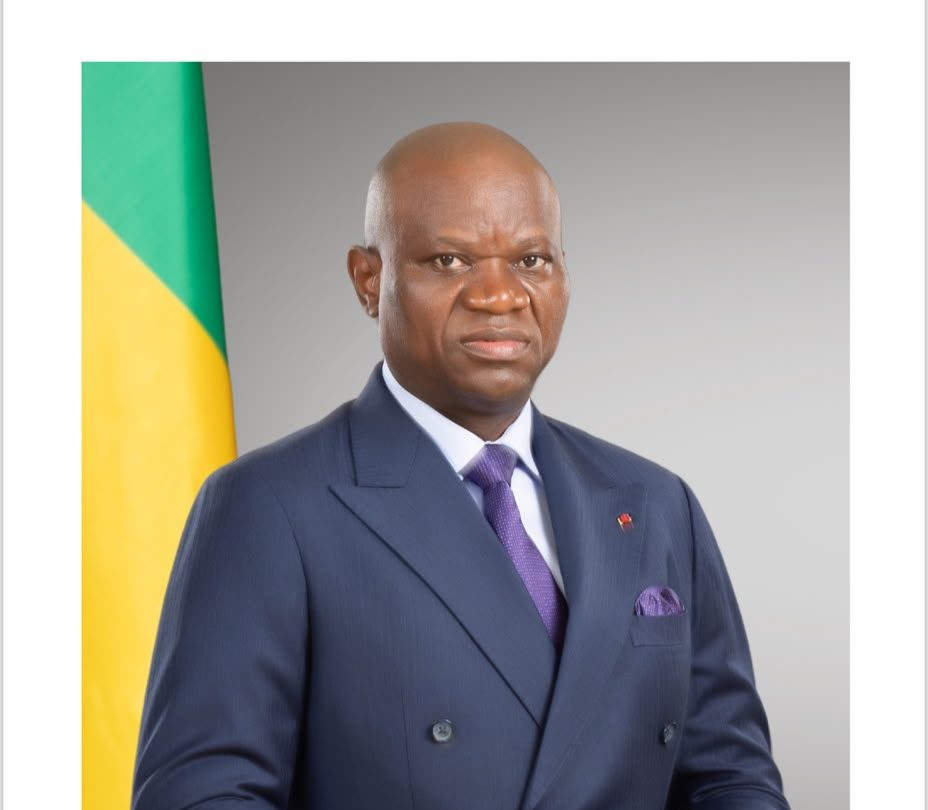
When Gabonese transitional president Brice Clotaire Oligui Nguema lands in Accra between 28 and 30 July, the visit will carry weight beyond ceremonial protocol. The three-day official engagement, extended at the invitation of President John Dramani Mahama, places two governments with distinct political trajectories in direct bilateral dialogue — one a consolidated democracy navigating fiscal recovery, the other a post-coup transitional authority seeking international legitimacy and economic partnerships.
The Ghanaian Presidency confirmed the visit in a formal statement, noting that Oligui Nguema will travel with a high-level delegation comprising government ministers, senior officials, and members of Gabon’s business community. That composition is deliberate. It signals that Libreville is not arriving for symbolism alone.
The Institutional Architecture of the Talks
On 28 July, the two heads of state will hold a private tête-à-tête before proceeding to formal bilateral talks at Jubilee House in Accra. The sequencing matters. Private consultations between leaders typically establish political trust and set the tone for technical negotiations that follow at ministerial level. Ghana’s Ministry of Foreign Affairs and its Gabonese counterpart will anchor the substantive discussions.
The agenda spans an unusually broad range of sectors. Mining, energy, agriculture, forestry, fisheries, maritime affairs, transport, tourism, education, health, defence, security, environmental protection, and climate action are all explicitly on the table, according to the Presidency’s statement. Covering this breadth in three days requires pre-negotiated frameworks. The business delegation accompanying Oligui Nguema suggests deal-ready conversations, not exploratory ones.
Gabon’s Post-Coup Diplomatic Offensive
Oligui Nguema seized power in August 2023, ending five decades of Bongo family rule in Gabon. Since then, his transitional government has pursued aggressive international outreach to consolidate recognition and attract investment. Ghana represents a credible interlocutor. Accra carries institutional weight as a functioning democracy with a record of peaceful electoral transitions — the kind of governance legitimacy Libreville currently needs to borrow by association.
Gabon’s economy is heavily dependent on oil, which accounts for roughly 80% of export revenues, and on timber and manganese extraction. As oil production has declined from peak levels, Libreville has signalled intent to diversify into downstream processing, agribusiness, and renewable energy. Ghana, which has navigated its own resource-dependency challenges with mixed results, offers a comparative model — imperfect, but instructive.
Ghana’s Interests: Trade, Resources, and Regional Positioning
For Accra, the visit advances a foreign policy pivot that Mahama’s administration has pursued since returning to office in January 2025. Ghana has actively deepened bilateral engagements across the continent, positioning itself as a hub for intra-African trade under the African Continental Free Trade Area (AfCFTA), whose secretariat is headquartered in Accra. Strengthening ties with a resource-rich Central African economy directly serves that ambition.
The mining and forestry dimensions of the agenda are commercially significant. Ghana is among Africa’s top gold producers, and its regulatory frameworks for extractive industries, however contested domestically, are among the more institutionally developed on the continent. Gabon holds substantial timber and mineral reserves. Technical cooperation between the two countries’ regulatory bodies could yield frameworks for responsible extraction that benefit both governments’ revenue positions.
Maritime affairs also feature prominently. Both Ghana and Gabon are Gulf of Guinea coastal states, sharing exposure to illegal fishing, maritime insecurity, and the governance of exclusive economic zones. Bilateral cooperation here plugs into the broader architecture of the Gulf of Guinea Commission, which coordinates maritime security across the region’s littoral states.
The AfCFTA Dimension and Intra-African Trade Gaps
Ghana and Gabon are both AfCFTA signatories, yet direct bilateral trade between them remains thin. Intra-African trade across the continent averages roughly 15% of total trade volumes, compared to over 60% in Europe — a structural deficit that AfCFTA was designed to address. The Accra summit offers a concrete opportunity to identify tariff and non-tariff barriers that suppress trade between the two economies and to align customs procedures with AfCFTA protocols.
Gabon’s membership in the Economic Community of Central African States (ECCAS) and Ghana’s anchor role in ECOWAS place the two countries in adjacent but distinct regional blocs. Cross-bloc cooperation of this kind is precisely the inter-regional integration dynamic that the African Union’s Agenda 2063 envisions. A bilateral investment treaty or sector-specific memoranda of understanding signed during this visit could serve as a template for broader West-Central African economic linkages.
Climate, Forests, and the Carbon Economy
One agenda item deserves particular analytical attention: environmental protection and climate action. Gabon holds roughly 88% forest cover, making it one of the most forested nations on Earth and a critical carbon sink for the continent. Libreville has leveraged this position in international climate negotiations, securing carbon credit agreements and positioning Gabon as a model for tropical forest conservation under Article 6 of the Paris Agreement.
Ghana, which has faced significant deforestation pressures linked to illegal small-scale mining (galamsey) and agricultural expansion, stands to learn from Gabon’s forest governance architecture. Conversely, Ghana’s more developed financial sector and capital markets could help Gabon access green finance instruments and structure carbon credit transactions with international buyers. The complementarity here is genuine and commercially viable.
Governance Legitimacy and the Question of Democratic Standards
The visit raises a governance question that Accra cannot entirely sidestep. Ghana’s democratic credentials are foundational to its international standing. Hosting a transitional leader who came to power through a military coup — however popular domestically — invites scrutiny about the signals Mahama’s government sends to regional peers and to ECOWAS, which suspended Gabon following the August 2023 putsch.
ECOWAS has maintained a cautious engagement with Gabon’s transitional authorities, consistent with its protocol on unconstitutional changes of government. Ghana, as a member state, operates within that framework. The bilateral visit does not constitute formal ECOWAS rehabilitation of Libreville, but it does reflect the pragmatic reality that African governments balance democratic norm enforcement with economic interest and regional stability considerations. Mahama’s government will need to articulate that balance clearly, both domestically and within ECOWAS structures.
What Comes After Jubilee House
The durability of this summit depends on what institutional mechanisms survive it. Bilateral declarations without implementation frameworks have a poor record across African diplomacy. The presence of Gabon’s business community alongside government officials suggests that private-sector deal flow may provide the accountability structure that intergovernmental communiqués often lack. Investment commitments with defined timelines are harder to quietly shelve than diplomatic statements.
Ghana’s Ministry of Trade and Industry and its counterparts in Libreville should, in the weeks following the summit, publish any agreements reached with specific deliverables, responsible agencies, and review timelines. Transparency in that process would itself model the governance standards that both countries claim to uphold, and would give investors, civil society, and regional institutions the benchmarks needed to hold both governments accountable to what is agreed at Jubilee House.