The 2025 Global Organised Crime Index positions Ghana not merely as a country grappling with domestic security deficits, but as a functional node in the weapons supply chain sustaining active conflicts in Mali and Burkina Faso. The report’s designation of Ghana as a “principal source” of commercial explosives flowing into those two Sahel states raises a direct and uncomfortable question for ECOWAS: how does a member state’s regulatory and border-management failures become a regional security liability, and what institutional mechanisms exist to correct it?
This is not a peripheral concern. Both Mali and Burkina Faso have experienced military coups since 2021, withdrawn from ECOWAS, and are now aligned under the Alliance des États du Sahel. The weaponization of those political ruptures, partly enabled by materiel sourced from a core ECOWAS member, exposes a structural gap in the bloc’s conflict-prevention architecture that diplomatic communiqués alone cannot close.
Kumasi’s Gun Economy and the Limits of Domestic Oversight
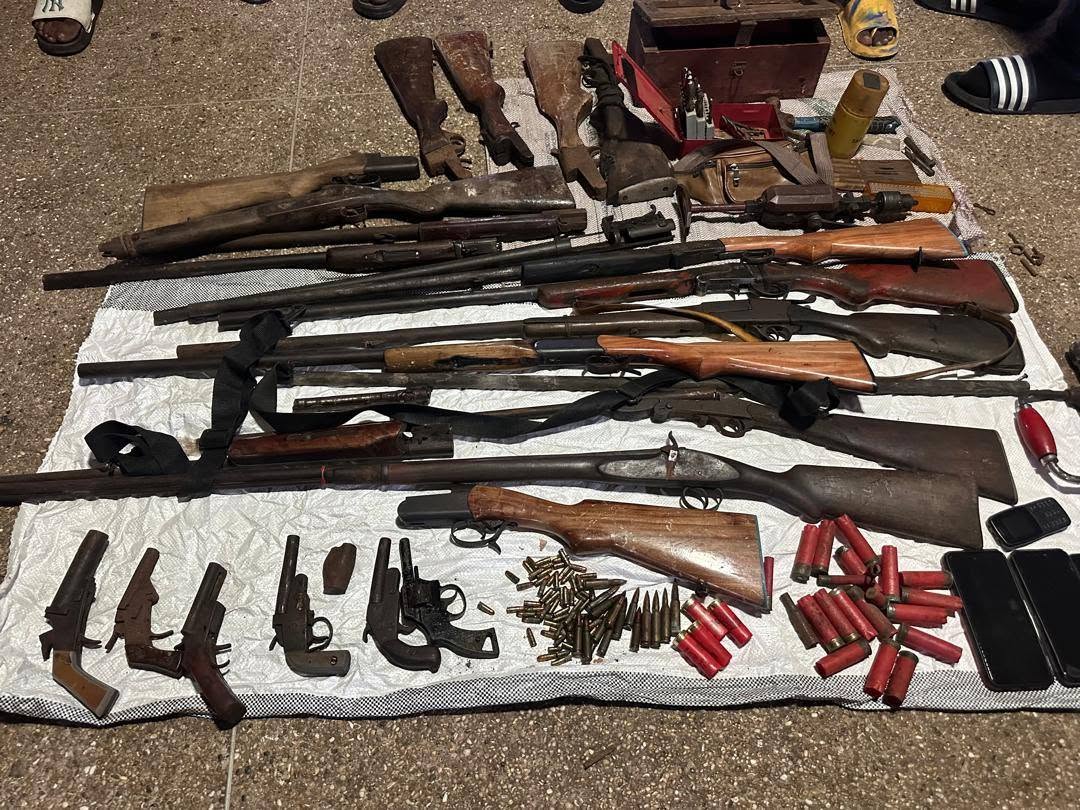
The Index identifies Kumasi, Ghana’s second-largest city, as a centre of artisanal firearms manufacturing, where skilled craftsmen produce weapons supported by affordable raw materials and profitable retail margins. This cottage industry is not new, but its scale and connectivity to cross-border criminal networks represent an escalation that Ghana’s regulatory framework has not kept pace with.
Ghana’s Minerals Commission and its licensing regime for commercial explosives were designed primarily around the mining sector, which accounts for roughly 48 percent of Ghana’s export revenues and relies heavily on controlled blasting materials. The diversion of those same materials into conflict zones represents a dual failure: a licensing and tracking failure within the extractive sector, and an export-control failure at the border. Neither the Minerals Commission nor the Ghana Immigration Service has, according to the Index, demonstrated capacity to interdict this diversion at scale.
Accra and Kumasi are identified as key markets for illegal weapons, with demand now extending well beyond communities historically associated with hunting and poaching. Urban and peri-urban areas experiencing rising crime rates have become new consumption points, broadening the market base and making supply-side interdiction alone insufficient as a policy response.
Cross-Border Porosity and the ECOWAS Free Movement Paradox
The Index draws particular attention to Ghana’s borders with Togo and Burkina Faso as conduits for illicit trade, encompassing not only arms and explosives but also contraband tobacco, alcohol, counterfeit medicines, and falsified electrical goods. High excise taxes on tobacco and alcohol are cited as a structural driver of smuggling, a pattern well-documented across WAEMU countries where tax harmonization remains incomplete.
This creates a governance paradox at the heart of regional integration. ECOWAS’s free movement protocol, one of the bloc’s most operationally successful frameworks, facilitates legitimate trade and labor mobility across 15 member states. It also, by design and by enforcement gap, reduces friction for criminal networks moving contraband. The protocol was never intended to function as a security instrument, and it has not been retrofitted with one. Ghana’s porous borders are, in part, a product of integration architecture that prioritized movement over monitoring.
Comparative context matters here. Ivory Coast, which shares a border with Burkina Faso and has faced its own jihadist spillover threats in its northern regions, has invested more heavily in joint border-monitoring mechanisms with French security partners and has engaged more consistently with the G5 Sahel’s intelligence-sharing structures, even as that body has itself fractured. Senegal, facing pressure from the Casamance corridor, has similarly developed bilateral security protocols that complement rather than contradict ECOWAS commitments. Ghana, by contrast, has not produced a publicly documented border-security strategy that addresses the specific vectors identified by the Index.
Counterfeit Goods, Port Governance, and the Tema Gateway Risk
Beyond arms, the Index paints a broader picture of Ghana’s governance exposure. Most electrical products sold in Accra are estimated to be counterfeit and non-compliant with safety standards. Makola Market and Abossey Okai are named as principal trading points for counterfeit textiles and vehicle spare parts respectively, with the majority of these goods manufactured in China and transiting through the Port of Tema.
Tema is Ghana’s primary maritime gateway and one of West Africa’s busiest container ports, handling an estimated 1.2 million twenty-foot equivalent units annually. Its role as an entry point for counterfeit goods, including falsified medicines, which the Index identifies as a longstanding and unresolved problem, reflects on the Ghana Revenue Authority’s customs enforcement capacity and on the Ghana Standards Authority’s post-clearance market surveillance. Both institutions have faced chronic underfunding relative to the volume of trade they are mandated to regulate.
The counterfeit medicine dimension carries the most acute public health and governance implications. Ghana is a signatory to the Abuja Declaration’s health financing commitments and has positioned itself regionally as a pharmaceutical manufacturing hub, with ambitions tied to the African Continental Free Trade Area’s pharmaceutical annex. Allowing Tema to function as a conduit for falsified medicines actively undermines that positioning and creates reputational risk with both the African Union Development Agency and potential manufacturing investors.
Policy Pathways: What Institutions Must Now Do
The Index’s findings point toward several concrete institutional responses that Ghana’s government and regional bodies can act on with existing mandates and without waiting for new treaty frameworks.
For investors and trading partners, the Index’s findings introduce a compliance and reputational calculus that extends beyond Ghana’s domestic market. Companies operating in Ghana’s mining sector face heightened due-diligence obligations if their licensed explosives are entering conflict zones. Pharmaceutical distributors sourcing through Tema face regulatory exposure in markets where falsified-medicine liability standards are tightening. These are not abstract risks; they are the kind of governance deficits that credit-rating agencies and export-credit insurers increasingly price into their assessments of frontier market exposure.
Ghana has genuine institutional assets to draw on: a functioning judiciary, an independent Electoral Commission with regional credibility, and a central bank whose governance, despite recent fiscal pressures, retains technical legitimacy. Applying that same institutional seriousness to border management and illicit-trade interdiction is not a foreign imposition; it is a precondition for the regional integration dividend that Ghana’s own trade and investment strategy depends upon.