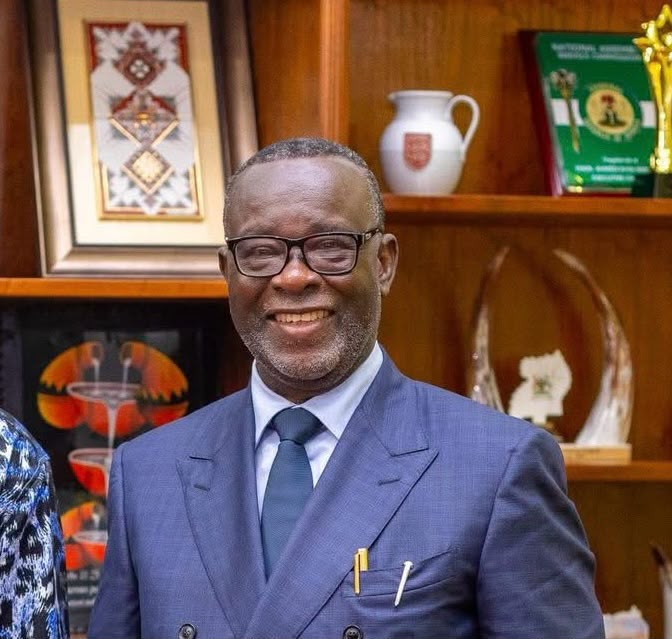
There is a particular kind of scrutiny that attaches itself to a Chief Justice appointed during a change of government, a scrutiny that rarely concerns itself with the texture of actual decisions and almost always concerns itself with the politics of nomination. In Ghana, that scrutiny has settled, with considerable intensity, on Justice Paul Kwadwo Baffoe-Bonnie, who assumed leadership of the Judiciary following his nomination by President John Dramani Mahama. The accusations are familiar in their shape: that the man is a political instrument, that the institution he leads has been subordinated to the Executive, that independence is a performance rather than a practice. What those accusations have struggled to do, however, is account for the record.
That record, still accumulating and still imperfect, tells a more complicated story than the critics allow, one that touches not only on the health of Ghana’s constitutional order but on the credibility of the governance frameworks that West African integration depends upon. For a region whose monetary and political architecture, through ECOWAS and the African Union, rests on the premise that member states maintain functioning rule-of-law institutions, the question of whether Ghana’s Supreme Court is genuinely independent is not a parochial one. It carries weight in Abidjan, Dakar, Lagos and Addis Ababa.
The “Unanimous FC” Inheritance
To understand what Justice Baffoe-Bonnie inherited, one must return to the phrase that entered Ghana’s legal vocabulary as both a joke and an indictment. “Unanimous FC,” a derisive shorthand for a succession of unanimous Supreme Court rulings perceived by opposition sympathisers as systematically favouring the then-governing New Patriotic Party, was sufficiently embedded in public discourse to attract scholarly attention, appearing in the University of Ghana School of Law Journal in 2023 as a documented social perception rather than merely a partisan talking point. Whether every such perception was warranted is a separate question. What is not separate is the damage that sustained perception of judicial alignment does to the foundational compact between citizens and courts.
Then-National Security Minister Albert Kan-Dapaah gave that concern institutional voice in 2022, publicly warning that persistent public belief in a biased judiciary carried national-security implications, a remarkable acknowledgment from within the very administration whose court victories had generated the perception. His warning was essentially that legitimacy, once eroded, does not restore itself through pronouncements alone. It restores itself through decisions, through the accumulation of rulings that cannot be predicted from the identity of the winning party. That is the standard against which Justice Baffoe-Bonnie’s tenure must be measured, and it is a standard that makes the politics of his nomination largely irrelevant to the analysis.
Jean Mensa, Kissi Agyebeng and the Threshold of Constitutional Removal
The most instructive data points in the Baffoe-Bonnie record are not the ones that generated political applause but the ones that generated political disappointment, specifically from the side of government. Seven petitions seeking the removal of Electoral Commission Chairperson Jean Adukwei Mensa and her two deputies, Dr Bossman Eric Asare and Mr Samuel Tettey, were referred to the Chief Justice by President Mahama under the constitutional removal process. These were officials appointed under the previous NPP administration, officials whom the NDC, while in opposition, had publicly and repeatedly vowed to remove once it returned to power. The political expectation, the institutional pressure, the prior rhetoric, all pointed in one direction. Justice Baffoe-Bonnie examined the petitions and determined that no prima facie case had been established to warrant further investigation. The removal process ended there.
Three petitions against Special Prosecutor Kissi Agyebeng followed the same trajectory. Again, the constitutional threshold was not met, and again the process went no further. The significance here extends beyond the individual outcomes. A constitutional democracy’s removal mechanisms are only as credible as their independence from the executive that initiates them. When a Chief Justice, appointed by the very President who referred the petitions, finds that those petitions fall short of the legal standard, the institutional architecture is functioning as designed. Some figures associated with the governing NDC publicly acknowledged disappointment while accepting the determination, which is precisely how institutional maturity expresses itself: not through satisfaction with every outcome, but through acceptance of the process that produced it.
The Kpandai Seat and the Discipline of Jurisdiction
A third episode sharpens the picture. The parliamentary seat of Matthew Yandam, Member of Parliament for Kpandai, became the subject of litigation that, had it proceeded, could have cost the NDC a seat in Parliament. The petition had been filed at the High Court outside the constitutionally prescribed 21-day window following the gazetting of election results. The Supreme Court quashed the High Court’s orders on the basis of jurisdictional deficiency. Justice Baffoe-Bonnie did not sit as part of the coram that determined the certiorari application, a recusal that itself reflects procedural discipline. The point is not that the NDC lost or gained anything in particular. The point is that the constitutional clock, rather than political convenience, governed the outcome, and that the Chief Justice’s posture throughout was one of institutional fidelity rather than executive accommodation.
These three episodes, taken together, constitute a body of evidence that the critics have not seriously engaged. The charge that Justice Baffoe-Bonnie has surrendered judicial independence to the Executive requires its proponents to explain how a Chief Justice under executive influence would consistently produce outcomes that frustrate, disappoint or contradict the political expectations of that same Executive. The charge cannot survive contact with the facts as they stand.
Reforming the Architecture of Access
Beyond the politically visible decisions, a parallel reform agenda is unfolding inside the Judiciary that matters more to the ordinary Ghanaian litigant than any Supreme Court ruling on electoral commission appointments. Under Justice Baffoe-Bonnie’s administration, the courts have moved toward morning and afternoon sessions to address chronic case backlogs, a structural response to a problem that has long undermined public confidence in the system’s capacity to deliver timely resolution. The expansion of Alternative Dispute Resolution mechanisms, the development of specialised courts, the acceleration of e-justice infrastructure, reforms to the Rules of Court, and the creation of dedicated judicial mechanisms for environmental and illegal-mining cases represent a coherent institutional programme rather than a collection of isolated initiatives.
The introduction of a Specialised High Court Division, designed to improve efficiency through judicial specialisation rather than requiring individual judges to navigate an unnecessarily broad range of subject matters, reflects a governance logic that West African peers have pursued with varying degrees of success. Senegal’s commercial court reforms and Côte d’Ivoire’s investments in arbitration infrastructure offer regional comparators, and Ghana’s trajectory under the current Chief Justice places it within a recognisable pattern of judicial modernisation that investors and regional institutions have come to regard as a proxy for governance quality more broadly. For businesses operating across the ECOWAS single-market framework, the predictability and efficiency of commercial dispute resolution in Ghana is not an abstraction; it directly affects decisions about where to incorporate, where to locate regional headquarters, and where to seek enforcement of contractual rights.
Justice Baffoe-Bonnie has publicly acknowledged that delays, cost and geographic distance remain the primary barriers between ordinary Ghanaians and meaningful access to justice. That acknowledgment is itself a governance act, because it establishes a standard against which his own administration can be held accountable. The Chief Justice who names the problem owns the obligation to address it, and the reform programme now underway suggests that the ownership is genuine rather than rhetorical.
Independence as Institutional Practice, Not Political Arithmetic
There is a broader principle at stake in the Ghanaian debate that resonates across the region. West Africa’s governance architecture, from the ECOWAS Protocol on Democracy and Good Governance to the African Union’s African Charter on Democracy, Elections and Governance, rests on the assumption that member states will maintain judicial institutions capable of operating independently of executive preference. That assumption is not merely aspirational; it is the load-bearing structure beneath regional integration commitments, investment protection frameworks, and the credibility of dispute-resolution mechanisms that cross-border commerce requires. When a member state’s judiciary is perceived as politically captured, the damage radiates outward, undermining confidence in the regional architecture itself.
Ghana has historically occupied a distinctive position in West African governance, a constitutional democracy with a track record of peaceful electoral transitions that has served as a regional reference point. The credibility of that position depends on the perception, and the reality, that its courts function independently. Justice Baffoe-Bonnie’s nomination by President Mahama is a constitutional fact, but constitutional systems are designed precisely to ensure that the act of nomination does not determine the character of judicial conduct. The evidence so far, in the Electoral Commission petitions, in the Special Prosecutor matter, in the Kpandai jurisdictional question, suggests that the design is holding.
His record also contains a dimension that predates his current role and speaks to the consistency of his judicial character. In 2005, as a High Court judge, he ruled that the NPP government’s transfer of a civil servant from the Ghana Immigration Service to an uncertain posting amounted to constructive dismissal, ordering reinstatement and payment of salary arrears. President Kufuor subsequently nominated him for elevation to the Supreme Court, a nomination the NDC opposed. In 2013, when the NPP expected his sympathy in the presidential election petition, he voted according to the evidence and upheld the NDC’s electoral victory. In September 2025, serving as acting Chief Justice, he publicly criticised the Mahama government’s handling of illegal mining at the bar conference in Wa. These are not the actions of a man whose judicial compass is calibrated to executive preference. They are the actions of a judge whose record of institutional fidelity crosses political cycles.
None of this places Justice Baffoe-Bonnie beyond scrutiny. The Judiciary exercises enormous constitutional power, and the Chief Justice who leads it must remain answerable to rigorous public and professional examination. His tenure is still unfolding, the reform programme is incomplete, and the most consequential constitutional moments may lie ahead. But scrutiny must be grounded in conduct rather than conjecture, in decisions rather than associations, in the record rather than the rumour. If the standard is whether, when the difficult moments arrived, the law was allowed to remain the law, then the evidence so far points toward a Chief Justice who is building something worth defending, and worth watching.