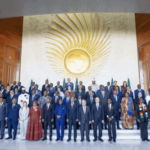

Ghana’s legal profession just grew by 1,568 practitioners. The General Legal Council’s formal admission of this cohort at the International Central Gospel Church in Teshie, Accra, marks more than a ceremonial milestone — it signals the closing chapter of a legal education architecture that has governed professional entry into the Ghana Bar for decades.
The newly admitted lawyers completed their qualifying journey under the established two-stage framework: first securing a Bachelor of Laws (LLB) degree, then passing the entrance examination for admission to the Ghana School of Law. This cohort constitutes the penultimate group expected to qualify under that structure, as Ghana’s legal education system transitions toward a broader institutional model that distributes professional legal training across a wider range of accredited institutions.
Among the 1,568 admitted is a cohort that cuts across journalism, politics, and public administration, lending the ceremony unusual public visibility. Samuel Nartey George, currently serving as Minister for Communication, Digital Technology and Innovations, was formally called to the Bar alongside Emmanuel Armah-Kofi Buah, the Minister for Lands and Natural Resources. Umaru Sanda Amadu, the widely followed host of Citi FM’s Eyewitness News, and former Eastern Regional Minister Seth Acheampong also completed their admission formalities. Their presence reflects a broader pattern in Ghana’s public sector, where legal credentials increasingly function as both professional capital and political currency.
The institutional significance of the transition underway deserves scrutiny. Ghana’s old legal education model concentrated professional training within a single gateway institution — the Ghana School of Law — administered under the General Legal Council’s oversight. That concentration produced consistent professional standards but also created persistent bottlenecks, with entrance examination pass rates generating recurring public debate about access, quality, and the adequacy of the Bar’s pipeline relative to Ghana’s growing demand for legal services. The reform now broadening institutional participation responds, in part, to those structural pressures.
Viewed from a West African governance perspective, Ghana’s legal education reform sits within a wider regional conversation about professional regulatory capacity and institutional competitiveness. ECOWAS member states operate divergent legal education systems — Francophone members of WAEMU, including Côte d’Ivoire and Senegal, train lawyers through university faculties and national bar associations operating under civil law traditions, while Ghana and Nigeria anchor the common law bloc with their own distinct professional entry mechanisms. As the AfCFTA progressively deepens cross-border trade and investment flows across the continent, the mutual recognition of legal qualifications and the harmonisation of professional standards across ECOWAS jurisdictions becomes a concrete governance question, not merely an aspirational one.
Nigeria’s experience offers a pointed comparison. The Nigerian Law School, operating under the Council of Legal Education, has faced sustained criticism for systemic throughput failures — bar examination pass rates have at times fallen below 40 percent, producing a legal services market where demand structurally outpaces supply of qualified practitioners. Ghana has historically maintained tighter quality controls at its School of Law, but the pressure to expand access without diluting professional standards is a tension that the ongoing reform must navigate explicitly. The General Legal Council’s capacity to regulate a more distributed training ecosystem — with multiple institutions now involved — will determine whether the reform produces a more competitive Bar or a more fragmented one.
For investors and commercial actors operating across West Africa, the depth and predictability of a country’s legal services market directly shapes transaction costs and dispute resolution confidence. Ghana has positioned itself as a regional hub for arbitration and commercial legal services, partly on the strength of its common law system and its relatively independent judiciary. The Law Reform Commission and the Attorney General’s Department have both signalled interest in aligning Ghana’s commercial law framework more closely with international standards, including those relevant to AfCFTA dispute settlement mechanisms. A well-regulated, adequately staffed Bar is not peripheral to that ambition — it is foundational to it.
The admission of sitting ministers to the Bar also raises a governance question worth examining directly. Samuel Nartey George and Emmanuel Armah-Kofi Buah hold executive portfolios with significant regulatory and resource-allocation authority. Their concurrent qualification as legal practitioners, while individually legitimate, touches on questions of professional role clarity that Ghana’s legal regulatory framework does not currently address with precision. The Ghana Bar Association’s rules on conflicts of interest and the General Legal Council’s admission standards do not explicitly govern how sitting ministers who are simultaneously legal practitioners should manage the intersection of those roles. As Ghana’s public institutions mature, that regulatory gap merits attention.
The 1,568 new lawyers now join a profession whose internal governance structures — the Ghana Bar Association, the General Legal Council, the judiciary — carry real institutional weight in shaping the country’s rule-of-law environment. Ghana ranks among the stronger performers on the Mo Ibrahim Foundation’s African Governance Index in the rule-of-law dimension, and the Bar’s professional standards have contributed to that standing. Sustaining that performance as the profession expands and the training system diversifies requires the General Legal Council to invest in robust accreditation, continuous professional development frameworks, and transparent quality assurance mechanisms for every institution now authorised to train lawyers.
What the General Legal Council must now demonstrate is that institutional expansion does not become institutional dilution. The Bar’s credibility — and by extension, Ghana’s attractiveness as a jurisdiction for regional commercial activity — rests on the profession’s ability to uphold consistent standards across a more complex training landscape. The 1,568 lawyers admitted this week carry that responsibility forward. The institutions that trained and admitted them carry it too.