Ghana’s Public Accounts Committee convened on 6 October 2025 confronting a figure that demands more than routine parliamentary scrutiny: GH¢5.2 billion in financial irregularities recorded across Ministries, Departments, and Agencies, of which GH¢4.8 billion traces directly to tax infractions. The sheer concentration of fiscal breaches within a single audit cycle raises a precise institutional question — not whether Ghana’s public financial management systems can detect wrongdoing, but whether they are structurally capable of correcting it.
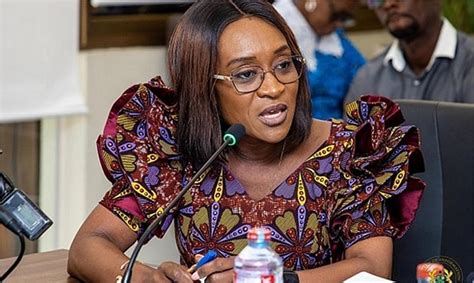
Committee Chairperson Abena Osei-Asare opened the sitting with language that cut through procedural formality. “If the same institution is cited repeatedly for the same control failure, then we are no longer dealing with just audit findings. We are dealing with a failure to learn.” That framing matters. It shifts the analytical lens away from the audit report as an endpoint and toward the institutional architecture that should translate audit findings into enforceable accountability. Ghana’s Auditor-General produces meticulous reports. The problem lies downstream, in the mechanisms — or the absence of them — that compel MDAs to act on what those reports reveal.
The GH¢4.8 billion attributed to tax infractions is not a marginal accounting discrepancy. It represents a structural revenue leak in a country where the Ghana Revenue Authority has spent years attempting to widen the tax base and where the IMF-supported fiscal consolidation programme demands credible domestic resource mobilisation. Ghana’s tax-to-GDP ratio, which hovered around 13 percent in recent years, already sits below the ECOWAS benchmark of 20 percent that regional fiscal convergence criteria aspire toward. When MDAs themselves generate tax irregularities at this scale, they actively undermine the revenue architecture that Ghana’s fiscal stabilisation depends upon. The irony is precise: state institutions eroding the state’s capacity to finance itself.
Osei-Asare’s observation that “many findings appear year after year” is not rhetorical frustration — it is a diagnostic statement about institutional memory failure. Comparative governance analysis across West Africa suggests this pattern is not uniquely Ghanaian, but Ghana’s institutional framework offers more tools to address it than most peers in the region. The Public Financial Management Act of 2016 established clear accountability mandates for Principal Spending Officers, and the Audit Service Act grants the Auditor-General significant independence. What the system lacks is a binding, time-limited remediation mechanism that forces MDAs to demonstrate corrective action before the next audit cycle opens. Senegal’s Cour des Comptes and Côte d’Ivoire’s Inspection Générale d’État both operate with more direct sanctioning authority than Ghana’s current parliamentary referral model, a structural gap that the PAC’s frustration makes vivid.
The withdrawal of special audit reports on the 13th All African Games and the Ghana Embassy in Washington, DC, by the Auditor-General introduces a separate but related governance concern. Special audits are typically commissioned precisely because standard audit processes have flagged elevated risk. Their withdrawal from PAC consideration, without a publicly stated rationale, removes from parliamentary scrutiny two expenditure areas that were already marked for closer examination. The All African Games, hosted by Ghana in March 2024, attracted significant public spending and generated substantial questions about procurement integrity. Withdrawing the audit report does not resolve those questions; it defers them indefinitely, and deferred accountability in public finance has a consistent record of compounding fiscal damage.
For investors and multilateral partners monitoring Ghana’s post-crisis governance trajectory, the PAC session carries signals that extend beyond domestic politics. Ghana’s 2023 debt restructuring and its ongoing engagement with the IMF under the US$3 billion Extended Credit Facility both hinge on demonstrated improvements in public financial management. When GH¢5.2 billion in irregularities surfaces in a single annual audit, and when the institutional response remains cyclical rather than corrective, it tests the credibility of governance reform commitments that underpin Ghana’s market re-entry narrative. The Eurobond market, to which Ghana hopes to return, prices sovereign risk partly on institutional quality. Persistent MDA audit failures are not invisible to that pricing mechanism.
Within the ECOWAS framework, Ghana’s fiscal governance performance also carries regional weight. As one of the two largest economies in the bloc alongside Nigeria, Ghana’s public financial management standards exert normative influence on the convergence agenda. The ECOWAS Multilateral Surveillance Mechanism tracks fiscal deficit ratios and debt levels, but the quality of public expenditure management — how well governments control, audit, and correct internal spending — is the less-measured variable that determines whether fiscal targets reflect genuine discipline or statistical compliance. A Ghana that produces rigorous audit findings but cannot institutionalise remediation sends a complicated signal to smaller ECOWAS member states calibrating their own governance investments.
The PAC’s stated intention to ask “what changed because of the audit” is the right institutional question. It reorients parliamentary oversight from retrospective documentation toward prospective accountability. But the question requires structural reinforcement to become effective. Ghana’s Ministry of Finance could establish a mandatory MDA remediation register, publicly updated on a quarterly basis, that tracks the status of audit recommendations from identification through to closure. The Controller and Accountant-General’s Department already holds the transactional data necessary to verify compliance. What is missing is the political mandate to publish that data in a form that makes non-compliance visible and consequential before the next audit cycle begins. Transparency without consequence produces the exact dynamic Osei-Asare described: institutions that explain, depart, and return unchanged.
Ghana built credible audit institutions. The Auditor-General’s office commands genuine professional respect across the region, and the PAC has historically been one of West Africa’s more active parliamentary oversight bodies. The GH¢5.2 billion irregularity figure is, in one reading, evidence that the detection architecture works. The governance failure is not in finding the problem. It is in the absence of a system that makes finding the problem matter.