A Shipment That Exposed Institutional Gaps
When 3.9 tonnes of cocaine surfaced in a shipment linked to Ghana, the immediate question was not simply one of law enforcement. It was a question of institutional architecture: which agencies were responsible, how their mandates overlapped, and why the cargo moved as far as it did before scrutiny caught up with it. The scale of the seizure placed Ghana’s port governance framework under a lens that domestic politics alone cannot adequately focus.
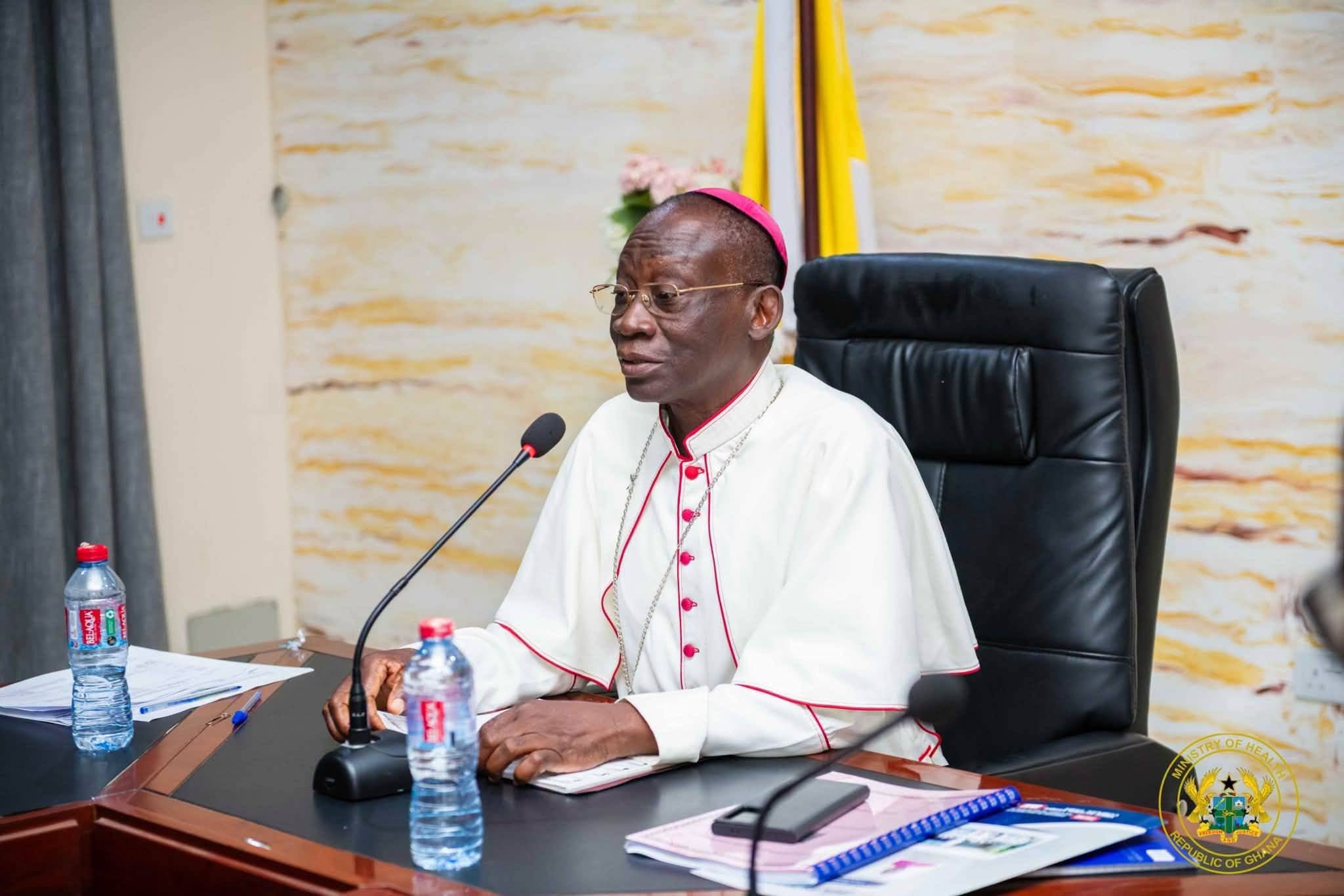
The Ghana Catholic Bishops’ Conference, issuing a formal statement on 21 September, described the parliamentary recall petition as “legitimate and necessary,” lending moral and civic weight to what had begun as a Minority caucus initiative. Their intervention reframed the episode from a partisan skirmish into a test of whether Ghana’s democratic institutions can exercise meaningful oversight over security and trade infrastructure.
The Recall Petition and What It Demands
The Minority in Parliament petitioned the Speaker to interrupt the legislative recess and convene an emergency sitting dedicated to scrutinising Ghana’s narcotics interdiction response. The petition’s core argument rests on national security grounds: a 3.9-tonne cocaine consignment linked to Ghanaian territory represents not merely a criminal incident but a systemic vulnerability in the country’s border and port management apparatus.
The Bishops’ Conference amplified this framing, identifying the specific institutions that must account for their performance. The Ministers for the Interior, Transport, and National Security are named, alongside the Narcotics Control Commission (NACOC), the Ghana Ports and Harbours Authority (GPHA), the Ghana Revenue Authority (GRA), the Ghana Immigration Service, and the National Intelligence Bureau. Each of these bodies holds a distinct mandate within Ghana’s security and trade facilitation architecture, and the Bishops’ statement implicitly indicts the coordination failures that allowed the shipment to pass through or be associated with Ghanaian entry points.
The Conference was equally direct in its caution to legislators: the sitting, if convened, must proceed “with the sobriety proper to a matter of this gravity rather than partisan point-scoring.” That warning carries institutional significance. Parliamentary oversight loses its disciplinary function when it degenerates into performance, and Ghana’s record on high-profile investigations offers mixed precedent on this front.
Port Governance as a Regional Vulnerability
Ghana’s Tema Port is one of West Africa’s principal maritime gateways, handling significant volumes of containerised cargo destined not only for Ghana but for landlocked neighbours including Burkina Faso, Mali, and Niger. Its governance quality therefore carries regional consequences that extend well beyond Ghanaian customs revenue or domestic law enforcement statistics.
Within the ECOWAS framework, member states are bound by a range of protocols on cross-border security cooperation, and the AU’s Agenda 2063 explicitly identifies transnational organised crime as a structural threat to continental integration. When a major port in the region becomes associated with a multi-tonne narcotics consignment, it does not merely damage the host country’s reputation; it introduces friction into the broader regional trade facilitation architecture that ECOWAS has spent decades attempting to rationalise.
Comparisons with Côte d’Ivoire are instructive. Abidjan’s port, which competes directly with Tema for West African transit cargo, has invested heavily in automated scanning infrastructure and inter-agency coordination protocols over the past decade. Senegal’s port of Dakar has similarly pursued World Bank-backed governance reforms as part of its broader ambition to anchor the ECOWAS Atlantic corridor. Ghana, which once led regional peers in port modernisation metrics, faces a reputational moment that could accelerate cargo diversion toward competing hubs if institutional accountability is not visibly demonstrated.
Presidential Direction and the Limits of Executive Response
President John Dramani Mahama has directed security agencies to develop a blueprint for improved inter-agency collaboration on drug trafficking and related threats. The directive is significant in signalling executive seriousness, but blueprints are instruments of planning rather than accountability. The distinction matters enormously in governance terms.
Inter-agency coordination failures in narcotics interdiction are rarely the product of absent planning documents. They reflect incentive structures, resource allocation decisions, information-sharing protocols, and in some cases, deliberate institutional capture. A presidential directive to produce a new framework document does not, by itself, address the question of what failed in this specific instance, who bore responsibility, and what consequences follow from that failure.
This is precisely where parliamentary oversight becomes constitutionally indispensable. The executive branch cannot credibly investigate its own agencies’ performance on a matter of this magnitude. A properly constituted parliamentary inquiry, with subpoena authority and public hearings, creates a record that executive review processes structurally cannot. The Bishops’ endorsement of the recall petition reflects an understanding of this separation of functions that goes beyond partisan positioning.
Accountability Architecture and Investor Confidence
For Ghana, which has spent considerable diplomatic and economic capital positioning itself as West Africa’s most stable investment destination, the cocaine seizure episode arrives at a sensitive juncture. The country is navigating an IMF-supported fiscal consolidation programme, seeking to rebuild creditor confidence after its 2022 debt restructuring, and competing with Côte d’Ivoire and Senegal for manufacturing and logistics investment anchored in AfCFTA supply chain development.
International investors in port logistics, trade finance, and customs technology assess country risk through precisely the kind of governance indicators that this episode implicates: the integrity of border management systems, the responsiveness of oversight institutions, and the willingness of political actors to pursue accountability regardless of where it leads. A Parliament that recalls itself from recess to conduct rigorous, non-partisan scrutiny of a narcotics interdiction failure sends a signal that institutional checks function. A Parliament that declines to act, or that converts the inquiry into political theatre, sends the opposite signal.
The Ghana Revenue Authority and the Ghana Ports and Harbours Authority, in particular, interface directly with international shipping lines, freight forwarders, and customs brokers whose operational decisions shape trade flows across the sub-region. Their credibility as institutions is not separable from the quality of governance oversight they receive.
What Rigorous Oversight Would Require
If Parliament does convene, the Bishops’ framework offers a useful starting point, but a genuinely rigorous inquiry would need to press beyond ministerial accountability into operational specifics. What scanning technology is deployed at Tema’s container terminals, at what coverage rate, and under what risk-profiling protocols? How does NACOC’s intelligence function interface with the National Intelligence Bureau and with INTERPOL’s Project COCAIR, which specifically targets cocaine trafficking through West African ports? What information, if any, was shared with regional partners through ECOWAS security mechanisms before or after the consignment was identified?
These are not rhetorical questions. They are the operational details that determine whether Ghana’s interdiction framework is structurally sound but momentarily breached, or whether it contains systemic gaps that will produce further incidents. The answer shapes both domestic policy reform and Ghana’s standing within the regional security cooperation architecture that ECOWAS and the AU have built around transnational organised crime.
President Mahama’s blueprint directive and the parliamentary recall petition are not mutually exclusive instruments. Properly sequenced, they are complementary: the inquiry establishes the factual record, the executive responds with structural reform, and the legislature monitors implementation. That sequence is how functional governance systems process institutional failures. Whether Ghana’s current political environment can sustain that sequence, without the process collapsing into recrimination or being quietly shelved once media attention moves on, is the governance question that the cocaine seizure has placed on the table.