Ghana’s Diplomatic Response to South Africa’s Xenophobic Violence Tests African Free Movement Commitments
Ghana’s decision to evacuate hundreds of its nationals from South Africa, following a wave of anti-immigrant protests, has exposed a structural fault line in continental integration: the gap between Africa’s free movement aspirations and the political conditions that make migration safe and economically productive.
A Consular Operation Rooted in Diplomatic Escalation
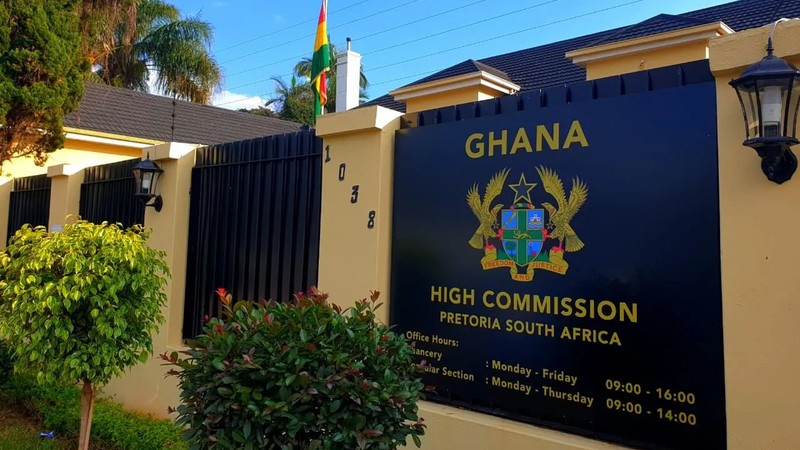
On Sunday, scores of Ghanaian nationals gathered at Ghana’s High Commission in Pretoria to undergo screening and verification ahead of a state-facilitated evacuation. Ghana’s High Commissioner to South Africa, Benjamin Quashie, confirmed that 826 Ghanaians had registered for repatriation, with the first cohort of 300 scheduled to depart on 27 May 2025.
The evacuation was triggered by nationwide protests led by the interest group March and March, which has demanded that non-South African nationals leave the country by the end of June. The protests have spread across Gauteng, KwaZulu-Natal, and the Eastern Cape, South Africa’s three most populous provinces and the primary destinations for West African migrants.
Quashie estimated that over 16,000 Ghanaians currently reside in South Africa, the majority legally. He nonetheless acknowledged that the climate of intimidation had made legal residency status practically meaningless for many. “The government of Ghana feels that it is time to bring those who feel unsafe in this country back home and reintegrate them into Ghanaian society,” he said.
Ghana’s Foreign Minister Samuel Okudzeto Ablakwa had already engaged his South African counterpart bilaterally to protest against circulating videos documenting xenophobic attacks on Ghanaian nationals. Accra subsequently requested a formal debate at the African Union (AU) on the recurrence of xenophobic incidents in South Africa, a move that elevates the crisis from a bilateral consular matter to a continental governance question.
Structural Drivers Behind Recurring Anti-Immigrant Violence
South Africa’s anti-immigrant violence is not episodic. Sixty-two people were killed during the 2008 xenophobic attacks, with further outbreaks recorded in 2015, 2016, and 2019. Each cycle follows a recognisable pattern: deteriorating public services, rising unemployment, and governance failures create conditions in which foreign nationals become political targets.
South Africa’s official unemployment rate exceeded 32 percent in 2024, among the highest in the world for a middle-income economy. Structural failures in electricity supply, municipal service delivery, and post-pandemic economic recovery have compounded public frustration. In this environment, organised groups have repeatedly mobilised anti-migrant sentiment as a proxy for broader governance grievances.
High Commissioner Quashie acknowledged the complexity without endorsing the violence. “You’ve heard the president of South Africa speak to the issue and say stop the xenophobic attacks. The minister of police has said the same thing. Let’s get to how we solve this problem, but let’s not take the law into our own hands,” he said.
The testimonies of Ghanaians at the Pretoria embassy illustrate the human cost of institutional failure. A 22-year-old hairdresser, Sylvester Boakye, described how corrupt officials systematically confiscated his earnings, preventing him from saving enough for a return ticket. “The little money I would make would be taken from me by corrupt officials, who always target us for bribes,” he said. A third Ghanaian, who declined to be named, recounted a physical assault in Meadowlands, Soweto, where he was beaten partly because he could not communicate in a local language.
Ghana’s Reintegration Package: Ambition Versus Absorptive Capacity
Accra has paired the evacuation with a structured reintegration package for returning citizens. The support framework includes a financial welcome-home payment, transport assistance within Ghana, a reintegration allowance, psychosocial support services, and inclusion in an employment and business opportunity database.
The package reflects a broader ambition to manage diaspora return as a development asset rather than a welfare burden. Ghana’s government has positioned returning nationals as potential contributors to domestic economic activity, particularly in sectors where South Africa-based Ghanaians have acquired skills and capital.
However, the absorptive capacity of Ghana’s labour market remains a critical variable. Ghana’s own unemployment and underemployment rates, combined with structural constraints in the informal sector, mean that large-scale returnee reintegration requires more than financial transfers. It demands coordinated engagement between the Ministry of Finance, the Ministry of Foreign Affairs, and sector-specific agencies capable of channelling returnee skills into productive employment.
Participation in the evacuation programme remains voluntary. Any Ghanaian holding a valid passport who no longer feels safe in South Africa may apply. The logistical timeline has already faced delays: as registration numbers increased, inter-agency coordination requirements, passenger screening protocols, and flight clearances extended the process beyond initial projections.
The Continental Governance Dimension: Free Movement Without Protection
Ghana and South Africa maintain a visa-waiver agreement permitting citizens of both countries to travel between them for up to 90 days without visas. That agreement exists within a broader continental framework in which the African Union’s Agenda 2063 and the Protocol on Free Movement of Persons envision an Africa where citizens can move, work, and invest across borders without legal or physical barriers.
The contradiction is direct. The AU framework promotes free movement as an integration driver. The AfCFTA, which entered into force in 2021, depends on the mobility of services, skills, and entrepreneurs to generate the intra-African trade volumes that justify its institutional architecture. Yet South Africa, the continent’s second-largest economy and a founding AU member, has repeatedly produced conditions in which African migrants face organised violence and institutional indifference.
Ghana’s decision to escalate the matter to the AU is significant precisely because it frames xenophobic violence as a governance failure with continental consequences, not merely a bilateral irritant. If the AU cannot enforce norms of migrant protection among its own member states, the credibility of its free movement instruments is structurally weakened.
ECOWAS, which has maintained one of Africa’s most functional free movement regimes since 1979, faces a parallel question: how do West African states negotiate the rights of their citizens in non-ECOWAS jurisdictions where no reciprocal institutional framework applies? The Ghana-South Africa case reveals the limits of regional integration when citizens cross into zones governed by different institutional logics.
Policy Pathways: From Crisis Response to Structural Advocacy
Ghana’s immediate consular response, evacuation, reintegration support, and AU engagement, is operationally sound. It demonstrates that African states can exercise diplomatic agency in protecting their citizens abroad without defaulting to silence or bilateral capitulation.
The more durable challenge is institutional. Ghana, alongside its ECOWAS partners, should use the AU platform to press for binding commitments on migrant protection standards, including accountability mechanisms for member states where anti-migrant violence recurs with impunity. The AU’s existing human rights architecture, including the African Commission on Human and Peoples’ Rights, provides legal instruments that have rarely been deployed in response to xenophobic violence.
South Africa’s government faces its own institutional test. Presidential and ministerial statements condemning xenophobic attacks carry limited weight when prosecution rates for perpetrators remain low and when local political actors continue to exploit anti-migrant sentiment for electoral advantage. Credible deterrence requires enforcement, not rhetoric.
For Ghana specifically, the crisis also raises questions about the economic conditions that drive emigration in the first place. Citizens leave because opportunities at home are insufficient. A reintegration package that fails to address those structural deficits risks cycling returnees back into the same emigration pressures within years. The Bank of Ghana and the Ministry of Finance have an interest in understanding the remittance flows that Ghanaian migrants in South Africa generate, and in designing reintegration incentives that convert returnee capital into domestic investment rather than consumption.
The 300 Ghanaians departing on 27 May 2025 represent a fraction of the 16,000 Ghanaians in South Africa. The majority will remain. Their safety, and the broader question of what continental citizenship means in practice, depends on whether African institutions move from declaratory commitments to enforceable standards.