A Procurement Lever for Industrial Policy
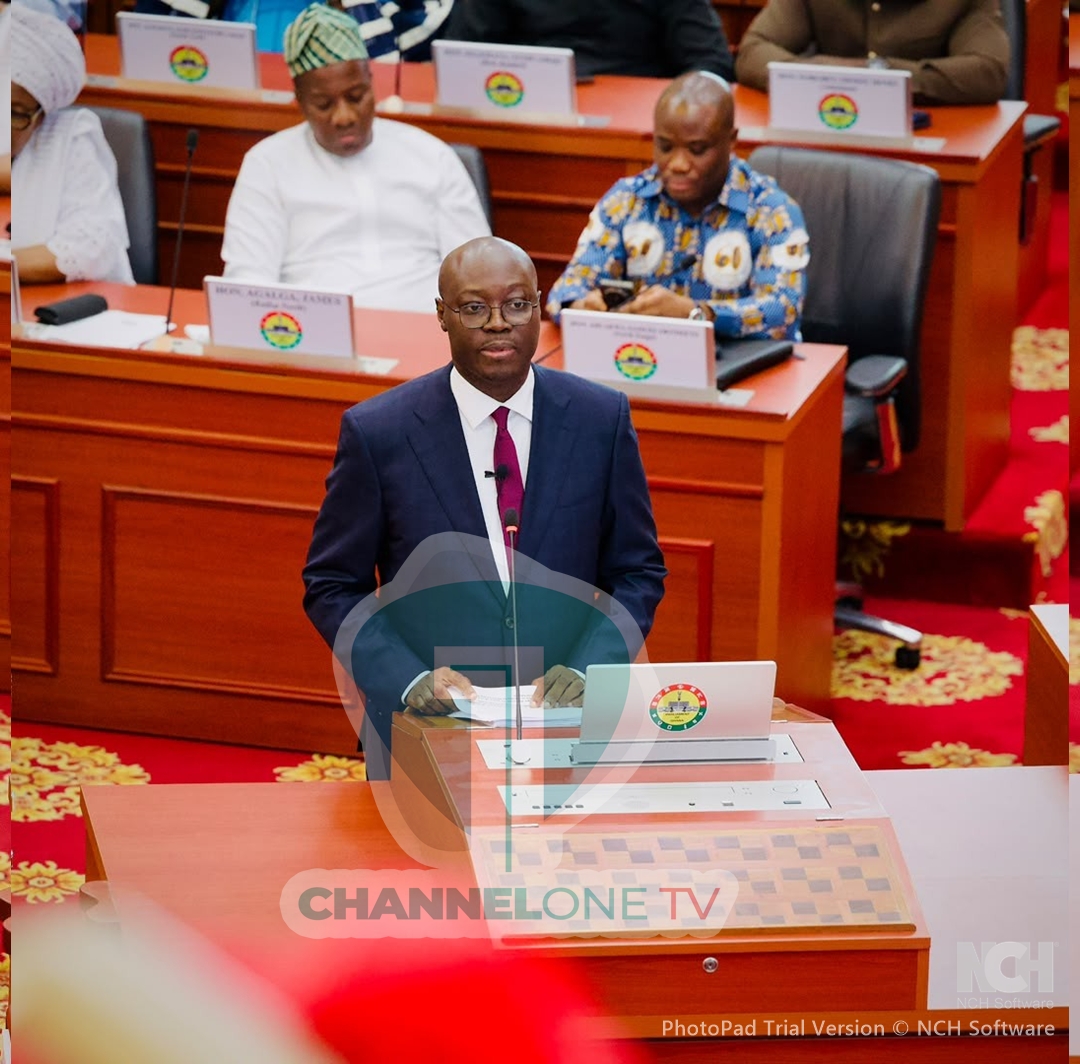
Ghana’s Ministry of Finance has announced a structural amendment to the country’s public procurement framework, one that would legally require all public institutions to source uniforms, hospital textiles, bedding, and protective wear exclusively from domestic textile and garment manufacturers. Finance Minister Dr. Cassiel Ato Forson presented the measure to Parliament on 12 November as part of the 2027 Budget Statement and Economic Policy, framing it not as a subsidy but as a demand-side intervention designed to redirect existing public expenditure toward Ghanaian industrial capacity.
The policy targets a concrete market failure. Ghana’s public sector, spanning security agencies, hospitals, and schools, routinely spends public funds on textile goods that are largely imported, bypassing domestic manufacturers who operate well below capacity. By legally mandating local sourcing through procurement law, the government converts routine government spending into an industrial stimulus without requiring new budget allocations.
This is a governance mechanism, not merely an aspiration. Amending procurement legislation creates enforceable obligations, audit trails, and institutional accountability for compliance, distinguishing it from voluntary “buy local” campaigns that have historically failed to shift procurement behavior in West Africa.
The Industrial Architecture Behind the Mandate
Infrastructure, Standards, and Production Timelines
Dr. Forson outlined a phased implementation timeline that grounds the policy in operational specifics. In 2027, the government commits to providing enclave infrastructure and modernizing priority textile and garment facilities. New and upgraded production lines are projected to become operational in 2028, supported by buyer agreements and export orders. By 2030, the target is a textile and garment sector operating at commercial scale, with international market recognition for Ghanaian designs and brands.
Critically, the government also pledged factory support to meet international standards in quality, traceability, and responsible production. That commitment matters enormously. Without conformity to global supply chain standards, domestically produced textiles cannot credibly compete for export markets or attract international buyer agreements, regardless of how robust domestic demand becomes.
Labor Market Implications
The Finance Minister identified machine operators, technicians, designers, dressmakers, factory managers, and logistics providers as primary beneficiaries, with particular emphasis on women and young people. Ghana’s garment sector has historically employed a disproportionately female workforce, and a structured scale-up could generate formal employment at a moment when youth unemployment remains a persistent governance challenge across West Africa.
“Our ambition is to put Made-in-Ghana fashion into wardrobes around the world and put dependable incomes into Ghanaian homes,” Dr. Forson told Parliament, a framing that positions the policy simultaneously as industrial strategy and social contract.
Regional Context: Where Ghana Fits in West African Textile Trade
Ghana’s announcement arrives within a West African textile landscape defined by competitive pressure and structural fragility. Côte d’Ivoire retains a more developed cotton-to-fabric value chain, anchored by its position as one of Africa’s largest cotton producers. Nigeria, despite its scale, has seen its once-dominant textile sector contract sharply over two decades due to cheap Asian imports and inconsistent policy support. Senegal has pursued garment sector development through export processing zones, with mixed results on domestic value addition.
Ghana’s approach, anchoring demand through procurement law rather than relying solely on export incentives or tariff barriers, represents a distinct policy architecture. It mirrors strategies employed in Ethiopia’s Hawassa Industrial Park model, where guaranteed buyer relationships preceded production scale-up, though Ghana’s emphasis on domestic procurement adds a sovereignty dimension that the export-only Ethiopian model lacked.
Within the ECOWAS framework, this kind of preferential domestic procurement sits in tension with the Community’s trade liberalization commitments, which generally prohibit member states from discriminating against goods originating within the bloc. Ghana’s government has not yet publicly addressed how the procurement amendment will interact with ECOWAS trade protocols, a legal and diplomatic question that regional trade lawyers and the ECOWAS Secretariat will need to scrutinize carefully.
AfCFTA Alignment and the Export Opportunity
The African Continental Free Trade Area provides the more compelling long-term framework for Ghana’s textile ambitions. AfCFTA’s rules of origin requirements, which determine whether goods qualify for preferential tariff treatment across the continent, create a structural incentive for building genuinely domestic production capacity rather than assembling imported inputs. A textile sector that sources cotton, weaves fabric, and produces finished garments within Ghana, or within qualifying regional value chains, stands to benefit from preferential access to a continental market of over 1.4 billion consumers.
Dr. Forson’s reference to “buyer agreements and export orders” as part of the 2028 production ramp-up suggests the government envisions the domestic procurement mandate as a foundation, not a ceiling. Guaranteed government contracts reduce investor risk during the initial scale-up phase, after which commercially competitive producers can pursue continental and global markets under AfCFTA’s preferential terms.
This sequencing, domestic demand anchor first, export competitiveness second, reflects a more sophisticated industrial policy logic than Ghana has historically applied to the textile sector, which has seen repeated policy interventions fail to generate durable capacity expansion.
Governance Risks and Implementation Gaps
The policy’s credibility depends on execution quality. Ghana’s procurement system has a documented history of compliance failures, with public institutions routinely circumventing procurement rules through fragmented purchasing, emergency exemptions, and weak audit enforcement. The Public Procurement Authority will need explicit new mandates, monitoring capacity, and sanction mechanisms to make the local sourcing requirement binding in practice rather than nominal on paper.
Supplier readiness is an equally serious constraint. Ghana currently lacks the domestic production capacity to immediately absorb the full volume of public sector textile demand. A transition period with clear capacity benchmarks, phased compliance timelines, and transparent criteria for what qualifies as a “Ghanaian textile and garment manufacturer” will determine whether the policy catalyzes genuine industrial development or simply creates procurement bottlenecks and informal workarounds.
Investor confidence, particularly from regional and international manufacturers considering Ghana as a production base, will hinge on the consistency and durability of the policy signal. A procurement mandate that survives one electoral cycle but is reversed by the next administration offers insufficient certainty for the multi-year capital investments that textile manufacturing requires. Embedding the requirement in primary legislation, rather than ministerial regulation, would significantly strengthen its credibility as a long-term industrial anchor.
Policy Pathways for Durable Impact
For Ghana’s textile procurement reform to generate the structural industrial transformation Dr. Forson described, three institutional conditions must hold. The Public Procurement Authority needs enforcement capacity and political independence sufficient to hold ministries and agencies accountable for compliance. The standards and quality support framework for domestic manufacturers must be operationalized through specific institutions, whether the Ghana Standards Authority, sector-specific industry associations, or dedicated technical assistance programs, before the mandate takes full legal effect. And the government must resolve the ECOWAS compatibility question transparently, either by securing a regional carve-out for strategic procurement policies or by structuring the mandate in ways that comply with existing trade protocols.
Ghana’s textile sector has absorbed decades of policy attention with limited durable results. The procurement mandate offers a genuinely different mechanism, one that works through market demand rather than supply-side subsidies alone. Whether that mechanism translates into a commercially competitive industry by 2030 depends on whether Ghana’s institutions can execute with the consistency and accountability that industrial transformation actually requires.