Arrivals Rise, but Governance Gaps Persist
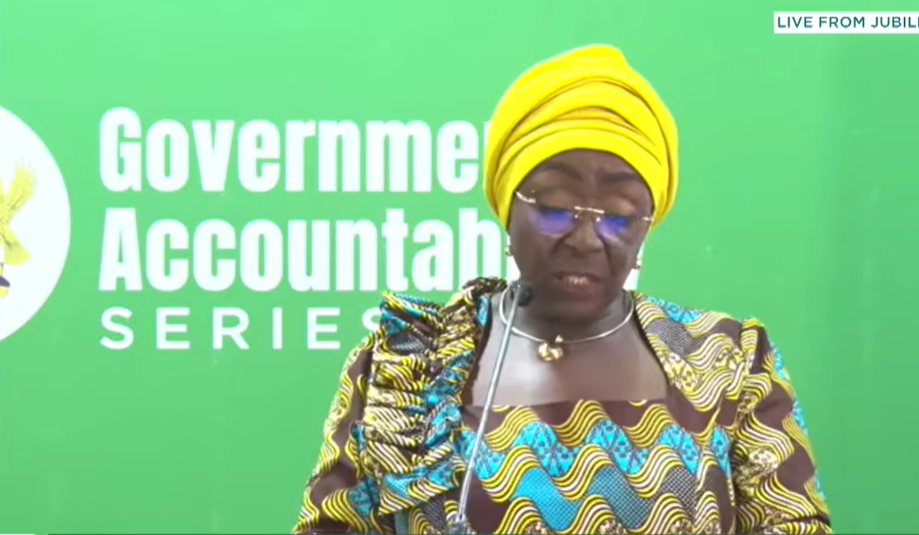
Ghana’s Ministry of Tourism, Culture and Creative Arts recorded 1,303,962 international tourist arrivals in 2025, generating GHS 4.34 billion in revenue, Minister Abla Dzifa Gomashie announced on 10 August 2025 at the Government Accountability Series. The figures mark a modest but measurable increase over the 1,288,804 international arrivals logged in 2024, and arrive alongside domestic tourism data showing approximately 1.68 million visits within the country during the same period.
The headline numbers confirm a sector in steady expansion. Yet Gomashie’s own presentation exposed a structural constraint that limits how much of that growth translates into coordinated national benefit: only three of Ghana’s ten most visited tourist attractions fall directly under her Ministry’s management.
A Sector Spread Across Competing Institutional Mandates
The ten attractions that collectively drew 1,377,588 visitors in 2025, accounting for roughly 77% of all domestic tourism site visits recorded nationwide, span multiple institutional jurisdictions. The list includes the Kwame Nkrumah Memorial Park, Kakum National Park, Bunso Arboretum Eco Park, Cape Coast Castle, Manhyia Palace, Kumasi Zoo, Accra Zoo, Elmina Castle, Shai Hills Resource Reserve, and Aburi Botanical Gardens.
These sites fall under the authority of bodies ranging from the Ghana Museums and Monuments Board to the Forestry Commission, local government assemblies, and traditional authorities. The Ministry of Tourism holds direct oversight over just three of them.
This fragmentation is not incidental. It reflects a broader pattern in West African public administration where tourism assets are treated as peripheral outputs of other sectoral mandates, rather than as core economic infrastructure requiring unified governance. The result is inconsistent visitor experience standards, uncoordinated investment pipelines, and revenue leakage that is difficult to quantify precisely because no single institution tracks it comprehensively.
Regional Benchmarking Reveals Competitive Pressure
Ghana’s 1.3 million international arrivals place it in a competitive but exposed position within West Africa’s tourism landscape. Côte d’Ivoire, which has aggressively repositioned itself as a business and cultural tourism hub since 2020, recorded over 2 million international visitors in 2023 according to the World Tourism Organization, buoyed by direct airline route expansion into Abidjan and sustained infrastructure investment in the Grand-Bassam heritage corridor. Senegal, leveraging its Teranga brand and the Dakar-Diamniadou airport opened in 2017, has similarly drawn high-value leisure and diaspora tourism at scale.
Nigeria, despite its demographic weight, remains structurally underdeveloped in inbound tourism, making Ghana’s cultural heritage circuit, anchored by the slave castles of Cape Coast and Elmina, a genuine regional differentiator. That advantage, however, depends on site quality, institutional continuity, and investment certainty, all of which require the kind of cross-ministerial coordination that the current governance architecture does not reliably produce.
The AfCFTA and ECOWAS Dimension
Tourism’s contribution to regional integration is frequently underestimated in policy discussions focused on goods trade and monetary convergence. Within the African Continental Free Trade Area (AfCFTA) framework, services liberalization, including tourism services, represents one of the protocol areas with the highest near-term revenue potential for West African economies. Ghana, as an AfCFTA Secretariat host country in Accra, carries a particular institutional responsibility to demonstrate that services trade governance is functional at the national level.
ECOWAS member states have long committed, under the Community’s free movement protocols, to facilitating intra-regional travel, yet visa friction, inconsistent border processing, and the absence of a unified West African tourism promotion brand continue to suppress intra-regional visitor flows. The 1.68 million domestic visits Ghana recorded in 2025 suggest real appetite for internal tourism, but ECOWAS-level data on cross-border leisure travel within the bloc remains sparse, limiting evidence-based policymaking at the regional level.
Revenue Concentration and Investment Gaps
The GHS 4.34 billion in tourism revenue generated in 2025 represents a significant contribution to Ghana’s foreign exchange earnings at a moment when the country continues to manage its IMF-supported fiscal consolidation program. Precise conversion to US dollars depends on the prevailing exchange rate, but at recent market rates the figure approximates US$ 290 million, a sum that underscores tourism’s relevance to the current account.
The investment gap is compounded by the absence of a consolidated tourism infrastructure fund. Competing institutional mandates mean that capital allocation decisions for individual sites are made through separate budget cycles, with no mechanism for the Ministry of Tourism to direct resources toward the highest-return assets regardless of which agency manages them.
Institutional Reform as the Prerequisite for Growth
Minister Gomashie’s public acknowledgment of the governance fragmentation at a formal accountability forum signals awareness at the political level. Translating that awareness into structural reform requires more than inter-ministerial memoranda of understanding. It demands either a consolidation of management authority over high-traffic heritage and nature sites under a single statutory body, or a legally binding revenue-sharing and standard-setting framework that applies uniformly across all managing institutions.
Ghana’s Tourism Development Fund, established under the Tourism Act, provides a partial instrument, but its capitalization and mandate require legislative reinforcement to cover sites managed outside the Ministry. The Ghana Investment Promotion Centre has identified tourism as a priority sector for foreign direct investment, yet investors assessing site-specific concession opportunities consistently cite unclear management authority as a deal-level risk factor.
For West African peers watching Ghana’s trajectory, the 2025 data offers a clear lesson: arrival volumes and revenue generation are necessary but insufficient metrics. The institutional architecture governing how tourism assets are managed, maintained, and monetized determines whether growth is sustainable or episodic. Ghana has the heritage assets, the diaspora connection, and the AfCFTA platform to build a regionally dominant tourism economy. Whether it builds the governance infrastructure to match is a policy choice, not a market outcome.